
News and Announcements
Why the Next Solar Revolution Looks Less Like a Silicon Valley Tech Play and More Like a Newspaper Press
- Published June 24, 2026 2:11AM UTC
- Publisher Jade Miguel
- Categories Capital Insights, Executive Interviews, Landing, Trending
For more than half a century, the global solar industry has suffered from a fundamental lack of imagination. To generate power from the sun, the script has remained rigidly unchanged: heavy, rigid, silicon-based glass panels, bound in heavy aluminium frames, bolted onto reinforced structures.
Anthony Letmon is the co-founder and CEO of Kardinia Energy, a deep-tech Newcastle startup building Australia’s first fully sovereign solar manufacturing facility, based on a radical departure from traditional photovoltaics: printed solar.
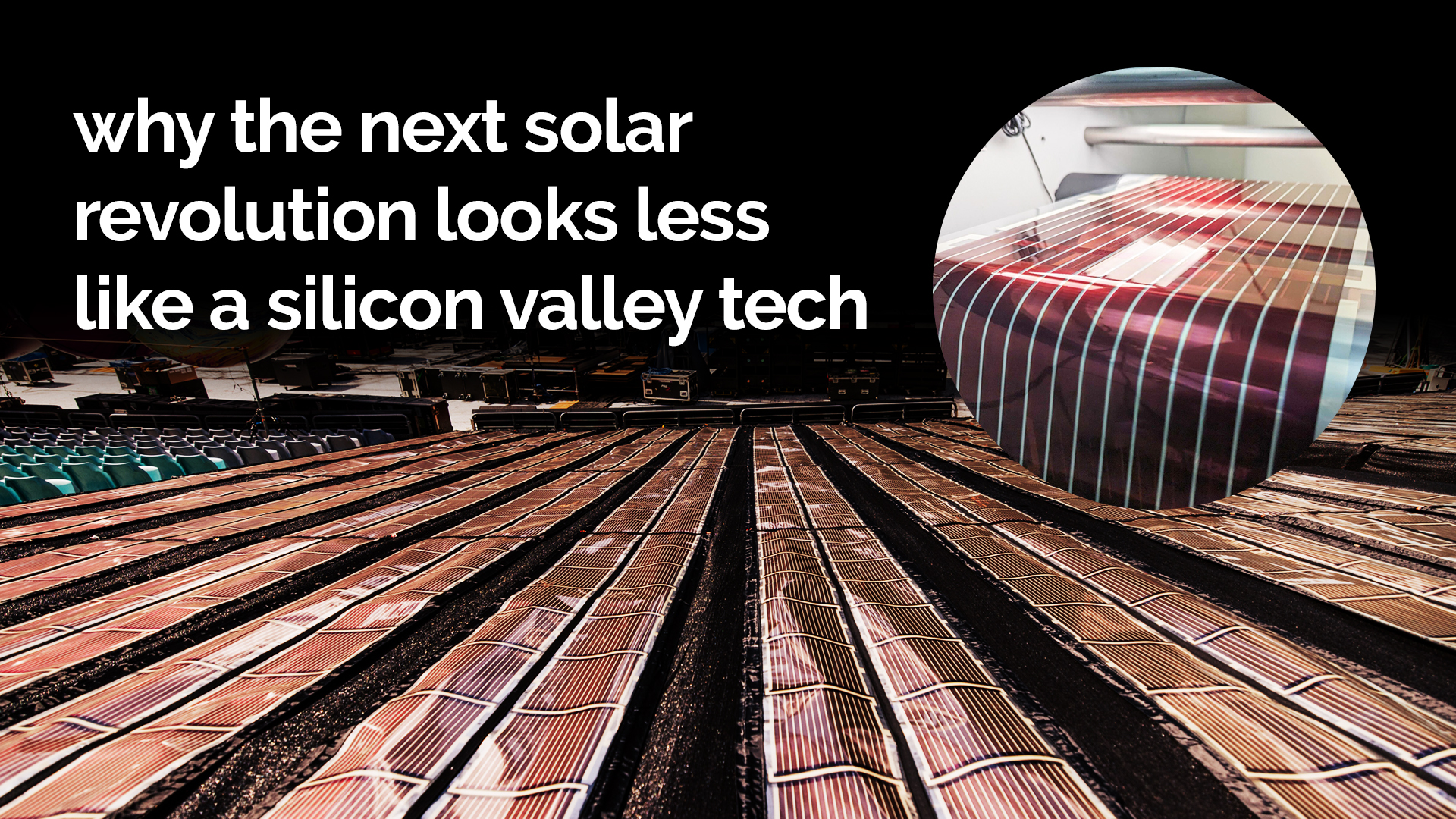
Instead of cleanrooms and critical mineral supply chains, Kardinia’s raw materials look more like a print shop’s inventory. Using sophisticated roll-to-roll printing presses—architecturally identical to the ones that once churned out daily newspapers—the company deposits proprietary organic photovoltaic (OPV) inks onto flexible, recyclable substrates.
The result is an ultra-lightweight, flexible solar panel that weighs mere grams per square meter, costs roughly one-tenth of traditional silicon to manufacture, and is fully recyclable in-house.
If it sounds like science fiction, just ask Coldplay.
For the past three years, the British rock icons have been working quietly in lockstep with Kardinia to develop and deploy this exact printed solar technology behind the main stage of their record-breaking world tour, harvesting clean energy to meet the band’s aggressive carbon-reduction mandates.
“It’s not just Coldplay,” Anthony explains, speaking with the measured intensity of an executive who knows he is sitting on an explosive piece of intellectual property. “There’s an entire live events industry—from stadium concert tours to the Olympics and golf tournaments—screaming out for this. They need to satisfy a consumer base that demands sustainability, but they are constantly hamstrung by logistics and infrastructure.”

The 70 Million Square Meter Blindspot
While the rock-and-roll pedigree gives Kardinia immediate cultural capital, the commercial thesis underpinning the business rests on a massive, unaddressed real estate blindspot.
In Australia alone, Kardinia estimates there are approximately 70 million square meters of industrial roofing space unable to support the structural load of traditional silicon arrays.
“A massive percentage of industrial roofs are built strictly for rain and shade,” Anthony says. “They were never engineered to carry 15 to 20 kilograms per square meter of glass and metal. We can walk in and address that entire footprint.”
By Kardinia’s mathematics, that industrial dead space represents roughly 3.5 gigawatts of untapped generation capacity in Australia alone. Beyond factory roofs, the company’s pipeline stretches across data centres, agriculture, mining, defence, and commercial stadium infrastructure.
“Think about a major sports stadium,” Anthony suggests. “The roofs are often lightweight and curved, rendering silicon useless. But what about the seating? For 80% of the year, those stadium seats sit empty, baking in the sun. We can roll our printed solar sheets directly over the seating bowls, harvest megawatts of power, and then simply roll them up and pack them away when the fans arrive for match day.”
Decoupling from the “Ferrari” Metrics
To understand the economics of Kardinia Energy, Anthony says investors must first undergo a psychological uncoupling from standard industry metrics.
In the traditional solar market, efficiency is king. Monocrystalline silicon panels routinely boast efficiency rates north of 20 to 22 per cent. Kardinia’s first commercial-scale printed solar modules will hit the market at a comparatively modest 5 to 6 per cent efficiency.
To the uninitiated, that looks like a flaw. To Anthony, it’s a feature.
“I use the car showroom analogy,” he says. “The silicon industry is a Ferrari. It’s beautiful, it’s fast, it’s high-performing. Printed solar is a Hyundai Tucson. It’s your everyday car built for practical, massive deployment. We aren’t chasing top speed.”
The breakthrough lies in the radical cost deflation of the manufacturing process. Kardinia’s organic ink formulation requires minimal materials—amounting to roughly 3 grams per square meter—and avoids the geopolitical bottlenecks of rare earth minerals. The company’s target manufacturing cost is under $10 USD per square meter.
| Metric | Traditional Silicon Panels | Kardinia Printed Solar |
| Form Factor | Rigid, heavy glass & aluminium | Flexible, rollable like a yoga mat |
| Weight | ~15–20 kg per square meter | Grams per square meter |
| Est. Mfg Cost | High (Critical mineral dependent) | <$10 USD per square meter |
| Efficiency | ~20% – 22% | 5% – 6% (Initial commercial scale) |
| Target ROI | Multiple years | 12 – 18 months |
| Recyclability | Complex, low circularity | ~99.9% fully recyclable in-house |
“Because it is ten times cheaper, the Return on Investment (ROI) on the harvested energy drops to just 12 to 18 months,” Anthony points out. “After that, it’s free energy provision. If I have a 10,000 square meter industrial roof that cannot take a single gram of silicon weight, efficiency ceases to be the proxy metric. I can cover that entire surface, catch ambient light in shaded areas where silicon fails, and completely change the financial equation.”
Furthermore, the technology leans into a rapid upgrade cycle. Because the panels simply roll out and adhere to surfaces, replacing them doesn’t require an army of contractors. “In five years, we can come back, peel off the old array, recycle 99.9% of the constituent materials in-house, and roll out the next-generation, higher-efficiency printed solar module in a single day,” says Anthony .
A 28-Year Overnight Success Story
Kardinia is hitting the market at a moment of acute macroeconomic anxiety over energy security and supply chain localisation, but the underlying science is far from a recent hackathon invention.
The startup’s entire commercial architecture sits on top of 28 years of foundational academic research born out of the University of Newcastle’s Centre for Organic Electronics, led by Anthony’s co-founder, Professor Paul Dastoor. Over nearly three decades, the program has drawn tens of millions of dollars in federal and state government backing.
“Paul went entirely against the grain of the academic establishment,” Anthony says. “In a research environment, you are institutionalised to chase the highest possible efficiency to secure peer-reviewed credibility. Paul focused on the holistic ROI equation: efficiency, durability, and cost. He derisked the entire scientific profile before we ever tried to scale.”
With the core science locked down, Kardinia is transitioning from a research entity into a commercial engineering and capital markets player.
The company is currently closing a $5 million USD capital raise—a sum that is already heavily matched by Australian state and federal government grant structures. The capital injection will fund the build-out of Australia’s first commercial-scale printed solar manufacturing facility, moving production away from aging, small-scale laboratory printers into an industrial-grade showcase plant capable of generating an initial 20 megawatts of capacity per year.
The Macro Storm of 2026
When asked why 2026 is the definitive breakout year for a technology that organic physicists have experimented with for decades, Anthony points to a perfect storm of regulatory pressure, corporate climate mandates, and a structural shift toward deglobalisation.
“The world has changed dramatically over the last few years,” he says, nodding to recent global energy crises. “Companies are under unprecedented legislative pressure to meet environmental credentials. At the same time, governments are realising the profound risk of concentrated global supply chains. Printed solar offers total sovereign energy capability. We can manufacture this locally, end-to-end, with zero reliance on foreign critical minerals.”
Having completed the largest-ever rapid deployment solar pilot in history last year, and armed with fresh letters of intent from major domestic commercial property portfolios, Anthony is ready to scale.
“Hardware takes longer than software; that’s the reality of deep-tech,” Anthony says. “But we have verified the science, we have built the marketplace demand, and we are now moving at pace. The sun hits everywhere—it’s time we started harvesting it everywhere.”
Trending
The A$20.4 Million Inertia Trap: How Kepa Software Is Unlocking Value in Enterprise Capital Allocation
A government agency renewed the same maintenance decision nine years running, because auditing the original choice was deemed too expensive. When the portfolio was finally tested, A$20.4 million of low value spend was identified in a single year. Kepa Software’s capital governance platform was built to expose and eliminate precisely these boardroom blind spots. For […]
Forget the share price. SpaceX just published a map of the next five years.
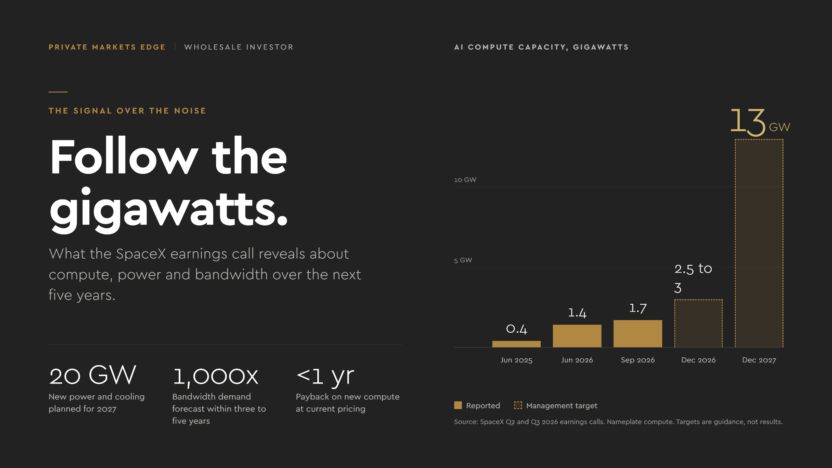
Most coverage of SpaceX’s result focused on a 9.1% share price fall. That is noise. The signal is in the transcript: compute, power, bandwidth and demand over the next five years.

The prefab company that deliberately leaves part of the house unbuilt
BuiltQuik prefabricates the floor and roof structure and stops there. Co-founder Ryan Mullaney argues the omission is the product. Prefabricated housing usually means a factory. A large central facility, identical modules, limited room to move on design, and a logistics problem getting the finished box to site. BuiltQuik builds the opposite, and the design decision […]
Backed By Leading Investment Groups and Family Offices