
News and Announcements
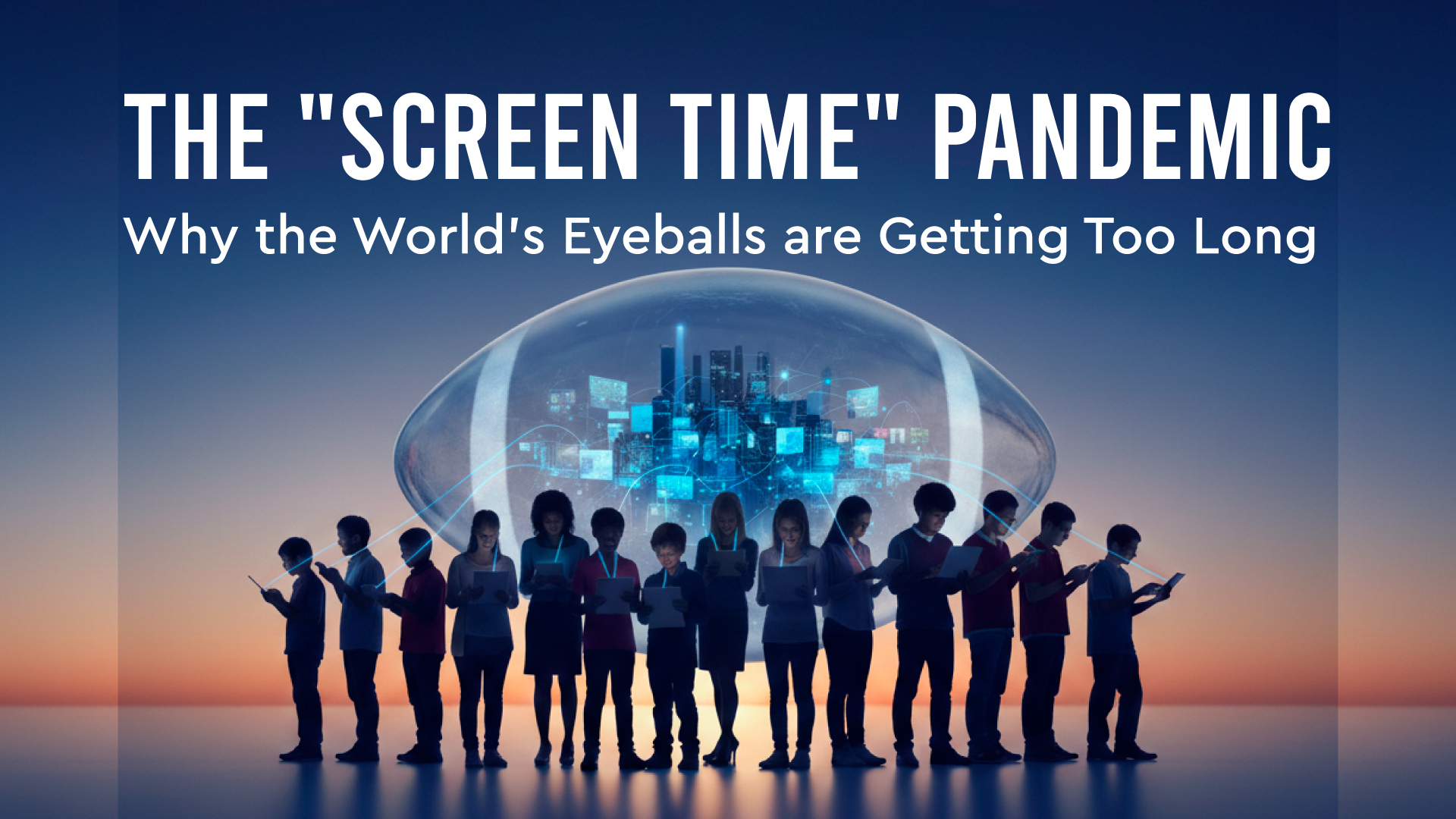
The “Screen Time” Pandemic: Why the World’s Eyeballs are Getting Too Long
- Published February 09, 2026 3:29AM UTC
- Publisher Jade Miguel
- Categories Capital Insights, Executive Interviews, Landing, Life Science Hub, Trending
Jason Sun isn’t just worried about children needing glasses; he’s worried about the long term consequences which shape their future.
“Myopia isn’t just a vision problem,” Jason, the Managing Director of Eyerising International, explains. “It is a structural one. The eyeball actually elongates as children myopia progresses. If it grows too long, the tissues are stretched thin, leading to a much higher risk of retinal detachment, glaucoma, and permanent vision lessor even blindness later in life.”
The statistics Jason cites are enough to make any parent look up from their smartphone in alarm. In South Korea, 98% of children are now short-sighted. Globally, the figure is 30%, but we are on a fast track to a crisis: by 2050, one in every two people on Earth—five billion souls—will be myopic and 1 billion high myopes (people with a more severe form of the disease).
People often mistakenly think of glasses or Lasik surgery as treatments. Incorrect, they were corrections, not cures. For Jason, a healthcare technology veteran, the “legacy” treatments—invasive eye drops or hard contact lenses that reshape the cornea overnight—weren’t enough. These are often ineffective (particularly for high myopic patients) and also may be associated with significant side effects. He wanted something that could actually stop and partially reverse the clock.

The Red Light Revolution
Eyerising’s solution, the Eyerising Myopia Management Device, sounds like science fiction but is grounded in a simple 3-2-5 protocol: three minutes, twice a day, five days a week.
The device uses patented, non-invasive and home-use Repeated Low-Level Red Light (RLRL) therapy to address a deficiency in red light exposure, as people spend more time indoors and on screens (narrower spectrum of light). The child sits in front of the desktop device—which looks a bit like a high-tech microscope—and looks at a gentle red light. This light stimulates blood flow and metabolism at the back of the eye, slowing down the elongation of the eyeball.
“We are the first therapy on the market that is disease-modifying,” says Jason. “In many cases, we aren’t just slowing the progression; we are seeing myopia reverse. Clinicians are often gobsmacked. They didn’t think it was possible to get better from high myopia.”
The clinical data backs the “shock” factor. With over 30 peer-reviewed publications in top medical journals, the therapy has shown up to 90% efficacy. Perhaps most importantly for busy families, the compliance rate is over 80%. It’s easy, non-invasive, and can be used by children as young as three.
A “SaaS” Model for Sight
Eyerising’s business strategy is as modern as its technology. Rather than just selling a piece of hardware, they’ve adopted a software-style recurring revenue model. They sell the device to optometrists at a low margin and charge patients a monthly fee over a five-year period—revenue that is shared with the clinicians.
“We are a responsible company,” Jason emphasises. “We only engage patients through their clinicians. They need the diagnosis and the monitoring to ensure safety and efficacy.”
With regulatory approval in 40+ countries and 2,000 patients already signed up across eight pilot markets, the company is now eyeing a much larger prize.
The $3 Billion Vision
Eyerising is currently raising $5 million to fuel a global expansion. While the pediatric market is the current focus, Jason reveals that the adult market—where no treatment currently exists for high myopia—is five times larger.
The investment timing is notable. The sector is heating up, with giants like Zeiss and Alcon recently acquiring myopia and red-light therapy firms for hundreds of millions of dollars. Jason believes Eyerising is positioned for a similar exit opportunity, while keeping an eye toward an IPO in Australia or Hong Kong within the next three years.
“We are inviting investors to join us in the fight against this global epidemic,” Jason says. “But it’s also about achieving a fantastic commercial outcome. We are tackling a problem that affects billions.”
In the race to save the world’s sight, Jason Sun is betting that a little red light can lead the way out of the dark.
Trending
The A$20.4 Million Inertia Trap: How Kepa Software Is Unlocking Value in Enterprise Capital Allocation
A government agency renewed the same maintenance decision nine years running, because auditing the original choice was deemed too expensive. When the portfolio was finally tested, A$20.4 million of low value spend was identified in a single year. Kepa Software’s capital governance platform was built to expose and eliminate precisely these boardroom blind spots. For […]
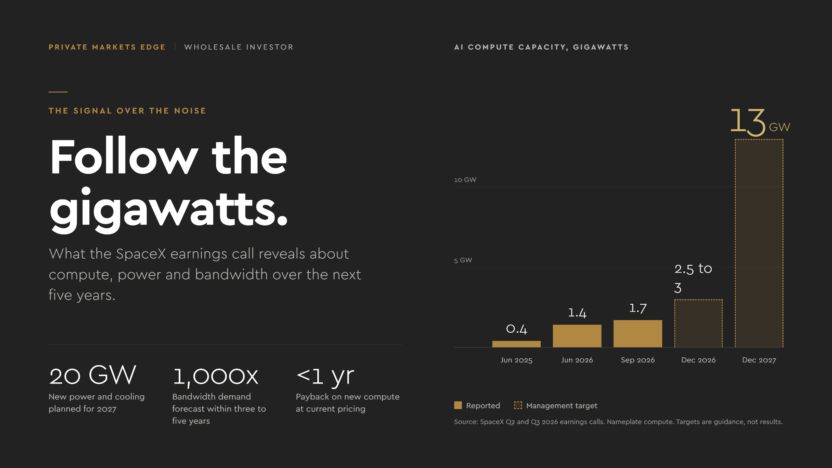
Forget the share price. SpaceX just published a map of the next five years.
Most coverage of SpaceX’s result focused on a 9.1% share price fall. That is noise. The signal is in the transcript: compute, power, bandwidth and demand over the next five years.

The prefab company that deliberately leaves part of the house unbuilt
BuiltQuik prefabricates the floor and roof structure and stops there. Co-founder Ryan Mullaney argues the omission is the product. Prefabricated housing usually means a factory. A large central facility, identical modules, limited room to move on design, and a logistics problem getting the finished box to site. BuiltQuik builds the opposite, and the design decision […]
Backed By Leading Investment Groups and Family Offices