
News and Announcements
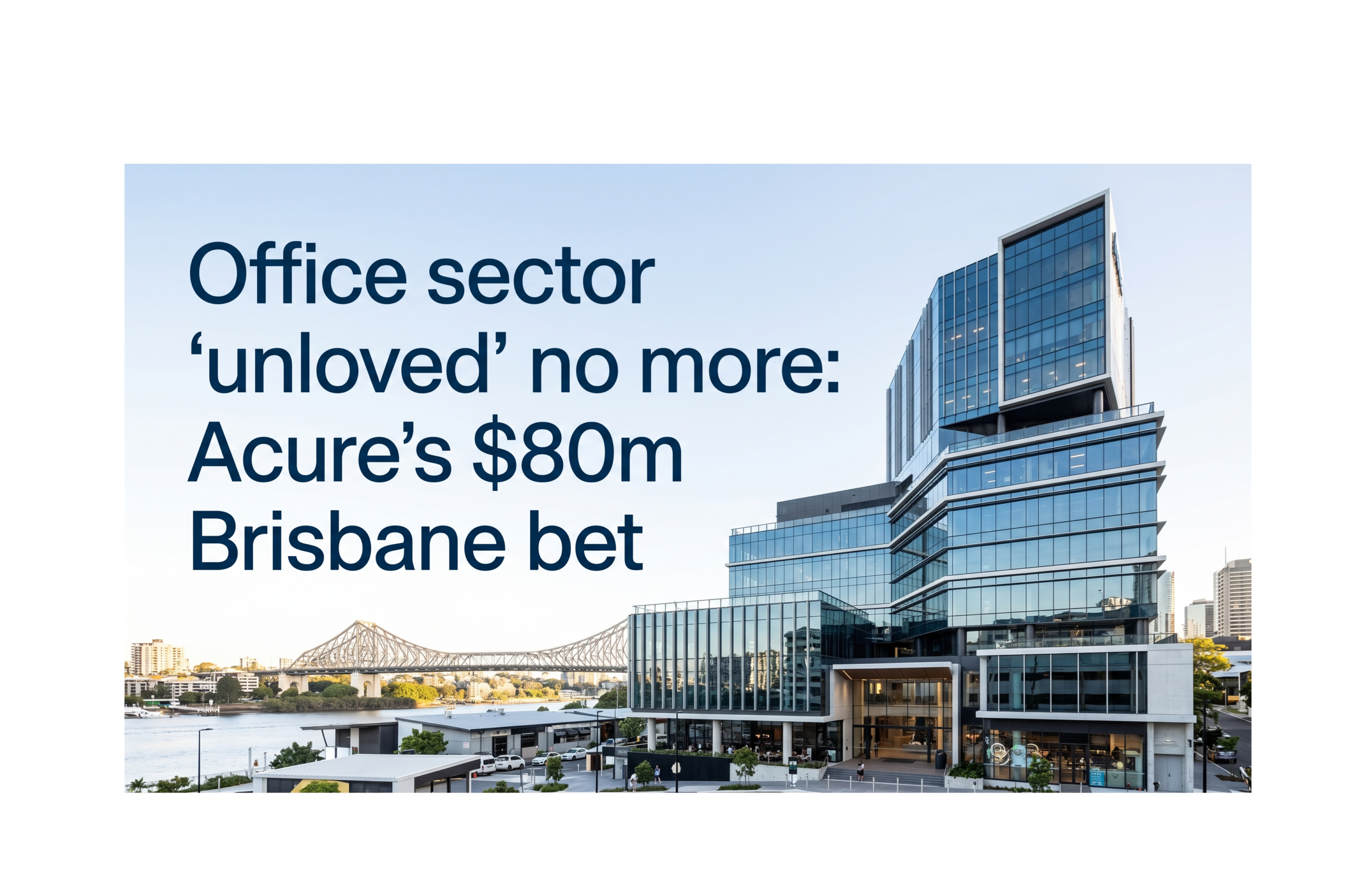
Office sector ‘unloved’ no more: Acure’s $80m Brisbane bet
- Published June 04, 2026 12:07AM UTC
- Publisher Jade Miguel
- Categories Capital Insights, Executive Interviews, Landing, Trending
Angelo Del Borrello has a simple rule for outsized returns: buy the assets that make other people nervous.
The founder and managing director of Acure Asset Management is currently zigging while the broader market zags. As institutional investors remain wary of the office sector’s post-pandemic recovery, Del Borrello is doubling down on Queensland, finalising a deal for an A-grade Brisbane office tower at a staggering 42 per cent discount to its replacement cost.
It is a high-conviction move from a man who has spent 27 years navigating the peaks and troughs of the Australian market, including a decade at the helm of a $1.4 billion listed development group before pivoting to the unlisted space.
“Running a listed company can be quite draining,” Del Borrello told the Executive Interview. “In the unlisted world, it’s about doing less and buying better. That is the key to making good returns.”
The Brisbane arbitrage
The new acquisition, an A-grade tower in Brisbane’s urban renewal precinct, is expected to yield a 10 per cent return on an ungeared basis. For investors in the forthcoming syndicate, that translates to an initial monthly distribution yield of 9 per cent.
Del Borrello’s bullishness on the Sunshine State is backed by a cocktail of infrastructure spend and supply constraints. With the 2032 Olympics on the horizon, the Queensland government’s massive investment in the Cross River Rail, new stadiums, and athlete housing is effectively crowding out private office construction.
“All that will limit the ability for private builders to focus on new office towers,” Del Borrello said. “We believe vacancy rates will drop significantly leading into the Olympics. When vacancy drops, you see rental growth, and returns escalate.”
Counter-cyclical discipline
Acure’s strategy is rooted in a disciplined, almost clinical approach to the property cycle. The firm currently manages a $725 million portfolio across 19 syndicates, covering industrial, retail, hospitality, and mining accommodation.
The group’s track record is defined by knowing when to exit as much as when to enter. While many are still chasing the industrial tailwinds, Del Borrello has been quietly heading for the exits.
“We’ve sold all our industrial properties over the last two or three years because that sector has been very strong,” he noted. “We were buying those in 2015-16 at 8 to 12 per cent yields; we’re now selling them at 5.5 per cent. Most of those assets doubled in value in that time.”
By recycling that capital into “unloved” sectors like office and hospitality, Acure is positioning itself for the next leg of the cycle.
| Asset Class | Strategy | Current Outlook |
| Office | Buying | High yields (8-10%) at deep discounts to replacement cost. |
| Industrial | Selling | The sector is “crowded” with international capital; yields have compressed. |
| Hotels | Watching | Post-COVID recovery creates tactical opportunities. |
The Syndicate Model
For the sophisticated investors who back Acure’s single-asset unit trusts, the appeal lies in the transparency. Del Borrello emphasises a “no-surprises” approach: quarterly newsletters, audited financial statements, and a focus on monthly income.
“We looked at 80 properties last year and bought two,” he said, highlighting the selectivity required to maintain an internal rate of return (IRR) that typically sits between 17 and 18 per cent upon asset disposal.
As the interest rate cycle begins to stabilise, Del Borrello believes the window for these high-yielding office plays won’t stay open forever. “It wasn’t that long ago that office buildings were selling at 6 to 7 per cent. We’re now buying them at 10. You need to execute when you see these opportunities.”
Trending
The A$20.4 Million Inertia Trap: How Kepa Software Is Unlocking Value in Enterprise Capital Allocation
A government agency renewed the same maintenance decision nine years running, because auditing the original choice was deemed too expensive. When the portfolio was finally tested, A$20.4 million of low value spend was identified in a single year. Kepa Software’s capital governance platform was built to expose and eliminate precisely these boardroom blind spots. For […]
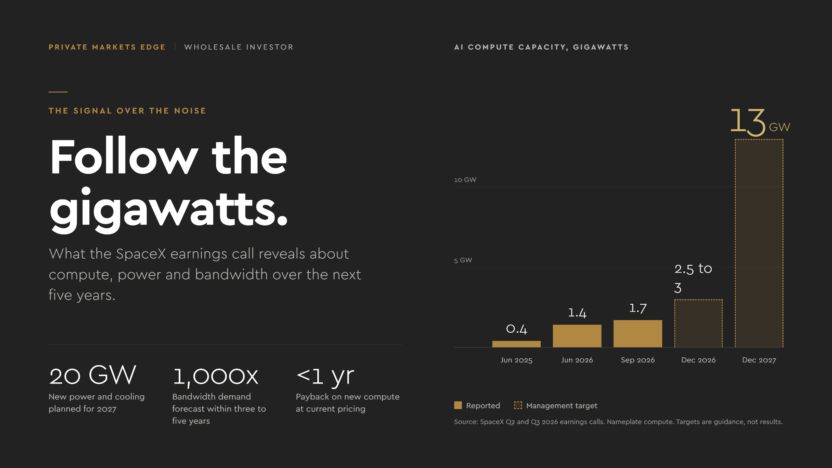
Forget the share price. SpaceX just published a map of the next five years.
Most coverage of SpaceX’s result focused on a 9.1% share price fall. That is noise. The signal is in the transcript: compute, power, bandwidth and demand over the next five years.

The prefab company that deliberately leaves part of the house unbuilt
BuiltQuik prefabricates the floor and roof structure and stops there. Co-founder Ryan Mullaney argues the omission is the product. Prefabricated housing usually means a factory. A large central facility, identical modules, limited room to move on design, and a logistics problem getting the finished box to site. BuiltQuik builds the opposite, and the design decision […]
Backed By Leading Investment Groups and Family Offices