
News and Announcements
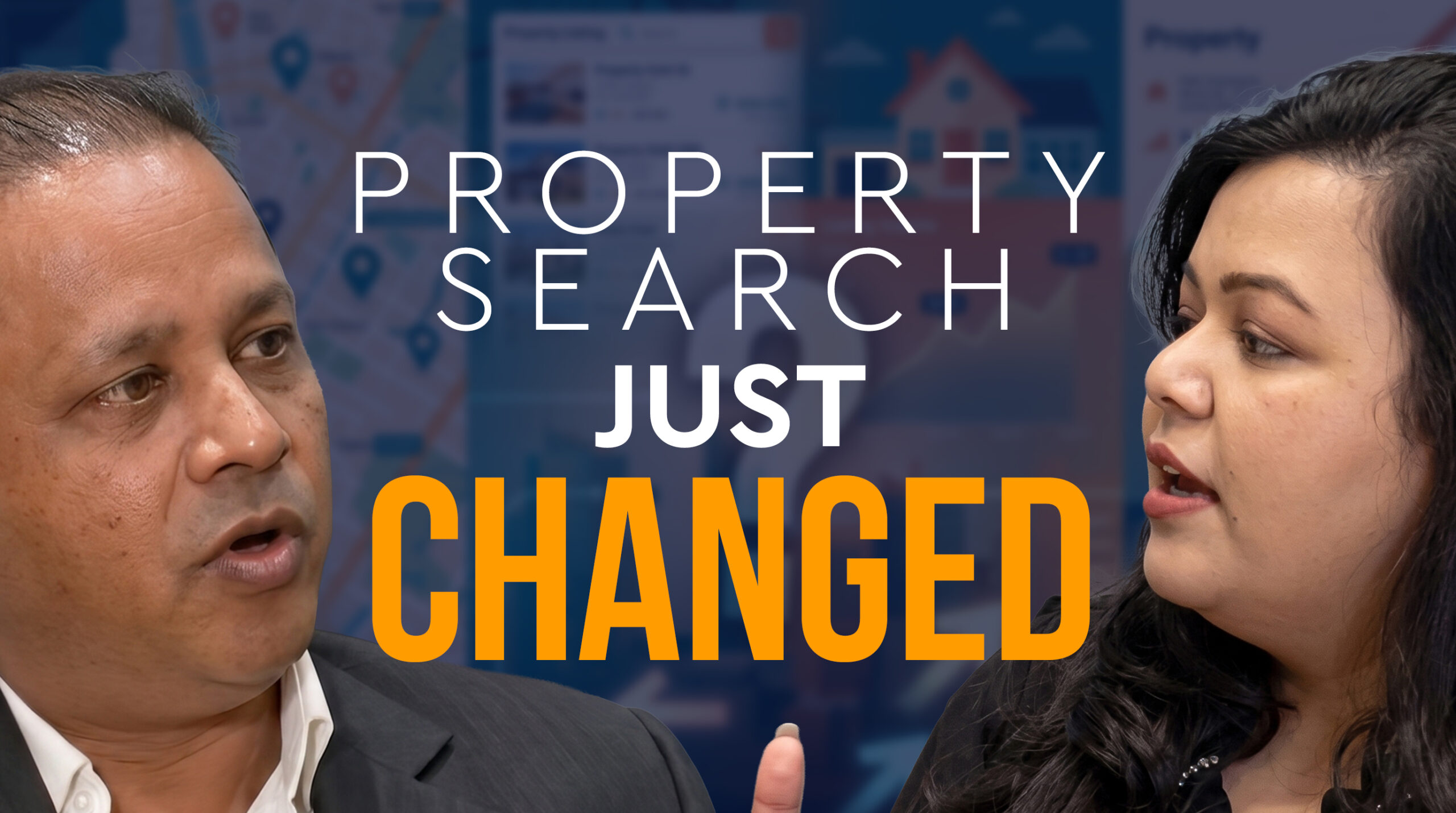
The listing fee vendors pay whether the house sells or not
- Published September 02, 2026 3:00AM UTC
- Publisher Bella Battsengel
- Categories Company Updates, Executive Interviews
Australia’s property portals collect more than $2 billion a year while national listings sit flat. An Australian-built AI platform is targeting the economics, not just the interface.
An Australian vendor listing a home pays a vendor-paid advertising fee on top of agency commission. Rama Dwarapudi, Founder and Chief Executive Officer of RealSearch, puts a typical figure at around $5,000, though the actual cost varies by property, postcode and campaign package. Whatever the number, it is charged whether the property sells or is withdrawn.
This, he says, is the pain point that surfaces in almost every conversation he has had with agents and agencies.
“The two dominant players pretty much decided the price,” Dwarapudi said. Agents pass the disbursement through to the vendor. The vendor absorbs it.
What the vendor receives in exchange is a classified advertisement.

The numbers behind the complaint
REA Group’s FY26 results, released this month, lend weight to the structural argument.
The company reported core operations revenue of $1,793 million, up 7 per cent, with Australian revenue up 11 per cent to $1,712 million. Residential revenue rose 12 per cent to $1,290 million, driven by a 13 per cent increase in Buy yield while national listings finished the year flat.
Flat listings. Double-digit revenue growth. The gap between those two figures is yield, and yield is paid by vendors.
Domain, the second largest portal, is no longer Australian-owned. CoStar Group completed its acquisition of the platform in August 2025, at approximately US$1.9 billion, or around A$3 billion.
Notably, CoStar’s own chief executive Andy Florance framed the acquisition around an Australian market he said was dominated by “an intention to extract value rather than deliver it”. Two well-funded players are now making the same diagnosis from opposite ends of the market.
The postcode tax
Dwarapudi’s second objection is to how the fee is calculated.
The same advertisement costs a different amount depending on where the property sits. Bondi carries one price. Parramatta another. A smaller centre another again.
“It’s an online system,” Dwarapudi said. “We call it a postcode tax.”
His position is that a digital listing has no meaningful marginal cost that varies by suburb, and that pricing which behaves otherwise is pricing to what a market will bear rather than to what a service costs to deliver.
RealSearch’s counter-proposal is a flat, pre-listing property showcase that agents can share as a link, positioned as an alternative distribution point rather than a supplement to the two incumbents.
An hour of scrolling, and nothing found
The platform began with a family request.
Dwarapudi, who spent 20 years in IT strategy and business innovation, sat with a relative to help find a home. They scrolled listings and photographs for close to an hour and ended the session no closer to an answer.
“A listing website is just like a classified ad,” he said. “There’s no intelligence.”
He began building AI for Australian property in 2021, several years before the term entered general industry use. The platform now covers more than 15,000 Australian suburbs. Dwarapudi is a finalist for PropTech Leader of the Year at the 2026 PropTech Awards, and the platform’s 3D mapping work has drawn recognition from Google.
What sits behind a natural language query
The product thesis is that buyers do not want a filtered list. They want an answer.
A user types something closer to speech. A quiet street, near good schools, low flood risk, walking distance to a park. The system interprets the context, builds a profile of what the buyer is optimising for, identifies the relevant datasets and renders the result against a three-dimensional map.
Layered onto that map are flood zones, fire zones, school catchments and planned infrastructure. Dwarapudi notes that more than 70 per cent of Australian property searching now happens on mobile, which makes the scrolling grid a poor fit for the device it runs on.
“The context is the key,” he said.
Due diligence before inspection day
The commercial logic sits in what the buyer no longer has to do.
Most of what actually determines a purchase decision, the feel of the street, what is being built next door, the flood exposure, currently surfaces on inspection day or after it. By then the buyer has already spent the weekend.
Dwarapudi’s model has buyers shortlist five or six properties, assess each from a bird’s eye view, and eliminate most of them before leaving the house. The inspection then becomes a confirmation exercise rather than a discovery one.
Digital twins for developers who cannot afford them
The same technology addresses a separate constraint in off-the-plan sales.
Developers sell property two to three years before completion, supported by floor plans, renders and a display suite. Buyers want orientation, dimensions, aspect and a sense of the surrounding area. Dwarapudi’s example is a Parramatta project marketed with a map pin dropped 25 kilometres away in central Sydney.
Large developers commission full 3D builds. Smaller ones cannot justify the cost, and so sell on brochures.
RealSearch builds a digital twin with walkthroughs at individual lot level, furnished and unfurnished, alongside real-time context on distance to shops, parks and transport. The claimed outcome is faster conversion, on the basis that a buyer who can experience a building requires less convincing.
The five-year position
Dwarapudi’s forecast is straightforward.
“In five years, no one will do scrolling anymore,” he said. The comparison he draws is to newspaper classifieds, a format that did not decline gradually so much as stop being relevant.
His view is that the data already exists but sits scattered across disconnected endpoints, and that the platform which joins those endpoints into a single narrative will define how property is searched.
Australian property is a multi-trillion dollar asset class. Its digital front door is controlled by two companies collecting over $2 billion a year between them, with listings flat and yields rising.
That is not a technology position. It is a distribution position. Distribution positions hold until the format they are built on stops being the one people use.
Executive Interviews
The prefab company that deliberately leaves part of the house unbuilt
BuiltQuik prefabricates the floor and roof structure and stops there. Co-founder Ryan Mullaney argues the omission is the product. Prefabricated housing usually means a factory. A large central facility, identical modules, limited room to move on design, and a logistics problem getting the finished box to site. BuiltQuik builds the opposite, and the design decision […]

Dogs First to Reduce Risk: QBiotics’ Smarter Path to Oncology Markets
QBiotics took a compound derived from a north Queensland rainforest tree all the way to veterinary registration before pursuing human oncology to de-risk its human cancer programme. Interim CEO Ebru Davidson argues that sequence – now backed by early responses across several human cancers – is the company’s real asset. The story that pulled Wholesale […]

Built on discipline, not complexity: inside an ASX equities income strategy
Haydn Froggatt and Zac Brabin have decades of derivatives experience between them and access to almost any strategy in the market. They use two of the simplest structures available, and wrote 202 positions with them last year. Published by Fairway Capital Management. Based on an interview with co-founders Haydn Froggatt and Zac Brabin. Two traders, […]
Backed By Leading Investment Groups and Family Offices