
News and Announcements
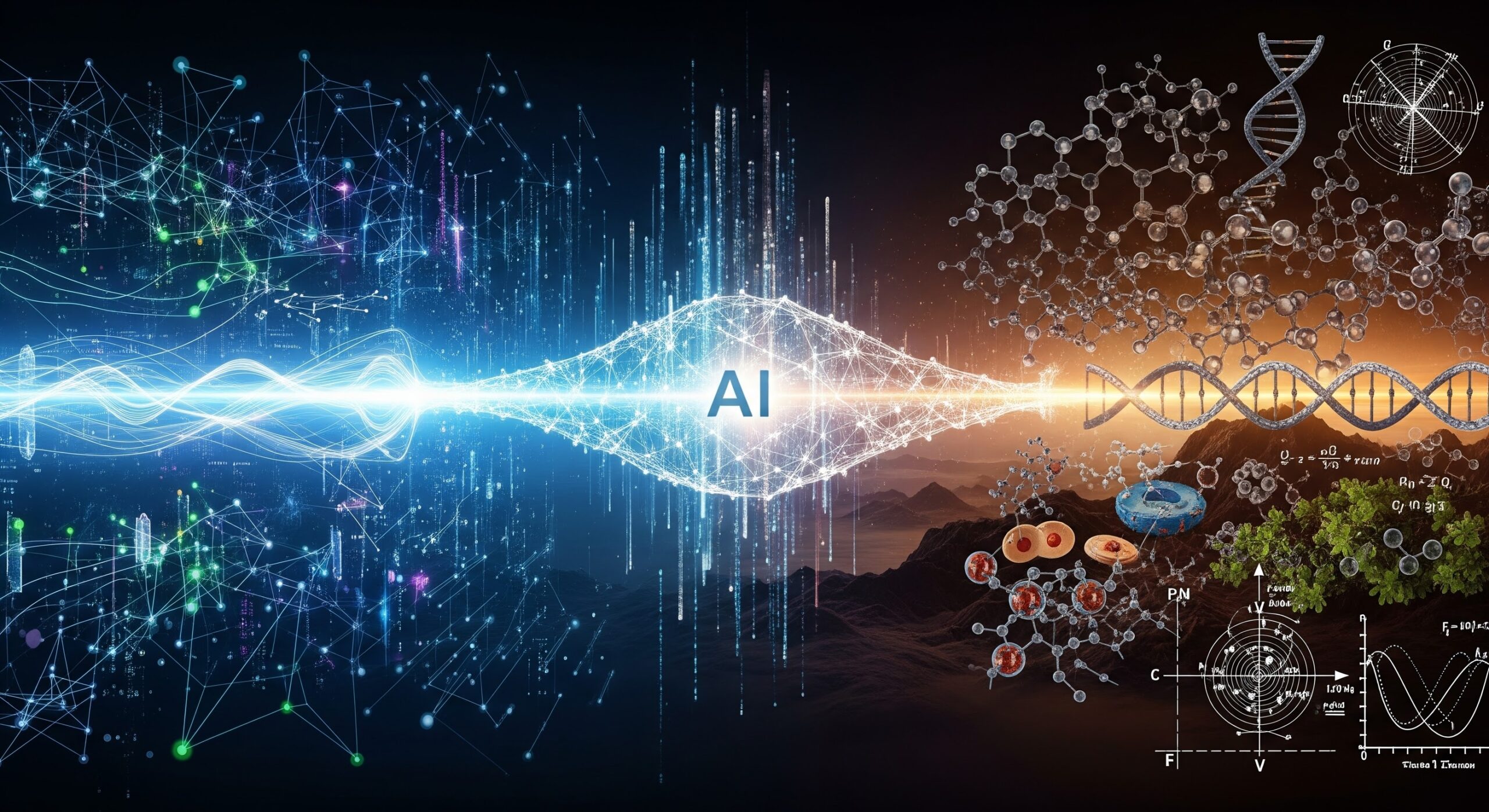
The Great Re-Allocation: Why AI is Forcing Smart Money From Software to Hard Science
- Published November 18, 2025 5:59AM UTC
- Publisher Steve Torso
- Categories Capital Insights, Landing, Trending
Smart money is quietly shifting its thesis from software to hard science. This is not a temporary trend. It is a foundational shift in how “defensibility” is being valued, and it is happening with unprecedented speed.
In recent conversations, I am hearing the same challenge from high-net-worth investors and family offices: it is becoming incredibly difficult to build a confident investment thesis around software.
The reason is simple. AI is aggressively commoditising the sector. The old barriers to entry, like complex codebases and distribution networks, are disappearing.
The Dual Squeeze on Investors
Investors are being squeezed from two directions at once.
First, as AI commoditises pure software plays, the traditional moats are evaporating. It is difficult to justify a high valuation for a business whose core function could be replicated by a more advanced AI model tomorrow.
Second, the AI race itself is consolidating. The winners are emerging faster than in any previous tech cycle. These “runaway” companies are consolidating talent, data, and compute power, creating a breakaway effect.
Access to these proprietary, high-growth deals is narrowing rapidly. These companies are not doing wide roadshows. They are locking in strategic capital from partners who were in the room before the breakaway, making it difficult for most investors to get in.
The Pivot to “Real” Moats
This dual pressure is forcing a necessary pivot. We are seeing capital flow away from pure software and move decisively towards technical and hard-science opportunities.
Why? Because these businesses have obvious, durable defensive moats.
You cannot commoditise a specific regulatory process.
You cannot use AI to bypass physics.
You cannot replicate a biological asset or a patented chemical compound.
These natural barriers are not subject to the same disruptive forces as code. They create a much clearer, more understandable pathway to value creation.
In this new paradigm, AI’s role shifts. It is no longer the product itself. It becomes a powerful accelerant for solving fundamental technical challenges. It is the tool that helps a deep tech company solve physics or biology problems faster, cheaper, and more effectively than ever before.
This is the new thesis. The clearest opportunities are no longer in the businesses AI is replacing, but in the complex, real-world sectors that AI can accelerate. This is a foundational shift, and it will define the next decade of wealth creation.
Trending

The asset class where the market has no vote
Litigation funding returns are decided in a courtroom, not a cycle. Knightsbridge’s Head of Capital is careful to call that a different risk rather than a lower one, and his answer to it is spread, not concentration. Most alternative assets still answer to something. Property answers to rates. Private credit answers to defaults. Even the […]

The listing fee vendors pay whether the house sells or not
Australia’s property portals collect more than $2 billion a year while national listings sit flat. An Australian-built AI platform is targeting the economics, not just the interface. An Australian vendor listing a home pays a vendor-paid advertising fee on top of agency commission. Rama Dwarapudi, Founder and Chief Executive Officer of RealSearch, puts a typical […]

Reinventing the Condom: How an Australian Deep-Tech Startup Plans to Disrupt a $12 Billion Market
For more than half a century, the global condom industry has remained fundamentally unchanged, constrained by standard materials like latex and solid synthetic polymers. Despite widespread consumer demand for better alternatives, product design has treated the device strictly as a mechanical barrier, sacrificing feel for function. Sydney-based Eudaemon Technologies is setting out to upend that […]
Backed By Leading Investment Groups and Family Offices