
News and Announcements
Funding the Future: The Strategic Power of Venture Debt in a Volatile Market
- Published May 06, 2025 4:33AM UTC
- Publisher Jade Miguel
- Categories Capital Insights, Landing, Trending
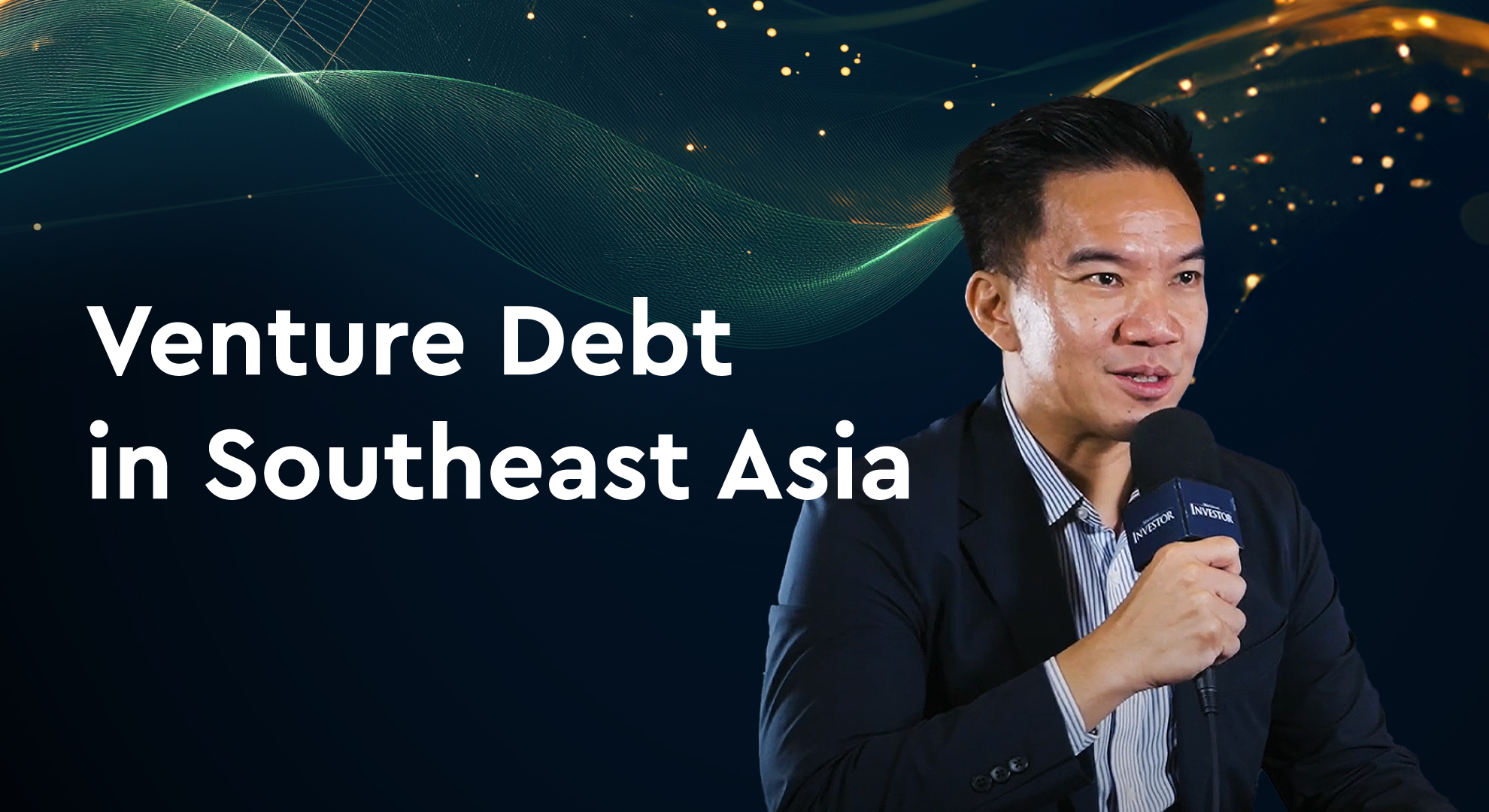
The Emergence 2025 Investment Conference provided a platform for in-depth discussions on evolving investment trends, and a key voice in the private equity space was Martin Tang, Co-Founder and CFO of Genesis Alternative Ventures. Tang, a seasoned expert in venture debt, offered valuable perspectives on the sector’s evolution in Southeast Asia, its differentiation from traditional VC, and the strategic opportunities it presents.
Tang’s insights, drawn from his pioneering work in venture debt, emphasised the significant maturation of the Southeast Asian ecosystem over the past decade. He observed, “It’s been almost 10 years since I started that business at DBS. In the last 10 years, the ecosystem has gone through a lot, a lot of ups and downs.” This experience provides a crucial lens through which to understand the current dynamics of the market.

The Maturation of Venture Debt
A key development highlighted by Tang is the increased understanding and acceptance of venture debt among founders, startups, and VC investors. The conversation has shifted from a fundamental explanation of the instrument to a strategic consideration of its role in capital structuring. As Tang articulated, it’s less about “what is venture debt” and more about “how do I include that as part of my capital structure, how do I include that as part of the next fundraise?” This reflects a growing sophistication in the market’s approach to financing high-growth companies.
Genesis Alternative Ventures, positioned as a leading venture debt provider in Southeast Asia, distinguishes itself by offering a unique form of capital that complements venture equity. Tang clarified the core difference: “Venture debt is similar to venture equity in so much as we provide capital to the same type of companies, the fast-growth tech companies, but it’s different in that debt sits above equity on the capital structure so we have a different risk appetite and a different return profile.” This structural distinction is crucial for investors to grasp when evaluating venture debt opportunities.
Leveraging Expertise for Strategic Advantage
Tang’s extensive background in corporate finance and M&A at institutions like Lazard and Standard Chartered provides a strong foundation for his approach to venture debt. He emphasised the value of analytical rigor, stating, “As an investment banker with Lazard and Standard Chartered, we spend a lot of time analysing companies, building financial models, doing fundamental analysis, asking a lot of questions, pitching positioning, understanding the capital markets, understanding M&A. All these are very, very key and crucial skills.” This experience translates into valuable advice and support for Genesis’s portfolio companies, particularly those navigating capital raises, IPOs, or M&A transactions.
Navigating the Current Economic Climate
The discussion also addressed the impact of the current economic climate on venture debt appetite in Southeast Asia. Tang acknowledged the challenges of the funding winter, noting that “with the funding winter, we’ve seen volumes halved in some markets, and are starting to recover right now.” However, he offered a balanced perspective, suggesting that increased scrutiny and due diligence ultimately contribute to a healthier ecosystem. He stated, “I think that’s not a bad thing. We’ve seen founders have to work doubly hard to raise the same amount of money, there’s a lot of due diligence questions that go into it, there’s a lot of scrutiny on the business plan, but I think it all makes for a good ecosystem in the next five to 10 years.” This resilience and adaptation within the market are important considerations for investors seeking long-term opportunities.
In conclusion, Martin Tang’s insights at Emergence 2025 provided a valuable overview of the evolving venture debt landscape in Southeast Asia. His expertise, coupled with Genesis Alternative Ventures’ strategic approach, positions the firm as a key player in supporting the growth of innovative companies in the region. For high-profile investors seeking exposure to this dynamic market, understanding the nuances of venture debt and partnering with experienced providers will be crucial for success.
Trending

The asset class where the market has no vote
Litigation funding returns are decided in a courtroom, not a cycle. Knightsbridge’s Head of Capital is careful to call that a different risk rather than a lower one, and his answer to it is spread, not concentration. Most alternative assets still answer to something. Property answers to rates. Private credit answers to defaults. Even the […]

The listing fee vendors pay whether the house sells or not
Australia’s property portals collect more than $2 billion a year while national listings sit flat. An Australian-built AI platform is targeting the economics, not just the interface. An Australian vendor listing a home pays a vendor-paid advertising fee on top of agency commission. Rama Dwarapudi, Founder and Chief Executive Officer of RealSearch, puts a typical […]

Reinventing the Condom: How an Australian Deep-Tech Startup Plans to Disrupt a $12 Billion Market
For more than half a century, the global condom industry has remained fundamentally unchanged, constrained by standard materials like latex and solid synthetic polymers. Despite widespread consumer demand for better alternatives, product design has treated the device strictly as a mechanical barrier, sacrificing feel for function. Sydney-based Eudaemon Technologies is setting out to upend that […]
Backed By Leading Investment Groups and Family Offices