
News and Announcements
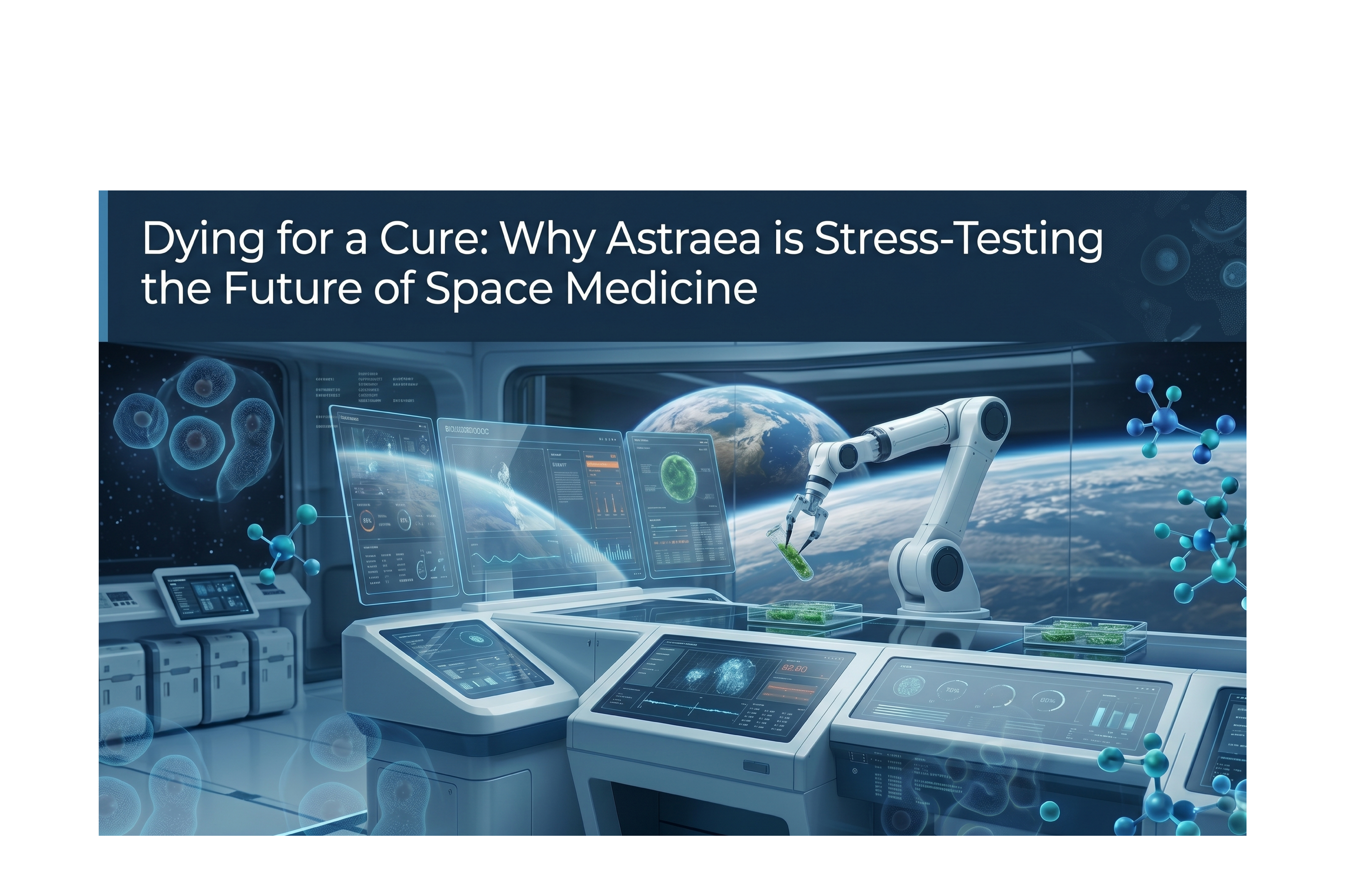
Dying for a Cure: Why Astraea is Stress-Testing the Future of Space Medicine
- Published April 24, 2026 1:50AM UTC
- Publisher Jade Miguel
- Categories Capital Insights, Executive Interviews, Landing, Trending
When astronauts board a rocket for the International Space Station, or soldiers deploy to remote battlefields, they carry medical kits designed for a temperature-controlled pharmacy shelf. The problem? No one actually knows if those life-saving drugs still work once they hit the gauntlet of cosmic radiation or extreme terrestrial environments.
Enter Astraea Technologies, an Australian deep tech startup on a mission to ensure that the medicine we rely on in extreme conditions doesn’t turn into a cabinet of expensive placebos. Led by CEO Brooke Mills and CTO Gordon Carroll, the company is currently seeking $5 million in seed funding to commercialise its proprietary HIRO-LAB platform.
The Radiation Problem
While the aerospace industry has spent decades fortifying hardware against the rigours of space, the healthcare and medicine used in space have simply been transported from the terrestrial healthcare system. On Earth, we are shielded by the atmosphere and these products are designed as such. But in space, radiation acts like a “bowling ball” that collides with human DNA, and this effect has not been thoroughly studied to determine its impact on human healthcare products. Space missions to date have relied on frequent resupply missions, but for future planned long-duration missions, this reliance cannot continue..
“We are pushing the boundaries of exploration, but humans seem to be the collateral,” says Brooke. As we go deeper into space and extreme environments, this blind spot becomes a life-or-death problem.”
Astraea’s solution is Astraea Drift, a full-spectrum degradation-profiling service enabled by its Heavy Ionising Radiation Observatory Laboratory (HIRO-LAB) platform. HIRO-LAB is a device roughly the size of a sandwich that provides real-time, continuous monitoring of samples under radiation bombardment. Unlike traditional labs that test samples before and after exposure, missing the potential complex “self-healing” or degradation spikes that occur during the journey, HIRO-LAB tracks the full degradation profile of an enclosed sample.
A Roadmap to the Moon
The company isn’t just theorising; it has a packed flight manifest. Astraea has already secured:
- A space launch is scheduled for later this year to validate radiation degradation over several hours.
- A follow-up mission spanning several days.
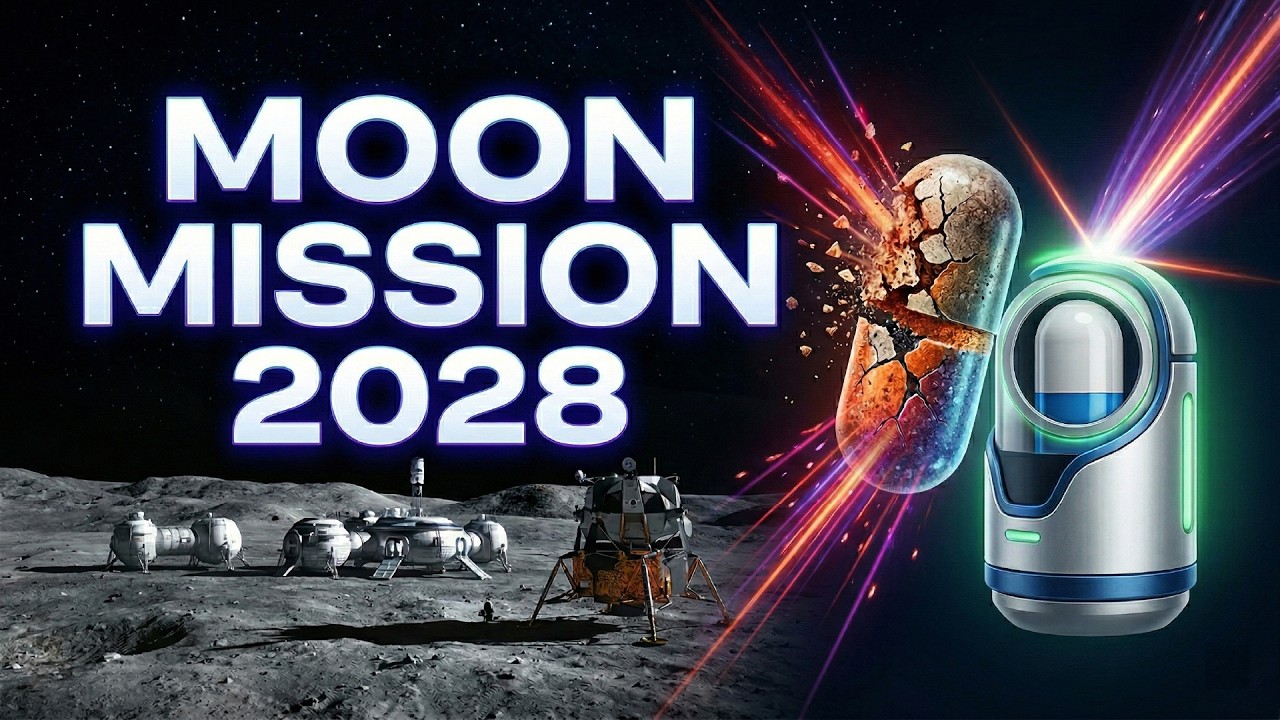
- An MoU for a lunar mission in 2028, where the tech will be tested for months on the Moon’s surface.
“We’re not coming for the big established labs,” explains Gordon, a neuroscientist turned space technologist. “We fit a niche they haven’t considered. We can take an existing pharmaceutical and say, ‘This is its full journey, and here is how we can stop it from degrading.'”
The Commercial Frontier
While space is the ultimate testing ground, the “Earth-side” applications are where the immediate impact lies. The founders argue that space-validated technology often becomes the gold standard for terrestrial durability, pointing to the iPhone camera and cordless tools as precedents.
For Astraea, the target markets include:
- Healthcare: Ensuring that pharmaceuticals and equipment exposed to radiation (say in cancer treatment facilities) are tested to determine ways to enhance their lifespan.
- Defence: Ensuring medical kits remain potent in high-stress, high-radiation zones.
- Disaster Relief: Validating shelf life in areas without cold-chain infrastructure.
The Investment Case
Astraea is raising $5 million at a pre-money valuation of $12 million. After bootstrapping for a year and reaching TRL (Technology Readiness Level) 3-4, Brooke says the company is ready to hit the ground running, with revenue potentially following within months of the capital injection.
“Deep tech can feel ‘woo-woo’ or scary,” Brooke admits. “But building for space forces a level of creativity and durability that results in superior products. This isn’t just about space; it’s about premium healthcare for extreme environments everywhere.”
For the Australian government, Astraea represents a flagship for the domestic space industry, promising job creation and a stake in a global first. As Gordon puts it: “Healthcare is a human right. Whether you’re in a war-torn country or orbiting the Earth, you should know that when you use a medicine, it’s going to work.”
At a Glance: Astraea Technologies
Target Sectors: Space, Healthcare, Defence, Disaster Relief, Pharmaceuticals
Founders: Brooke Mills (CEO), Gordon Carroll (CTO)
Core Tech: HIRO-LAB (Real-time radiation/environmental monitoring)
Funding Goal: $5M Seed
Key Milestones: 2026 Space Launch; 2028 Lunar Mission
Trending

The A$20.4 Million Inertia Trap: How Kepa Software Is Unlocking Value in Enterprise Capital Allocation
A government agency renewed the same maintenance decision nine years running, because auditing the original choice was deemed too expensive. When the portfolio was finally tested, A$20.4 million of low value spend was identified in a single year. Kepa Software’s capital governance platform was built to expose and eliminate precisely these boardroom blind spots. For […]
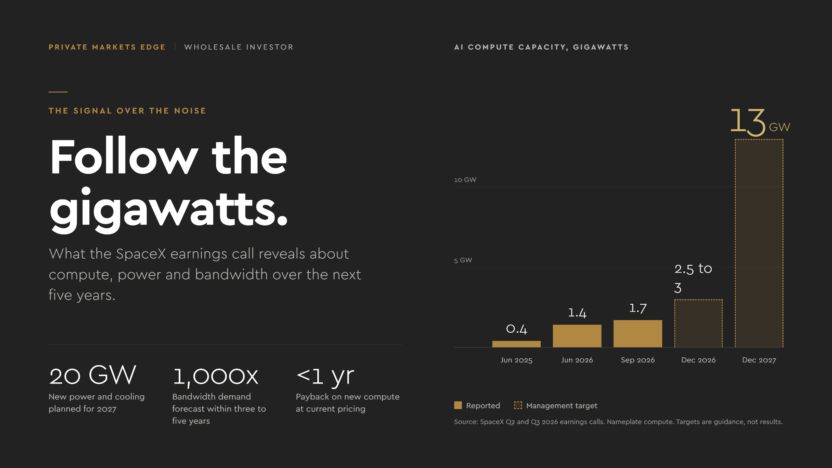
Forget the share price. SpaceX just published a map of the next five years.
Most coverage of SpaceX’s result focused on a 9.1% share price fall. That is noise. The signal is in the transcript: compute, power, bandwidth and demand over the next five years.

The prefab company that deliberately leaves part of the house unbuilt
BuiltQuik prefabricates the floor and roof structure and stops there. Co-founder Ryan Mullaney argues the omission is the product. Prefabricated housing usually means a factory. A large central facility, identical modules, limited room to move on design, and a logistics problem getting the finished box to site. BuiltQuik builds the opposite, and the design decision […]
Backed By Leading Investment Groups and Family Offices