
News and Announcements
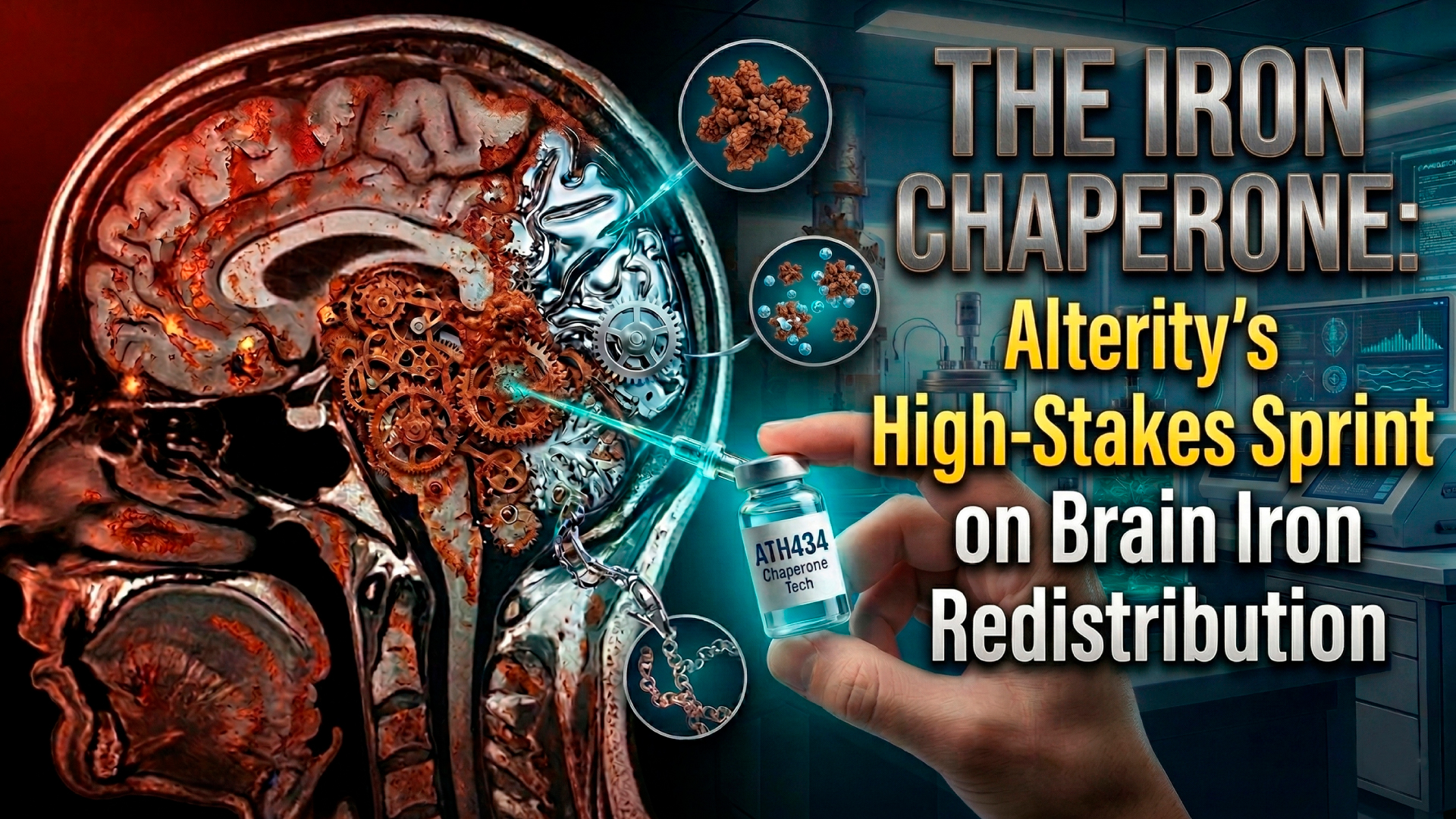
The Iron Chaperone: Alterity’s High-Stakes Sprint on Brain Iron Redistribution
- Published March 18, 2026 2:43AM UTC
- Publisher Jade Miguel
- Categories Capital Insights, Executive Interviews, Landing, Life Science Hub, Trending
In the hushed corridors of neurology, Multiple System Atrophy (MSA) is a diagnosis that carries a heavy, silent finality. While Parkinson’s has its treatments and public champions, MSA remains a “black box” of rapid decline—until now. With a successful Phase 2 trial in the rearview mirror, Alterity Therapeutics is preparing for a pivotal leap that could redefine the standard of care for a devastating rare disease.

A Devastating Disease Few Have Heard Of
For most families, the journey to a diagnosis of Multiple System Atrophy (MSA) begins with a flicker of recognition: a stooped posture, a shaky gait, or a loss of balance that mimics Parkinson’s disease. But MSA is a far more aggressive thief. Unlike Parkinson’s, it prominently attacks the autonomic nervous system, impairing basic bodily functions and typically forcing patients into wheelchairs within five years.
“It is a severe and debilitating disease with an unmet need,” explains Dr. Tara Speranza, Head of Investor Relations and Communications at Alterity Therapeutics (ASX: ATH). With a median survival rate of just 7.5 years and no disease-modifying therapies currently on the market, clinicians are often left managing symptoms with medications that simply don’t work for these patients.”Alterity isn’t just looking to manage the decline; they are looking to change the course of the disease,” Speranza added.
A New Approach: Acting as a “Molecular Chaperone”
The culprit behind this neurological devastation is a familiar element gone rogue: iron. While essential for brain function, MSA patients suffer from an accumulation of “reactive” iron in specific brain regions. This excess iron acts as a catalyst, causing a protein called alpha-synuclein to become sticky and “clump” into toxic aggregates that kill neuronal cells.
Alterity’s lead candidate, ATH434, functions through a mechanism Speranza describes with punchy simplicity: it is a “chaperone”.
- Targeted Neutralisation: The drug “takes the hand” of reactive iron, moving it away before it can react with proteins.
- Internal Housekeeping: By preventing the formation of protein aggregates, the drug aims to preserve the health of the neuronal cells.
- Precision: Unlike blunt-force chelation, ATH434 is designed to redistribute iron to where it is needed, rather than simply stripping it from the body.
Moving the Needle: From Phase 2 to Pivotal Reality
In the biotech sector, “clinically meaningful” is the phrase that separates interesting science from an investment reality. Alterity recently cleared this bar with a randomised, double-blind, placebo-controlled Phase 2 trial.
The results were a “gold standard” validation:
- Clinically Meaningful: The drug showed a measurable effect on disease severity scales at two different doses, one of which reached significance
- Unprecedented Efficacy: The readout showed an impact on the rating scale to a level not seen before in MSA clinical trials.
- Strategic Partnerships: The company’s credibility is further bolstered by collaborations with the The Michael J. Fox Foundation and Vanderbilt University, which helped refine the biomarkers used to ensure that only confirmed MSA patients enter the trials.
The “Duck” Phase: A Value Inflection Point
To the casual observer, Alterity might currently look like a quiet pond. Speranza, however, uses a classic metaphor to describe the current state of play: “We’re in a phase where it looks like we’re a duck. Seemingly quiet on the surface, but underneath our legs are running like crazy”.
The company is currently in the “hot zone” of operational scaling:
- FDA Alignment: Alterity is actively working with the FDA to finalise the design of a pivotal Phase 3 trial.
- Manufacturing: Ramping up production capabilities to meet the requirements of a global pivotal study.
- Market Readiness: Positioning for a first-in-class launch in a market with 20,000 to 50,000 patients in the US alone—a significant “orphan drug” opportunity.
The Investor Takeaway
Biotech investing is often a game of timing. For Alterity, the successful Phase 2 data has de-risked the biological hypothesis, while the current “quiet” period of Phase 3 preparation may represent the final window before the next major valuation re-rate.
As the only company with a potentially disease-modifying treatment for MSA that has shown this level of clinical efficacy, Alterity is no longer just a “speculative” play; it is a frontrunner in a multi-billion dollar race to solve one of neurology’s most heartbreaking “blind spots.”
Trending

The A$20.4 Million Inertia Trap: How Kepa Software Is Unlocking Value in Enterprise Capital Allocation
A government agency renewed the same maintenance decision nine years running, because auditing the original choice was deemed too expensive. When the portfolio was finally tested, A$20.4 million of low value spend was identified in a single year. Kepa Software’s capital governance platform was built to expose and eliminate precisely these boardroom blind spots. For […]
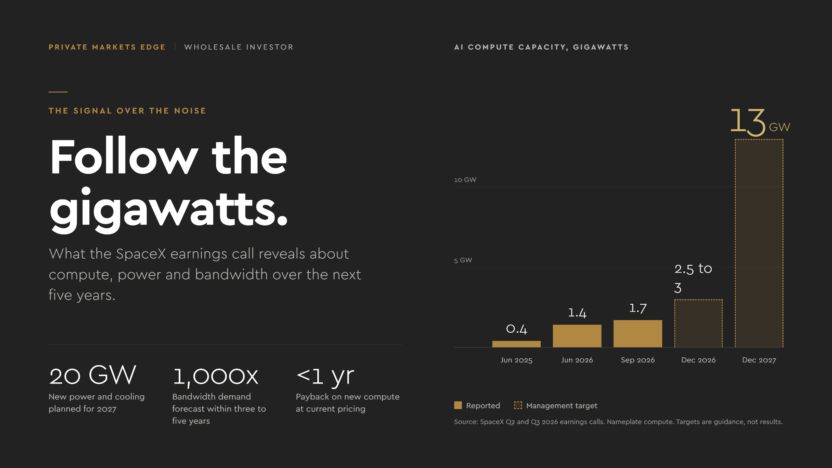
Forget the share price. SpaceX just published a map of the next five years.
Most coverage of SpaceX’s result focused on a 9.1% share price fall. That is noise. The signal is in the transcript: compute, power, bandwidth and demand over the next five years.

The prefab company that deliberately leaves part of the house unbuilt
BuiltQuik prefabricates the floor and roof structure and stops there. Co-founder Ryan Mullaney argues the omission is the product. Prefabricated housing usually means a factory. A large central facility, identical modules, limited room to move on design, and a logistics problem getting the finished box to site. BuiltQuik builds the opposite, and the design decision […]
Backed By Leading Investment Groups and Family Offices