
News and Announcements
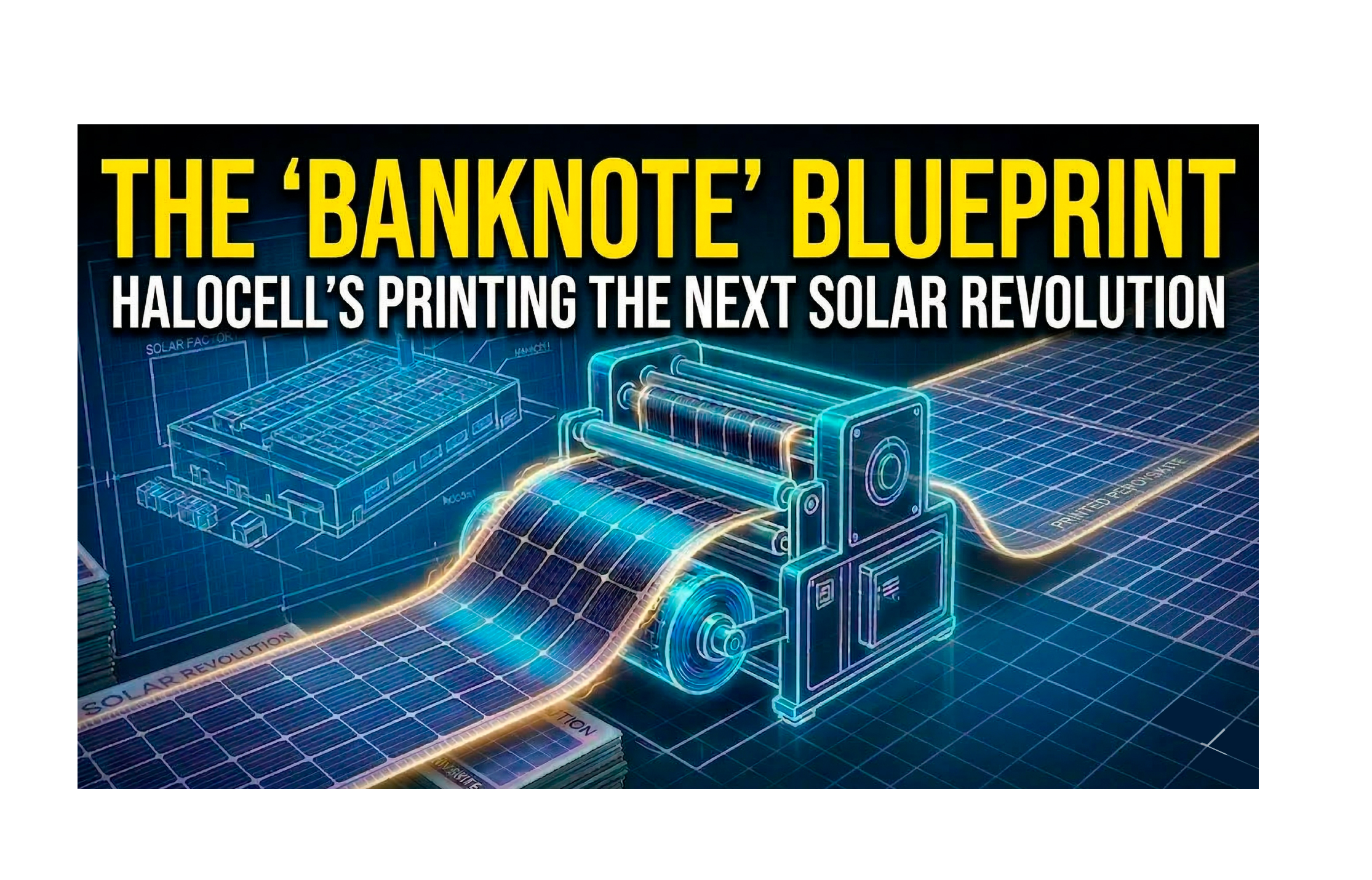
The ‘Banknote’ Blueprint: Halocell’s Plan to Print the Next Solar Revolution
- Published March 18, 2026 4:01AM UTC
- Publisher Jade Miguel
- Categories Capital Insights, Executive Interviews, Landing, Trending
For two decades, the solar industry has focused on large silicon panels for rooftops, with technology developed in Australia and now dominated by China. Halocell Energy, based in Wagga Wagga, Australia, is shifting the paradigm with technology that captures light even in challenging environments, including indoor spaces, shaded areas, and outer space.
Halocell is a leading perovskite PV tech company, delivering next-generation photovoltaics through a roll-to-roll process—similar to printing banknotes —that is set to achieve higher daily output at significantly lower costs across a wide spectrum of light conditions.

Beyond the Roof: Halocell’s Three Horizons Go-to-Market Strategy
Halocell differentiates in the solar landscape with a “Three Horizons” roadmap for scaling innovations:
- Horizon 1: PV for Artificial / Ambient Light – Halocell’s initial focus is the Internet of Things (IoT) sector and small electronic devices. Its indoor photovoltaics harvest ambient light efficiently, providing power sources for devices like sensors, extending the life of reusable batteries and eliminating disposable batteries. In May 2025, Halocell launched its first perovskite-based product, the Halocell Ambient Modules, optimised for low-light conditions. These modules are fully recyclable and RoHS-certified.
- Horizon 2: New Frontiers – In partnership with V-Tol Aerospace and Gilmour Space Technologies, Halocell is developing perovskite cells for high-value niche markets like fixed-wing drones and satellites. Halocell’s PV on fixed-wing drones will charge batteries to extend flight time by three times. Current space PV technologies are extremely expensive, fragile, and have long lead times. Halocell’s modules for space satellites are lightweight, flexible, and cost-effective alternatives to traditional PV options. Their perovskite modules demonstrate resilience to meet all test criteria to operate in Low Earth Orbit, with planned test flights later this year.
- Horizon 3: The Silicon ‘Turbocharger’ Collaborating with Tindo Solar in Adelaide, Halocell is creating semi-transparent, flexible modules to overlay silicon panels to boost output.
The capabilities developed through Horizons 1 and 2 and are directly applicable to Horizon 3, and by taking these incremental steps Halocell generates early sales and maturity before moving into large-scale solar farms and rooftop PV.
Halocell’s competitive advantage
The true competitive advantage for Halocell isn’t just the chemistry; it’s the cost. Silicon manufacturing is energy-intensive and reliant on high-purity materials. In contrast, Halocell will be lighter and cheaper than silicon PV, as well as cheaper and more versatile than perovskite on glass solutions.
With roll-to-roll technology, you’re removing the high energy, material, and labour costs. It’s highly automated. Halocell is our response to the commercialisation of this potential.
Currently, the Wagga Wagga facility is a boutique operation, producing thousands of units per year. However, Halocell is currently seeking the capital injection required to bridge the gap to mass production. The goal? Millions of units per year.
Traction and the 2027 Vision and Beyond
Together with First Graphene, Halocell has developed a graphene-enhanced carbon paste to replace expensive metal back contacts in the stack. In January 2026, Halocell signed a memorandum of understanding with Lava Blue to establish a domestic supply chain for high-purity perovskite precursors, enabling scalable production. On February 15, 2026, the company certified the PV modules are compliant with the EU Restriction of Hazardous Substances Directive (2011/65/EU and all amendments). These steps underscore Halocell’s commitment to low cost and environmentally responsible innovation.
By 2027, Halocell aims to increase adoption of its products, positioning Australia as a hub for renewable manufacturing. With continued roll-to-roll printing, certifications, partnerships, low-cost abundant materials, and a focus on recyclability, Halocell is redefining energy harvesting for tomorrow.
For more on Halocell’s advancements, explore their recent updates or partnerships.
Trending

The A$20.4 Million Inertia Trap: How Kepa Software Is Unlocking Value in Enterprise Capital Allocation
A government agency renewed the same maintenance decision nine years running, because auditing the original choice was deemed too expensive. When the portfolio was finally tested, A$20.4 million of low value spend was identified in a single year. Kepa Software’s capital governance platform was built to expose and eliminate precisely these boardroom blind spots. For […]
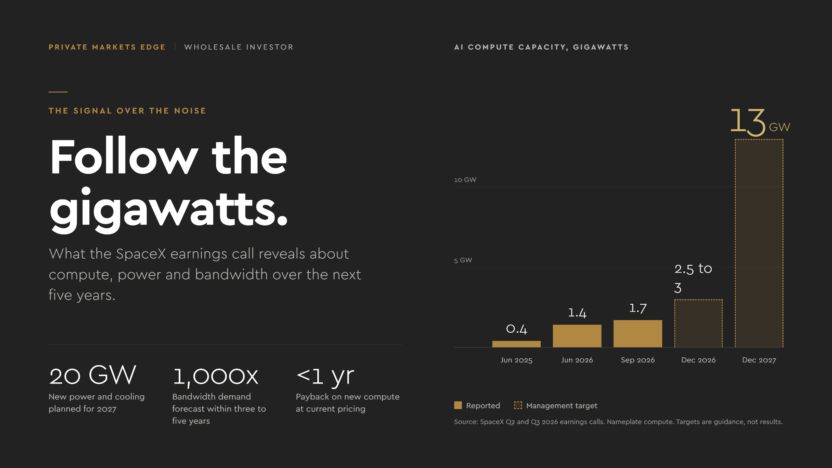
Forget the share price. SpaceX just published a map of the next five years.
Most coverage of SpaceX’s result focused on a 9.1% share price fall. That is noise. The signal is in the transcript: compute, power, bandwidth and demand over the next five years.

The prefab company that deliberately leaves part of the house unbuilt
BuiltQuik prefabricates the floor and roof structure and stops there. Co-founder Ryan Mullaney argues the omission is the product. Prefabricated housing usually means a factory. A large central facility, identical modules, limited room to move on design, and a logistics problem getting the finished box to site. BuiltQuik builds the opposite, and the design decision […]
Backed By Leading Investment Groups and Family Offices