
News and Announcements

Arterial Alchemy: Turning the ‘Ticking Time Bomb’ of Heart Disease into Excretable Waste
- Published March 02, 2026 10:31PM UTC
- Publisher Jade Miguel
- Categories Executive Interviews, Landing, Life Science Hub, Trending
We’ve all heard the plumbing analogy for our hearts. Over time, the “pipes” get clogged with a fatty, waxy sludge called plaque. For decades, modern medicine has been remarkably good at one thing: thinning the grease in the water to prevent more buildup. But until now, nobody has figured out how to actually scrub the pipes clean.
Perth-based Atherid Therapeutics is about to change that. They aren’t just looking to manage heart disease; they are looking to reverse it with a drug that acts as a biological “clearing agent” for human arteries.

The Silent Build-up
Heart disease remains the world’s most prolific killer, claiming 18 million lives annually. In Australia, the statistics are a grim metronome: 155 heart attacks every single day.
The culprit is atherosclerosis—the slow, silent accumulation of cholesterol plaque. While current blockbusters like statins do a heroic job of lowering blood cholesterol, they leave the existing “gunk” exactly where it is.
“The really good drugs that manage cholesterol don’t really effectively remove cholesterol from the plaques,” says Dr. James Williams, Non-Executive Director at Atherid and a veteran biotech entrepreneur with three FDA approvals to his name. “That’s why surgical interventions are required. What we’re trying to do for the first time is develop a molecule that reduces the burden of cholesterol in there—to strip the cholesterol out of those deposits.”
Precision Engineering: A GPS for the Heart
The technology, dubbed ATH01, was born from an unlikely place: cancer research. Scientist Juliana Hamzah discovered a way to take a powerful naturally occurring protein, TNFα , and give it a “biological GPS.”
In its raw form, TNFα is like a wildfire. It causes massive inflammation throughout the body. However, the Atherid team has attached a proprietary “CSG tag” to it. This tag ensures the drug ignores healthy tissue and attaches itself “exquisitely” and exclusively to the surface of the plaque.
“It recognises the molecules that are expressed on the surface of the plaque,” Williams explains. “In doing that, it enables the TNFα to do its job. It switches on the cell’s metabolic pathways to break down insoluble cholesterol and allow it to be released from the plaques and back into circulation.”
The “Cream-Coloured” Blood: A Race for the Most Vulnerable
While Atherid’s technology could eventually benefit millions, they are starting with the people who need it most: children and young adults born with a rare genetic condition called Homozygous Familial Hypercholesterolemia (HoFH).
For these patients, their blood is so saturated with fat it can appear cream-colored. “If you look at the blood of one of these patients as they get a little bit older, it’s almost cream-coloured. It’s got that much fat in it,” Williams says. Currently, these patients must undergo a grueling, dialysis-like process every two weeks just to filter the fat out of their blood.
By focusing on this “orphan” disease first, Atherid can prove the drug works in the most extreme cases. “The clinical need is so high that the regulators recognise the challenge,” Williams notes. “The trials are smaller, can be conducted faster… and we need access to less capital to prove that.” Success here would provide a shortcut to the broader market, offering hope to anyone living with the fear of a blocked artery.
From the Lab to the Living Room
The journey from a “eureka” moment in a Perth lab to a pharmacy shelf is long, but Atherid has already spent a decade de-risking the path. Unlike many biotech startups that rely solely on computer models, Atherid has tested ATH01 on actual human tissue removed during surgeries at Sir Charles Gairdner Hospital.
“Try as we might [to break it], this drug keeps exceeding what we expected it to do,” says Williams. “That says to us, we have a potential therapy for a clear unmet medical need. Therefore, we’re obliged to find a way to take it forward.”
As the company moves toward human trials in 2027, the goal is simple but revolutionary: a future where a heart attack isn’t an inevitability of aging, but a preventable and reversible condition.
Trending
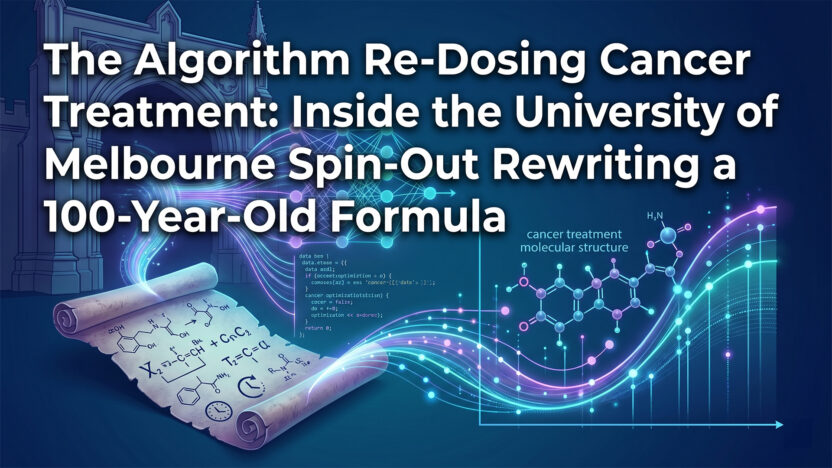
The Algorithm Re-Dosing Cancer Treatment: Inside the University of Melbourne Spin-Out Rewriting a 60-Year-Old Formula
Oncology specialists are still calculating toxic chemotherapy doses using a formula from the era of the Ford Model T, leading to a system where seven out of eight patients are routinely overdosed. University of Melbourne spin-out PredicTx is dismantling this legacy approach, utilizing advanced AI to analyze existing patient CT scans, deliver precision medicine to the bedside, and return a massive 100x financial rerate to hospital networks.

Asset over thematic: Centuria’s Andrew Essey warns against ‘blanket strategies’ as global capital eyes Australia
Relying solely on broad macroeconomic trends is the single biggest mistake property investors make today. Centuria Capital CIO Andrew Essey explains why asset-level “lettability” always trumps the overarching sector thematic, and reveals where global institutional capital is quietly pivoting to capture high-octane returns.
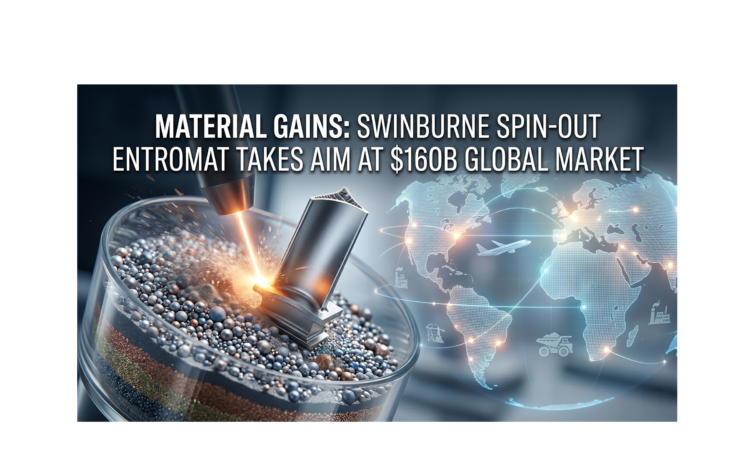
Material gains: Swinburne spin-out EntroMat takes aim at $160b global market
Traditional metallurgy has hit a performance wall. Discover how Swinburne University spin-out EntroMat is leveraging physics-based AI and circular critical minerals to engineer high-entropy alloys capable of surviving the world’s most extreme industrial environments.
Backed By Leading Investment Groups and Family Offices