
News and Announcements
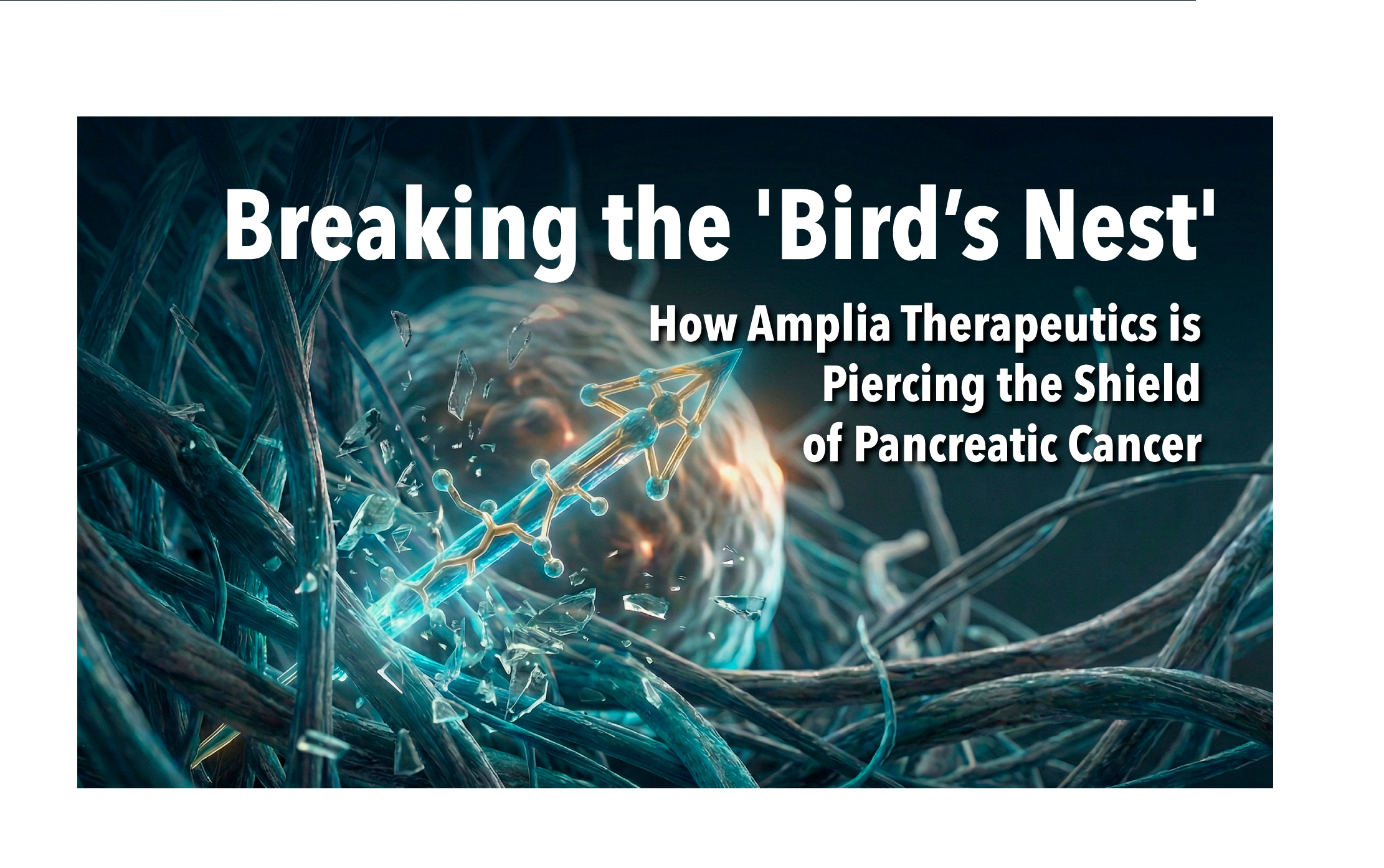
Breaking the ‘Bird’s Nest’: How Amplia Therapeutics is Piercing the Shield of Pancreatic Cancer
- Published March 02, 2026 10:15PM UTC
- Publisher Jade Miguel
- Categories Executive Interviews, Landing, Life Science Hub, Trending
In the high-stakes arena of oncology, few foes are as formidable as pancreatic cancer. It is a disease defined by its stealth and its stubbornness, often remaining silent until it has reached an advanced stage. For those diagnosed with advanced pancreatic cancer, the prognosis is sobering: a five-year survival rate of less than 3 per cent.
“Patients deserve better treatments, better options,” says Dr. Chris Burns, CEO and Managing Director of Amplia Therapeutics (ASX: ATX). “That’s what we’re working toward.”
A PhD chemist with 25 years in drug discovery, Dr. Burns is no stranger to the long road of clinical validation. He previously led teams that developed an approved drug for blood cancer, and in 2024, he was a co-recipient of the Prime Minister’s Prize for Innovation. Now, he is applying that veteran expertise to dismantle the biological fortress that makes pancreatic tumors so resistant to traditional medicine.

The ‘Bird’s Nest’ Breakthrough
To understand Amplia’s lead asset, narmafotinib (AMP945), one must first understand why standard chemotherapy often fails. Pancreatic tumors don’t just grow; they build a “fibrotic shield”—a dense, scarred layer of tissue that acts as a physical barrier.
“In my mind, I imagine it as a bit like a bird’s nest that sits around the tumor cells,” Dr. Burns explains. “This thick fibrous tissue stops drugs and the immune system from getting in to attack the cancer.”
While most therapies try to “brute force” their way through this barrier, Amplia’s approach is more surgical. Narmafotinib is a small-molecule drug—taken conveniently as a pill—that inhibits a specific enzyme responsible for building this “nest.”
By breaking apart the fibrous tissue, the drug provides a “one-two punch”:
- Microenvironment Modification: It opens “space” within the tissue, allowing chemotherapy and immune cells to penetrate the tumor.
- Direct Action: The drug also exerts a direct inhibitory effect on the cancer cells themselves.
Beating the Benchmarks: 35% and Counting
In the world of biotech, data is the only currency that matters. Amplia’s Phase 2a ACCENT trial is currently generating the kind of figures that capture the attention of both clinicians and the FDA.
The trial, which combines narmafotinib with standard-of-care chemotherapy, has reported an interim Objective Response Rate (ORR) of 35 per cent. In clinical terms, this means over a third of patients saw their tumors shrink by more than 30 per cent, with that reduction maintained for at least two months.
“In many cases, we see tumor size shrink by a lot more than 30 per cent,” notes Dr. Burns. This performance has already earned the company FDA Fast Track Designation, a tailwind that accelerates the regulatory process for drugs addressing serious unmet needs.
Perhaps most critically for a patient group already weakened by disease, the drug has proven to be well-tolerated. “We’re not adding a lot of added toxicity or additional burden,” Burns says, highlighting a key competitive advantage in a sector where the “cure” can often feel as punishing as the disease.
The 2026 Value Inflection Point
Amplia is currently moving through a high-velocity phase of its corporate lifecycle. As the calendar turns toward mid-2026, the company is approaching several “value inflection” points that could fundamentally re-rate its market standing:
- Survival Data (Q2 2026): Following interim response rates, the market is now looking for Overall Survival (OS) data—the gold standard for oncology. Results are expected in late March or early April.
- Registration Study: The current data lays the groundwork for a registration-enabling study, which Amplia aims to commence by the end of 2026.
- Strategic Partnerships: With a “mature” data set in hand, Dr. Burns intends to engage with global pharmaceutical majors to “supercharge” the latter stages of development.
“Phase 2 is where the rubber hits the road,” Dr. Burns notes. “It allows us to start talking to partners in the pharmaceutical industry who have experience in pancreatic cancer drug development.”
The Investor Takeaway
For investors, Amplia represents a rare combination: a de-risked leadership team with a proven track record of taking drugs to market, and a clinically validated asset targeting a multi-billion dollar “blind spot” in oncology.
Operating with a lean, specialised team, the company is focused on high-impact milestones rather than sprawling overhead. At its current valuation, Amplia sits in the “hot zone”—sufficiently advanced to have proven safety and efficacy, yet early enough to offer significant upside as it enters registration-enabling trials.
“We are driven to push this forward as aggressively as we can,” says Dr. Burns. For the thousands of families affected by pancreatic cancer, and the investors backing the science, the next few months could be transformative.
Trending
The Algorithm Re-Dosing Cancer Treatment: Inside the University of Melbourne Spin-Out Rewriting a 60-Year-Old Formula
Oncology specialists are still calculating toxic chemotherapy doses using a formula from the era of the Ford Model T, leading to a system where seven out of eight patients are routinely overdosed. University of Melbourne spin-out PredicTx is dismantling this legacy approach, utilizing advanced AI to analyze existing patient CT scans, deliver precision medicine to the bedside, and return a massive 100x financial rerate to hospital networks.

Asset over thematic: Centuria’s Andrew Essey warns against ‘blanket strategies’ as global capital eyes Australia
Relying solely on broad macroeconomic trends is the single biggest mistake property investors make today. Centuria Capital CIO Andrew Essey explains why asset-level “lettability” always trumps the overarching sector thematic, and reveals where global institutional capital is quietly pivoting to capture high-octane returns.
Material gains: Swinburne spin-out EntroMat takes aim at $160b global market
Traditional metallurgy has hit a performance wall. Discover how Swinburne University spin-out EntroMat is leveraging physics-based AI and circular critical minerals to engineer high-entropy alloys capable of surviving the world’s most extreme industrial environments.
Backed By Leading Investment Groups and Family Offices