News and Announcements
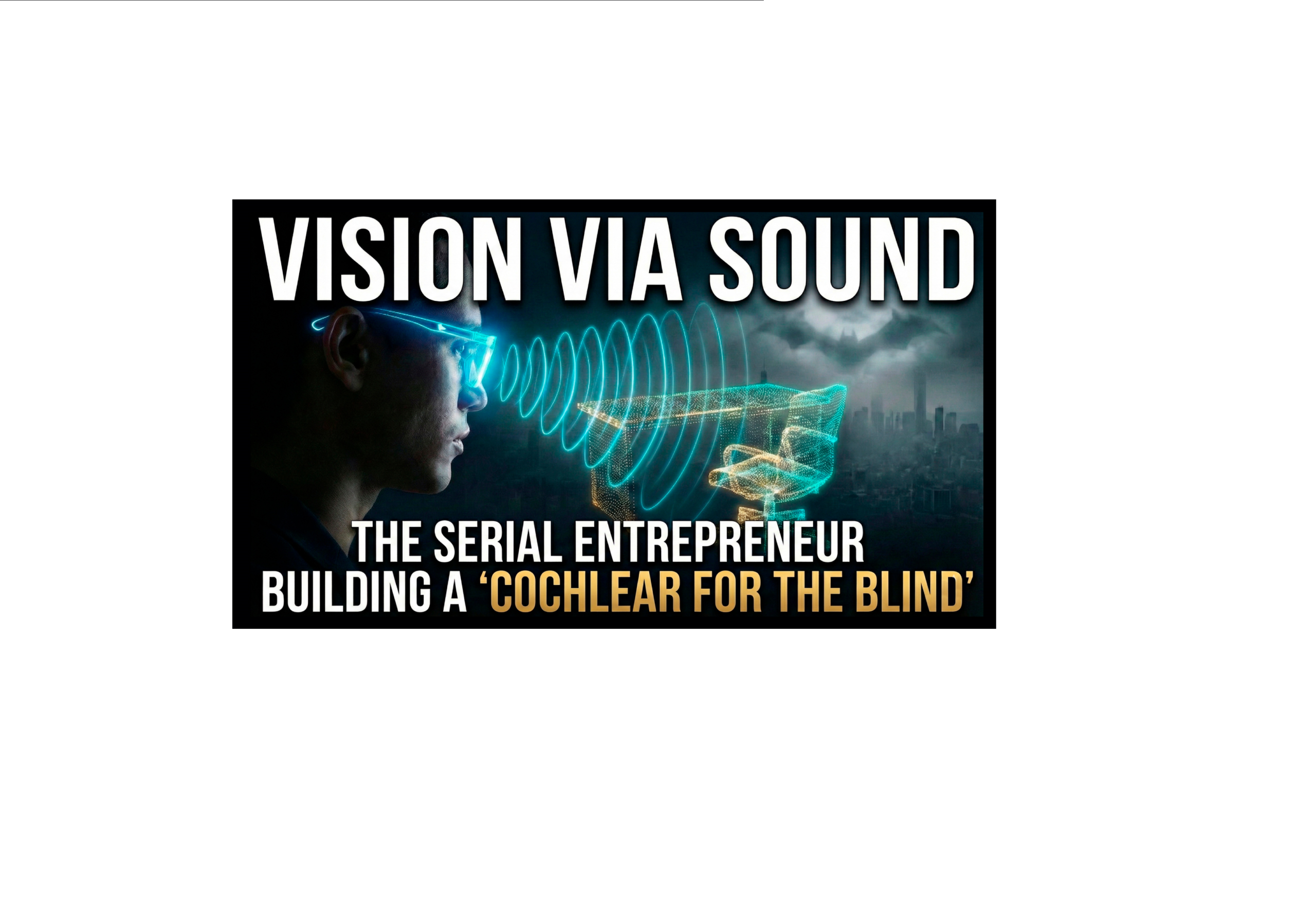
Vision Via Sound for the Blind: Can a Silicon Valley Veteran Deliver the Solution to a $2B NDIS Problem?
- Published February 13, 2026 12:13AM UTC
- Publisher Jade Miguel
- Categories Capital Insights, Executive Interviews, Landing, Life Science Hub, Trending
In the high-octane world of Silicon Valley, Robert Yearsley was the quintessential success story—a serial tech entrepreneur with a 30-year track record building everything from digital video recorders to global collaboration platforms. But in 2016, a sudden family health crisis shifted his focus from consumer pixels to the profound isolation of disability. One of his children was experiencing a sudden, profound disability, a shock that transformed his life and finances.
That shock birthed ARIA Research. Alongside his wife and fellow tech CEO, Yearsley realised that while dreamed of “miracle cures” like genomics and bionic implants captured headlines, even after decades of R&D, they hadn’t moved the needle for the 90% of blind individuals who still rely on another human being just to get around their world. ARIA isn’t looking to restore eyesight with medicine or implanted bionic eyes; it’s leveraging a toolkit of augmented reality (AR) and artificial intelligence (AI) to deliver a vision-equivalent via sound for blind people.
Covering the Visual World in a Symphonic Overlay of Sound
Current AI solutions, like the Meta Ray-Bans, use Large Vision Models (LVM) to describe a scene—telling a user “there is a glass at 12 o’clock.” Yearsley calls this “clunky.” ARIA’s breakthrough is Augmented Reality in Audio.
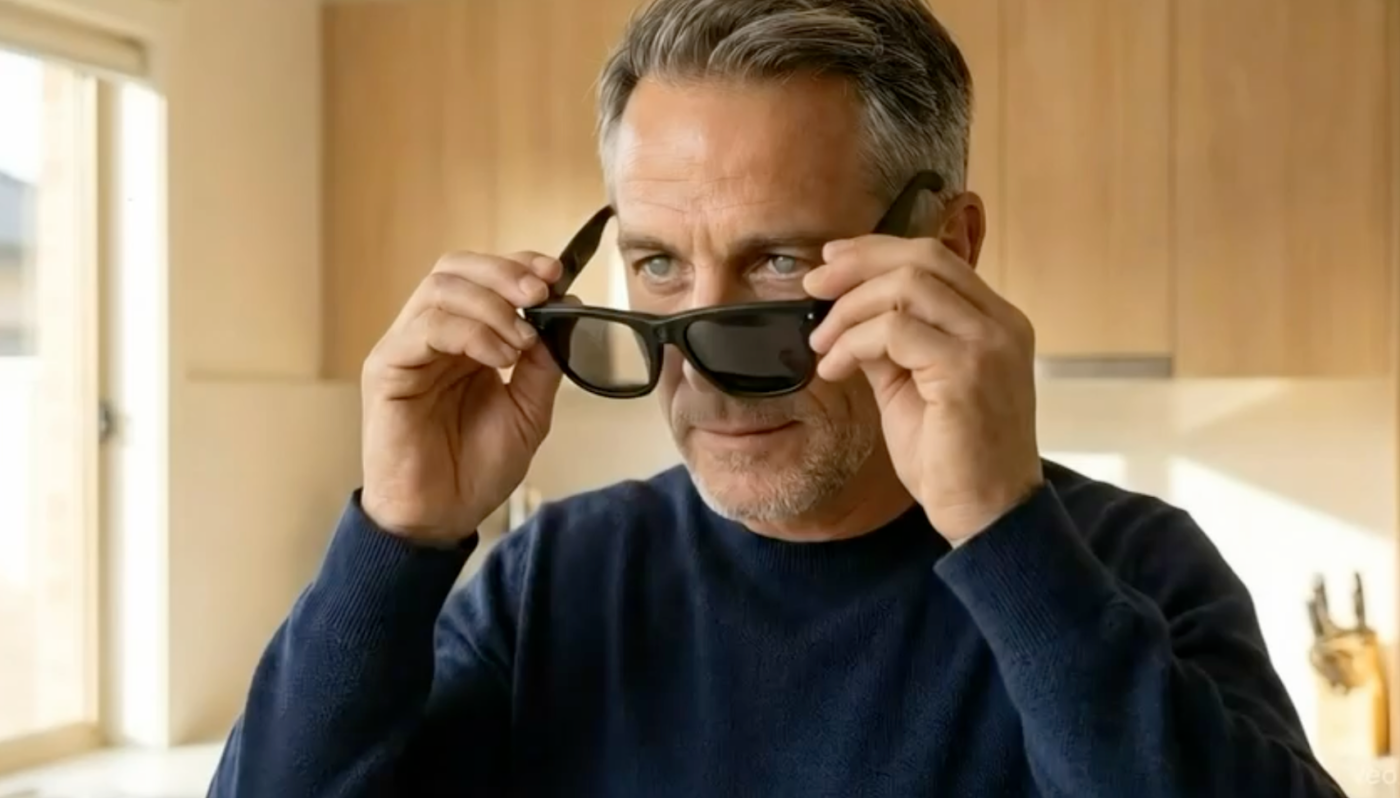
The device, which looks like standard sunglasses, uses machine vision to create a real-time 3D model of the environment. It then renders this as a virtual spatial audio overlay of the user’s surroundings through speakers in the arms of the glasses, “painting” a real-time version of the environment “before the user’s very ears”.
The “Sonic Doppelgaenger”: For example, if there is a glass on a table, the user hears the iconic “ting” sound of a glass, projected exactly to where that glass sits in 3D space.
Social Perception: It “paints in” social gaps, allowing a user to “hear” a nod, a shrug, or a smile.
Real-Time Flow: Unlike descriptive AI, ARIA allows users to perceive moving objects – like a person coming up to them and extending a hand for a handshake – allowing the blind user to perceive the person approaching, note their hand coming up, sense their smile and extend their own hand to engage the handshake.
A Multi-Billion Dollar Market Opportunity
The commercial logic behind ARIA is as compelling as the clinical impact. In Australia, the NDIS spends roughly $2 billion annually on just 24,000 blind participants, and offers Aria its first $300M in ARR while providing the NDIS and estimated $200M in annual savings while increasing the amount of time services can be provided to blind NDIS recipients by an expected 14X. The global market is even larger, with the US Department of Veterans Affairs supporting 1.1 million blind veterans, and US Medicare/Medicaid supporting another 7M+ . By working with these government payers, ARIA is positioning itself not as a luxury gadget, but as a critical medical device that reduces the massive economic burden of dependent care for both the blind end users and for the government payers..
Yearsley has attracted to this world-changing mission a team from around the world to execute this vision, including veterans from Cochlear (at the CTO level), Meta, Magic Leap, and Dolby Research. This unit has already secured $11 million in investment, including a recent $2 million infusion from the New South Wales Medical Device Fund.
The Value Inflection Point: From Lab to Living Room
ARIA is currently transitioning from prototype validation to productisation and regulatory reality. The company has completed pilot clinical trials with 11 participants, hitting primary endpoints for safety as well secondary endpoints for efficacy and usability. The next 24 months focus on:
- At-Home Field Trials: Moving out of the lab to collect real-world efficacy data.
- Entering the Australian market within 2 years via the NDIS with the V1 ARIA device as an unregulated assistive technology.
- Regulatory Filing: Pursuing TGA Class 2a (Australia) and FDA Class 1 (USA) classifications.
ARIA has already exceeded the functional performance of implanted bionics at a fraction of the cost and invasiveness. For investors, the “rerate” happens here: while bionic eye companies have spent 30 years and hundreds of millions chasing biological sight, ARIA’s “Vision via Sound” approach uses proven physics and AI to deliver immediate functional independence via a non-invasive consumer-tech like device the user can pop on and off like a pair of glasses.
The Investor Takeaway: “The Goal is to Become as Common as Hearing Aids”
Named 2023 Australian Technology Company of the Year, ARIA remains a hidden gem for investors in the med-tech sector. With a $300M ARR domestic market and multi-billion dollar market internationally it is currently in the “hot zone” for investors. “Success for me isn’t about being ‘extraordinary,'” Yearsley says. “I want what ARIA does to one day be mundane as a hearing aid or the normal eyeglasses that you and I are wearing. I want it to just fade into the background as a given”.
Trending

The A$20.4 Million Inertia Trap: How Kepa Software Is Unlocking Value in Enterprise Capital Allocation
A government agency renewed the same maintenance decision nine years running, because auditing the original choice was deemed too expensive. When the portfolio was finally tested, A$20.4 million of low value spend was identified in a single year. Kepa Software’s capital governance platform was built to expose and eliminate precisely these boardroom blind spots. For […]
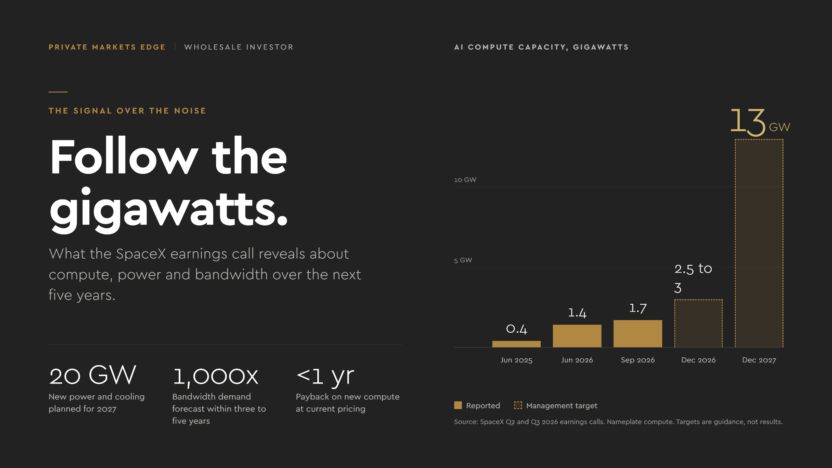
Forget the share price. SpaceX just published a map of the next five years.
Most coverage of SpaceX’s result focused on a 9.1% share price fall. That is noise. The signal is in the transcript: compute, power, bandwidth and demand over the next five years.

The prefab company that deliberately leaves part of the house unbuilt
BuiltQuik prefabricates the floor and roof structure and stops there. Co-founder Ryan Mullaney argues the omission is the product. Prefabricated housing usually means a factory. A large central facility, identical modules, limited room to move on design, and a logistics problem getting the finished box to site. BuiltQuik builds the opposite, and the design decision […]
Backed By Leading Investment Groups and Family Offices