News and Announcements
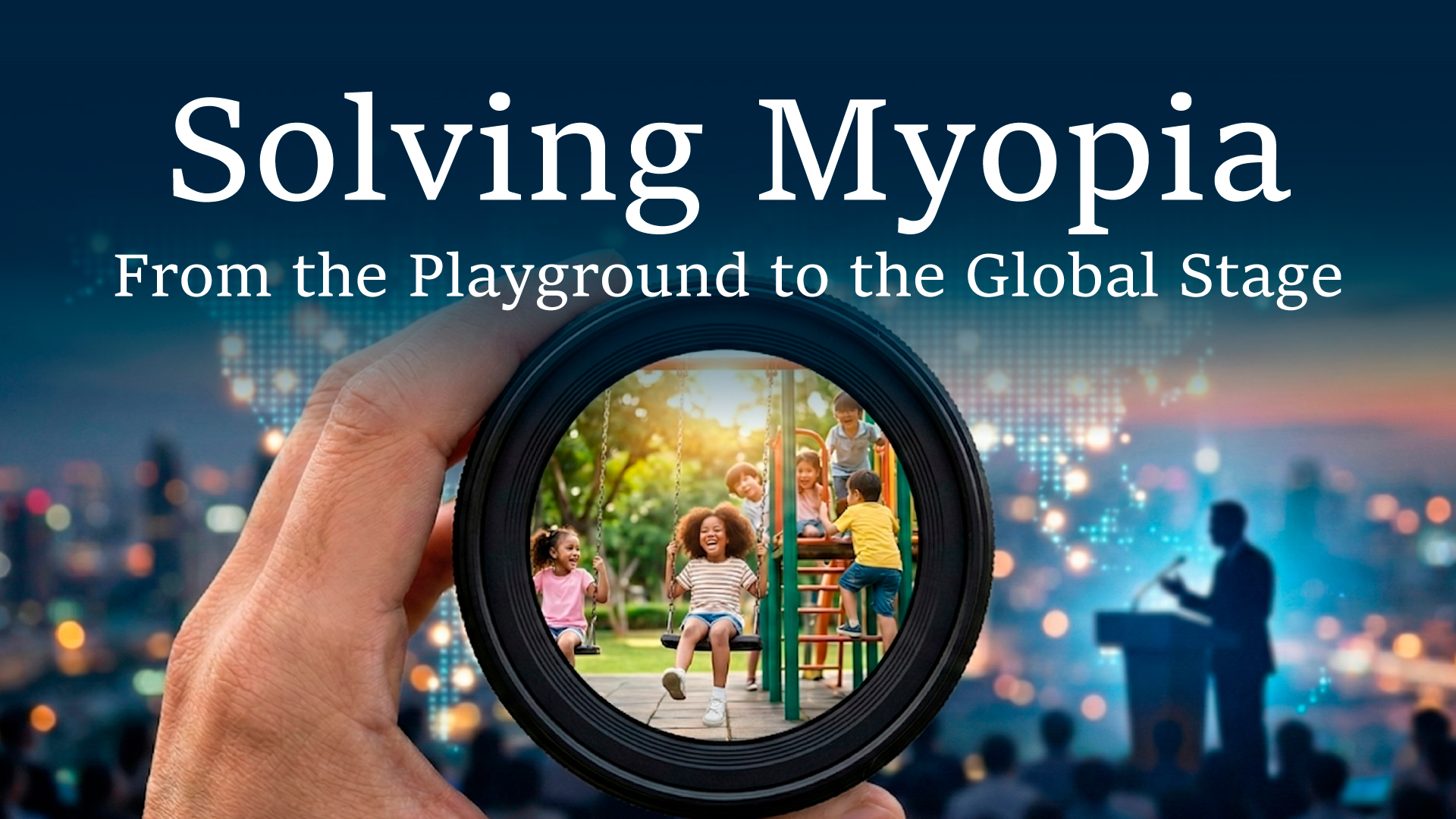
Solving Myopia: From the Playground to the Global Stage
- Published February 09, 2026 3:33AM UTC
- Publisher Jade Miguel
- Categories Capital Insights, Executive Interviews, Landing, Life Science Hub, Trending
For John Nguyen, the moment of clarity did not happen behind a phoropter in a darkened consulting room. It happened at home, watching the daily struggle between screen time and sunshine that defines modern parenting.
As an optometrist and founder of Luxi Health, Nguyen knows the clinical data well. He understands that the world is facing a surge in nearsightedness. As a father, he also knows that telling a child to go outside because it is good for their eye development is rarely effective.
“I am the scientist, the user, and the parent,” Nguyen says. “My wife and I start things with the best intentions, but life gets crowded. We needed a way to make eye health frictionless.”

The Biology of the Backyard
The science is straightforward. To develop correctly, a child’s eye requires a specific amount of natural outdoor light. Without it, the eyeball can grow too long, which causes light to focus in front of the retina rather than directly on it. This is the code Nguyen wants to crack. He is looking for ways to ensure children get the biological light they need in an era of tablets and indoor play.
Current care is often reactive. Specialists wait for a child to fail a vision test before prescribing stronger glasses. Luxi Health is moving toward prevention. The company has developed a lightweight, wearable sensor that acts as a tool to track the exact intensity and duration of light a child receives throughout the day.
Beyond Laboratory Tools
Until now, researchers and doctors have lacked clear visibility. They rely on parental memory, which is often inaccurate, or bulky research devices that are not suited for daily life.
“I have seen the competitor research tools,” Nguyen notes. “They actually look quite scary to a kid. If a child does not want to wear the device, the data is useless.”
Luxi’s prototype is built for the playground. By making the hardware simple and the accompanying app engaging, Nguyen is using rewards to turn outdoor time into a positive experience. The goal is a formula where the child is happy, the parent is not stressed, and the doctor finally has the data required to provide real medical guidance.
Validation in Los Angeles
The commercial logic of Luxi Health recently received a boost from the United States. The company was accepted into the Pegasus Accelerator in Los Angeles. It secured a spot in a program that accepts only 5% of global applicants.
For investors, this is an important external nod. Pegasus provides the structure needed to build a global brand. With the ability to provide funding of $200,000 USD, the firm is backing Nguyen’s ability to move quickly.
“They look for founders who can think on their feet,” Nguyen says. “In the startup world, you have Plan A and Plan B, but you are often resorting to Plan C or D. They saw that resourcefulness in us.”
The Value Point: From Lab to Market
Luxi Health has hit a major milestone with the completion of its first working prototype. The hardware and software now communicate via Bluetooth, proving the system works from end to end.
The roadmap for the next 12 months includes:
- Product Refinement: Moving from a USB-powered prototype to a consumer-ready, battery-operated device.
- University Partnerships: Providing Luxi sensors to researchers who need better data.
- Capital Raise: Using the Pegasus momentum to fund the move toward a full market launch.
The Investor Takeaway
Luxi Health represents a specific opportunity in the pediatric health space. Nguyen is not just selling a gadget. He is building a distribution network through his existing optometry businesses and a network of eye doctors.
While the rise in nearsightedness is a significant global problem, the solutions have remained manual and vague. By measuring light exposure accurately, Luxi Health is placing itself at the center of a shift in how we manage children’s vision. For those looking at the life sciences sector, the timing is clear.
Trending

The A$20.4 Million Inertia Trap: How Kepa Software Is Unlocking Value in Enterprise Capital Allocation
A government agency renewed the same maintenance decision nine years running, because auditing the original choice was deemed too expensive. When the portfolio was finally tested, A$20.4 million of low value spend was identified in a single year. Kepa Software’s capital governance platform was built to expose and eliminate precisely these boardroom blind spots. For […]
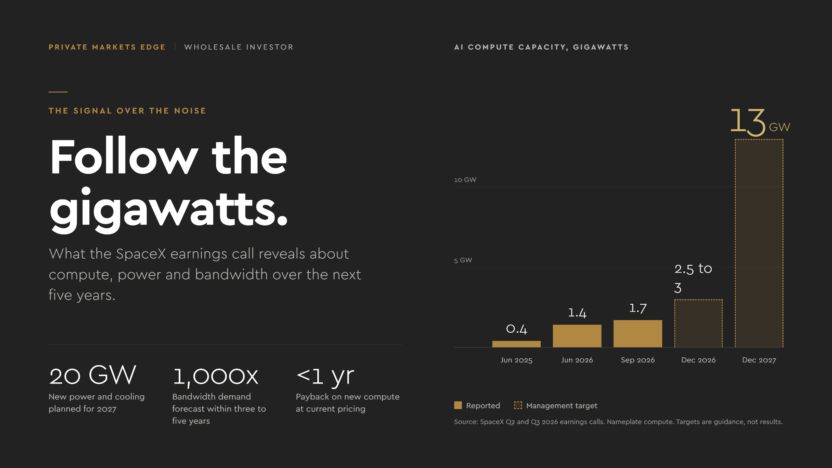
Forget the share price. SpaceX just published a map of the next five years.
Most coverage of SpaceX’s result focused on a 9.1% share price fall. That is noise. The signal is in the transcript: compute, power, bandwidth and demand over the next five years.

The prefab company that deliberately leaves part of the house unbuilt
BuiltQuik prefabricates the floor and roof structure and stops there. Co-founder Ryan Mullaney argues the omission is the product. Prefabricated housing usually means a factory. A large central facility, identical modules, limited room to move on design, and a logistics problem getting the finished box to site. BuiltQuik builds the opposite, and the design decision […]
Backed By Leading Investment Groups and Family Offices