News and Announcements
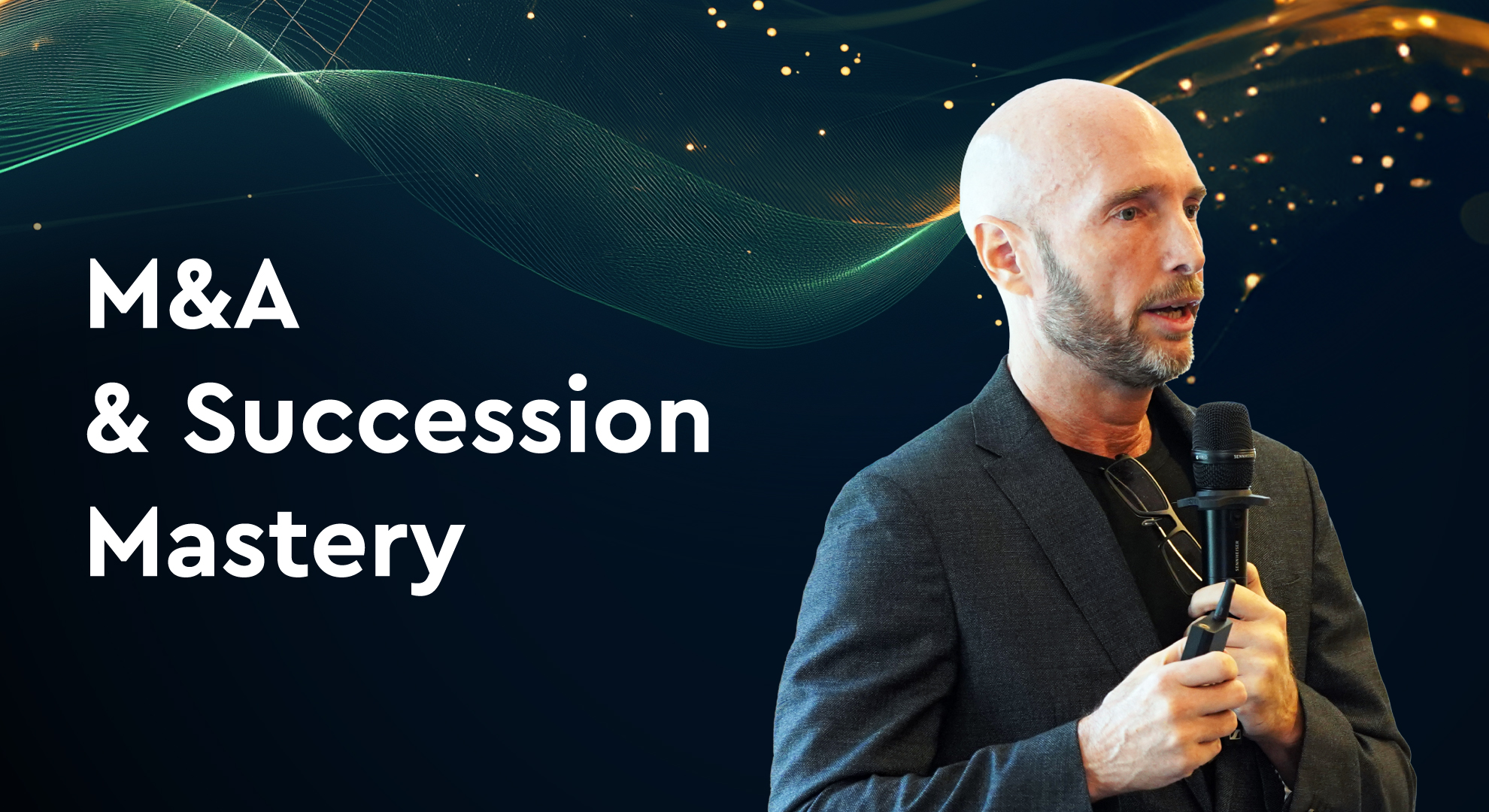
Ecosystems Over Exit: Callum Laing on Disrupting Small Business M&A
- Published June 06, 2025 4:02AM UTC
- Publisher Jade Miguel
- Categories Capital Insights, Landing, Trending
Callum Laing, Founder of Veblen Director Program and a seasoned entrepreneur, delivered a thought-provoking keynote at the Emergence Singapore investment conference, challenging conventional wisdom around small business M&A, succession, and the power of interconnected ecosystems. While the broader tech landscape grapples with the rapid pace of AI, Laing’s focus remains firmly on the “traditional old economy small businesses” – a sector he contends is ripe for a structural overhaul.
Laing’s core thesis, honed over 25 years as an entrepreneur and through taking over 100 companies public via his firm, Unity Group, is that building a robust ecosystem around a core business can significantly amplify reach, deal flow, and capital raising capabilities. He candidly admitted that while their specific model is complex, the underlying principles of ecosystem creation are universally applicable to any entrepreneur or firm.
A Unique Approach to Small Business Succession
Unity Group operates as a boutique M&A and investment banking entity with a distinct product: taking privately held, cash-generating “boring businesses” public. Crucially, their targets are not founders seeking an immediate exit, but rather those looking for growth. These businesses reverse into a public shell, swapping private stock for public stock, thereby accessing the advantages of a publicly listed company while the original founder retains operational control. Laing notes that “at this point no cash is needed,” making it an attractive solution for growth-oriented small businesses.
This model is further underpinned by a MAS-regulated fund, First Degree Global Asset Management, which provides growth capital to these newly listed entities. The fund, structured as a five-year bond paying 15 per cent, generates a two-for-one return for Unity Group, locked up for the entire five-year period. This long-term alignment of interests, with all parties locked up for five years, addresses the common issue of post-listing stock dumping.
Laing highlighted a surprising finding from their extensive work: acquisition, rather than traditional internal promotion or external hires, proves to be the most effective succession planning strategy for small businesses. “It’s nearly impossible to convince an employee to think like an owner,” he asserted, suggesting that pairing an entrepreneur with another entrepreneurial business is a more successful formula.
The Power of the Ecosystem: Credibility and Deal Flow
The sheer volume of deal flow is critical to Unity Group’s ability to operate its unique model. Laing revealed they receive around a thousand inbound inquiries annually, a figure that has accelerated in recent months. This high volume enables a “take it or leave it” deal structure, significantly streamlining negotiations – a point Laing jokingly noted as a bonus for frustrating lawyers.
He attributed this extraordinary deal flow and the firm’s credibility to its interconnected ecosystem. This includes:
- The Harbour Club: A small business M&A training program with 2,000 alumni, serving as a vast source of deals.
- Global Investment Leaders Directive (The Guild): A global network of 500 capital raisers.
- Veblen Director Program: Placing women, minorities, and first-timers on boards, providing access to more corporate opportunities.
- Investor Relations Digital Marketing: A dedicated firm amplifying lead generation across the ecosystem.
This integrated network allows Unity Group to approach investors with strong credibility and ease, overcoming the typical “slog” of capital raising.
A Three-Step Framework for Ecosystem Building
Laing concluded by offering a three-step framework for any individual or business to build their own powerful ecosystem:
- Amplification through Connection: You don’t need to own every element; trusted partnerships are key. The focus is on understanding mutual value and demonstrating usefulness to partners. Laing stressed the importance of “shout[ing] about your wins” on platforms like LinkedIn to attract introductions from your network.
- Scale through Specialisation: Offer a range of solutions within your ecosystem to cater to diverse client needs. This allows you to meet immediate demands and build relationships before potentially guiding clients towards your higher-value core activities.
- Embrace Constant Change: Recognising that “nothing works forever,” a diversified ecosystem provides resilience. If one area slows down, others can maintain deal flow, allowing for continuous testing and adaptation across the group.
In essence, Laing’s address served as a powerful reminder that in an increasingly interconnected business world, strategic collaboration and the deliberate construction of an ecosystem can be the ultimate competitive advantage, particularly for those navigating the complexities of small business M&A and succession.
Trending

The asset class where the market has no vote
Litigation funding returns are decided in a courtroom, not a cycle. Knightsbridge’s Head of Capital is careful to call that a different risk rather than a lower one, and his answer to it is spread, not concentration. Most alternative assets still answer to something. Property answers to rates. Private credit answers to defaults. Even the […]

The listing fee vendors pay whether the house sells or not
Australia’s property portals collect more than $2 billion a year while national listings sit flat. An Australian-built AI platform is targeting the economics, not just the interface. An Australian vendor listing a home pays a vendor-paid advertising fee on top of agency commission. Rama Dwarapudi, Founder and Chief Executive Officer of RealSearch, puts a typical […]
Reinventing the Condom: How an Australian Deep-Tech Startup Plans to Disrupt a $12 Billion Market
For more than half a century, the global condom industry has remained fundamentally unchanged, constrained by standard materials like latex and solid synthetic polymers. Despite widespread consumer demand for better alternatives, product design has treated the device strictly as a mechanical barrier, sacrificing feel for function. Sydney-based Eudaemon Technologies is setting out to upend that […]
Backed By Leading Investment Groups and Family Offices