
News and Announcements
Beyond the Balance Sheet: Decoding the DNA of Family Office Investing
- Published April 06, 2025 11:00AM UTC
- Publisher Jade Miguel
- Categories Capital Insights, Landing, Trending
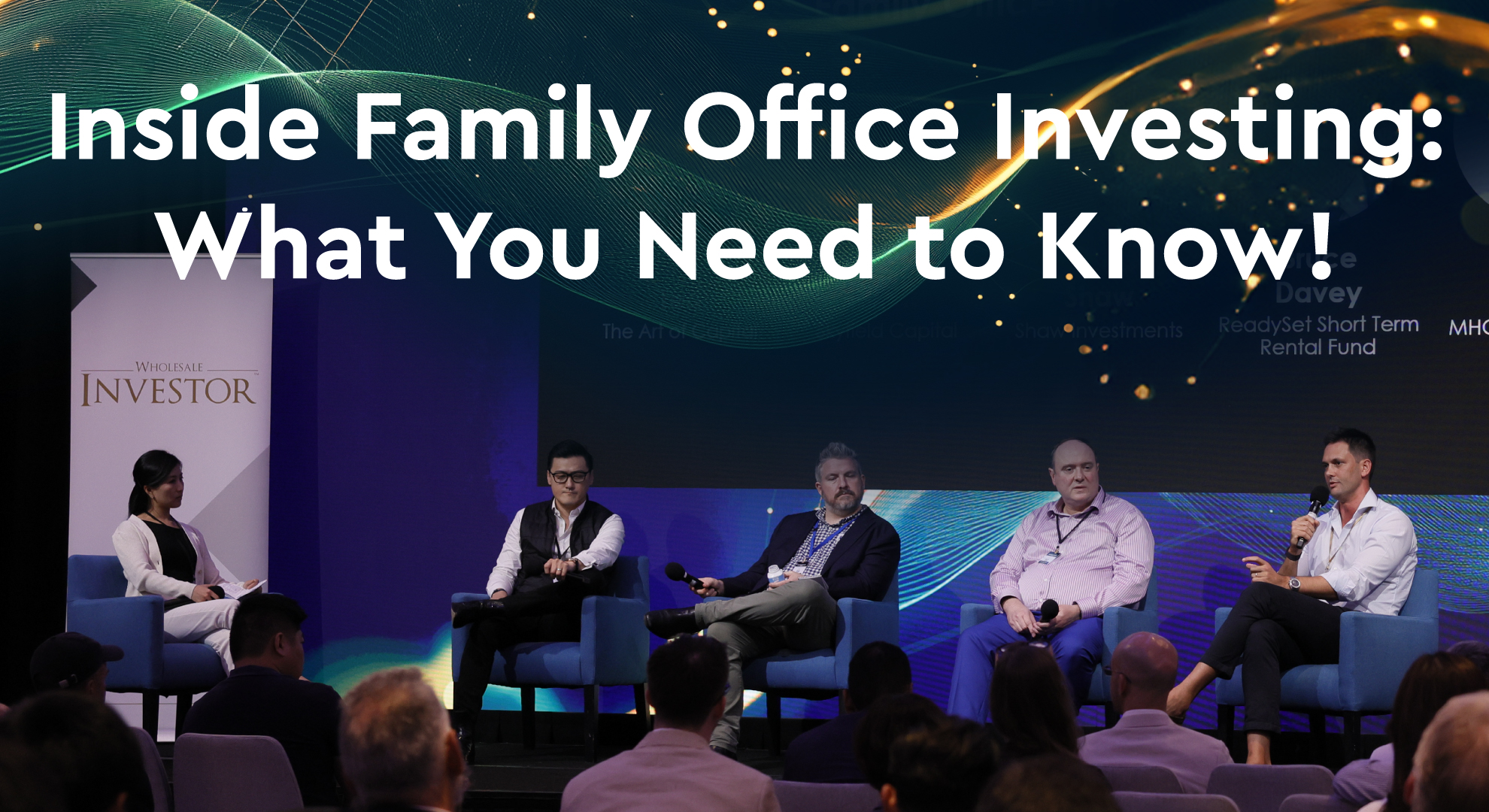
The world of family offices, often shrouded in discretion, is undergoing a significant transformation. At the Emergence 2025 conference, a panel of experts delved into the evolving nature of these entities, exploring their investment strategies, the impact of emerging technologies like AI, and the nuances of engaging with them. The discussion, moderated by Phoebe Teo of The Art of Capital, featured insights from Kevin Shen of Skyfield Capital; Ken Shaw, a third-generation family office representative from Shaw Investments; Bruce Davey, who runs a family office with a focus on algorithmic trading (ReadySet Short Term Rental Fund); and Ed Carroll of MHC Digital Group.

The Evolving Family Office: From Hands-On to Institutional
Kevin Shen of Skyfield provided a compelling overview of how family offices evolve over time. He highlighted two key drivers: the amount of capital they manage and the generational stage of the office. First-generation family offices, often closely tied to the operating businesses that generated the wealth, tend to be very involved in investment decisions, seeking both financial returns and impactful investments, often in areas of their expertise. As family offices transition to later generations and manage larger pools of capital, they often become more institutionalised. Shen noted that “in the later generations it becomes much more institutionalised. You look at portfolio allocation, correlation of investments etc.” This shift sees a greater emphasis on diversification across asset classes such as property, private credit, and alternative investments.
Shen also pointed out a significant change in access to investment opportunities. “Access to good alternative investments and top managers is no longer really an issue for family office,” he stated, contrasting the current environment with the past, where such access was often limited to large institutional investors. Now, family offices can access a wider range of investment products and managers, sometimes with smaller check sizes, and even bespoke offerings like separate management accounts.
Investment Trends: Navigating a Diverse Landscape
When asked about current investment trends, the panelists emphasised the diversity among family offices. Ken Shaw, a “recovering CEO and entrepreneur,” highlighted the challenge for those seeking funding, stating, “If you meet 50 VCs…there’s maybe 1.5 business models between them…you meet 50 family offices, there’s like 47 business models between them.” This underscores the need for thorough research and a tailored approach when engaging with family offices.
Despite this diversity, some common investment themes emerged. Shen identified a trend towards both “safe, high-yielding assets” like property and private credit, and investments with the potential for high returns, such as venture capital and private equity. He also highlighted the suitability of listed equities for family offices, given their ability to take a long-term, patient approach, echoing the investment philosophy of figures like Warren Buffett and Charlie Munger.
AI and the Family Office: Noise and Opportunity
The panel also discussed the impact of emerging technologies, particularly artificial intelligence (AI), on the investment landscape. Ken Shaw acknowledged the disruptive potential of AI, comparing it to the impact of the internet and personal computers, but also highlighted the challenges it presents. “AI is much more disruptive and much faster,” he stated, noting that the rapid pace of development and the sheer volume of information make it difficult to navigate the investment landscape. “I’m somewhat of an expert on B2B software and I’m confused,” Shaw admitted, underscoring the complexity of the current AI-driven environment.
Navigating Alternative Investments: Short-Term Rentals and Digital Assets
The discussion extended to specific alternative investment classes, including short-term rentals and digital assets. Bruce Davey, who runs a family office with a focus on algorithmic trading, discussed the professionalisation of the short-term rental market and the operational challenges involved, describing it as “Property Management on steroids.”
Ed Carrolll of MHC Digital Group addressed the integration of digital assets into family office portfolios. He emphasised the importance of regulatory clarity, which he believes is improving, and advocated for a measured approach, suggesting that “the starting point should definitely be probably a focus on something like a Bitcoin.” Carol also stressed the importance of trust and expertise in managing digital asset allocations, given the inherent risks and complexities of the market.
Engaging with Family Offices: Building Relationships and Providing Value
The panellists offered valuable advice for those seeking investment from family offices. A recurring theme was the importance of warm introductions and established relationships. As Kevin Shen put it, “all of the deals we’ve done is through warm introductions or a trusted source.” Ken Shaw echoed this sentiment, stating, “a warm introduction from a trusted person is the only way to talk to most family offices.”
Bruce Davey emphasised the importance of thorough preparation and providing well-structured investment proposals, advising entrepreneurs to “try your best to do their job for them, provide like the most well-formed investment paper for them.”
The insights from the Emergence 2025 panel provide a valuable glimpse into the evolving world of family offices. These entities, with their diverse investment strategies and unique characteristics, present both opportunities and challenges for investors and entrepreneurs alike. As the landscape continues to evolve, understanding the nuances of family office behavior and adapting to their specific needs will be crucial for success.
Trending

The asset class where the market has no vote
Litigation funding returns are decided in a courtroom, not a cycle. Knightsbridge’s Head of Capital is careful to call that a different risk rather than a lower one, and his answer to it is spread, not concentration. Most alternative assets still answer to something. Property answers to rates. Private credit answers to defaults. Even the […]

The listing fee vendors pay whether the house sells or not
Australia’s property portals collect more than $2 billion a year while national listings sit flat. An Australian-built AI platform is targeting the economics, not just the interface. An Australian vendor listing a home pays a vendor-paid advertising fee on top of agency commission. Rama Dwarapudi, Founder and Chief Executive Officer of RealSearch, puts a typical […]

Reinventing the Condom: How an Australian Deep-Tech Startup Plans to Disrupt a $12 Billion Market
For more than half a century, the global condom industry has remained fundamentally unchanged, constrained by standard materials like latex and solid synthetic polymers. Despite widespread consumer demand for better alternatives, product design has treated the device strictly as a mechanical barrier, sacrificing feel for function. Sydney-based Eudaemon Technologies is setting out to upend that […]
Backed By Leading Investment Groups and Family Offices