
News and Announcements
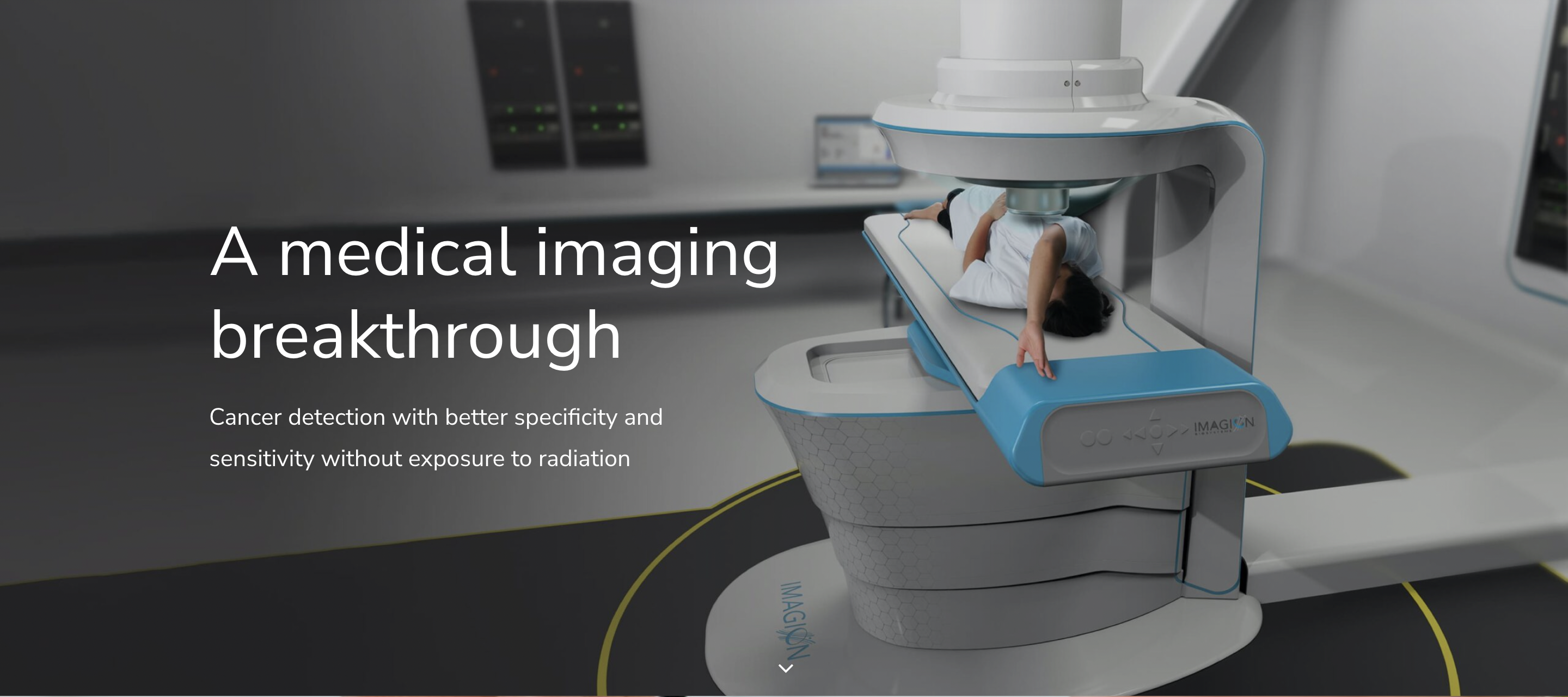
Imagion presents MagSense® interim study results at breast cancer meeting
- Published December 08, 2022 2:42PM UTC
- Publisher Wholesale Investor
- Categories Company Updates
Imaging agent aids in resolving nodal status
MELBOURNE — Imagion Biosystems Limited (ASX: IBX), a company dedicated to improving healthcare through the earlier detection of cancer, presented interim data from the company’s ongoing Phase I study for its MagSense® HER2 breast cancer imaging agent at the 2022 San Antonio Breast Cancer Symposium, a world-leading forum for scientists and clinicians focused on breast cancer research and
patient care.
Previously, the Company has reported that the MagSense® HER2 imaging agent has been well tolerated and that there have been no safety issues related to the agent identified. Here, the company reports for the first time the initial findings of the exploratory endpoints related to cancer detection. Analysis of the first cohort of six patients suggests that the molecular signature of the MagSense imaging agent, when used with conventional MRI, could help discriminate potentially cancerous nodes from normal nodes. The work was presented by Dr. Yalia Jayalakshmi, Chief Development Officer at Imagion Biosystems, and co-authored by study principal investigators.
Together, the authors conclude that when combined with standard morphological assessments, the imaging agent “has the potential to improve radiological evaluation thereby improving the standard of care clinical assessments.” The company notes that enrolment for the second cohort is ongoing with results consistent with those reported at the meeting and that further studies will be needed to broaden the study population to fully characterise the diagnostic performance of the imaging agent.
Several important findings have emerged from the results to date:
• changes in MR contrast created by the specific binding of the MagSense imaging agent to tumor cells in the nodes aid in resolving nodal status;
• the imaging agent is detectable by magnetic relaxometry, however, more subject samples are needed due to the limited amount of accessible dissected nodal tissue to-date
• there have been no safety, toxicity, or adverse events reported related to the imaging agent.
“We are very excited to be reporting our first clinical data at this important breast cancer meeting”, said Bob Proulx, CEO. “The results presented at the meeting are focused on the study protocol’s first cohort of six patients only, and though the number of patients might seem small, the implications for the Company are large as they provide the first proof-of-principle of our targeted nanoparticle technology in the clinical setting. Evidence in real patients that our nanoparticle technology could improve upon conventional medical imaging methods is a major milestone for the company. We are very pleased to be sharing these results with our shareholders and we look forward to providing additional updates as we make further progress.”
The Importance for HER2 Breast Cancer
Breast cancer is one of the most commonly diagnosed cancers among women and is the second leading cause of cancer deaths among women overall. Of the four breast cancer subtypes, HER2 represents 10-20 percent and has significant prognostic and predictive implications because the HER2 subtype is considered an aggressive phenotype with a high rate of recurrence and metastasis. The HER2 status is frequently
maintained during progression to invasive disease, nodal metastasis, and distant metastasis. Nodal status often determines the course of treatment including systemic therapy, the extent of surgery, reconstruction options, and the need for radiation therapy after mastectomy. Currently, nodal assessment is based on palpation or conventional imaging techniques, predominantly ultrasound. These methods try to identify nodes that appear to be abnormal by size or shape but are not able to confirm if cancer is present. Therefore, the current standard of care still relies on invasive biopsies and follow-up by a pathological confirmation to inform clinical decision-making. Imagion’s noninvasive and molecularly specific approach to cancer detection
has the potential to improve the overall diagnostic accuracy of axillary nodal imaging and reduce the need for invasive biopsies.
The poster presented can be requested here.
Connect with the company and learn more about Imagion Biosystems by accessing their deal room here.
Company Updates

Capital Flight or Policy Oversight? The $180M Seismic Shift Threatening Australian Innovation
A formal Senate submission by Wholesale Investor / CapitalHQ details the alarming real-world reactions of 260 founders and investors to proposed federal tax changes. With 91% of sophisticated investors scaling back local allocations and over $180M already paused or redirected offshore, the report warns of a structural funding crisis threatening the future of Australian deep tech, private equity, and startup innovation.

The Yield Illusion: Inside RAM’s Strategy to Withstand the Credit Shakeout
As interest rates reprice in 2026, the rush into private credit has created a dangerous trap for yield-hungry investors. Real Asset Management Group CEO Scott Kelly exposes the “yield illusion” dominating the market and explains why an origination-led, low-arrears mortgage strategy is the ultimate defense against an impending credit shakeout.

Office sector ‘unloved’ no more: Acure’s $80m Brisbane bet
While institutional investors remain wary of the office sector, Acure Asset Management is doubling down. Founder Angelo Del Borrello explains the “unloved” asset strategy behind his latest $80 million Brisbane acquisition and why the 2032 Olympics are creating a unique arbitrage opportunity for private syndicates.
Backed By Leading Investment Groups and Family Offices