News and Announcements
The Shift: Why Big Tech Stopped Buying Companies and Started Buying Brains
- Published January 13, 2026 12:58AM UTC
- Publisher Steve Torso
- Categories Capital Insights, Landing, Trending
The traditional M&A deal in tech is being replaced.
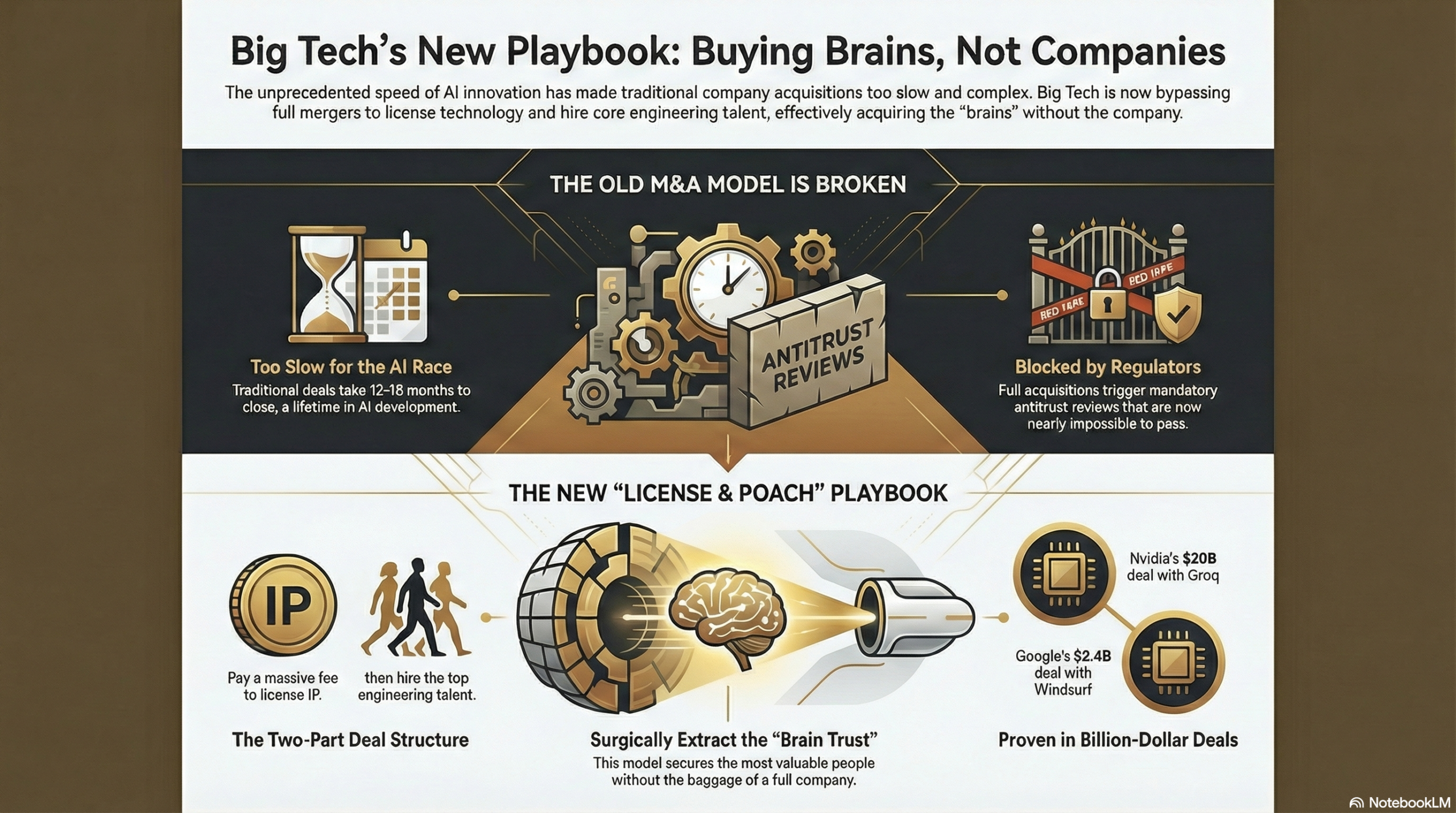
Over the last 12 months, we have witnessed a structural shift in how Big Tech consolidates power. The era of the full acquisition – buying a company hook, line, and sinker – is pausing.
Today, they aren’t buying companies. They are buying brains and renting IP.
The driver behind this is the unprecedented speed at which AI is moving. The market cannot wait for old processes.
We saw the proof in Nvidia’s $20B deal with Groq. We saw it again with Google’s $2.4B deal for Windsurf.
The mechanism is identical in every significant case. The acquirer pays a massive upfront fee for a non-exclusive license to the technology. Simultaneously, they aggressively hire the founders and the top 20% of the engineering talent.
The startup technically remains an independent entity on paper.
Why is this happening now? It comes down to three critical drivers that traditional M&A cannot solve.
1. Speed
In the current AI innovation cycle, speed is the only currency that matters. Traditional full mergers require extensive due diligence and regulatory review, often taking 12 to 18 months to close.
Big Tech cannot afford to wait a year to integrate critical capabilities. These licensing deals close in days.
2. Regulatory Evasion
Regulators like the FTC and DOJ have made traditional consolidation nearly impossible in the current climate.
By structuring these deals to avoid a technical “change of control,” the hyperscalers sidestep the Hart-Scott-Rodino Act and the mandatory antitrust reviews it triggers. It maintains a fiction of competition while securing the assets they need.
3. Talent Extraction
This structure allows Big Tech to secure the “brain trust”—the core researchers and engineers driving the value—without the baggage of the entire cap table or the complexity of integrating a whole organisation. It is a surgical extraction.
The New Standard
This is not a temporary loophole. It is the new standard for liquidity in the AI era.
Founders need to understand that the goalposts have moved. You aren’t just building for a traditional acquisition anymore. You need to recognise that you are also building for a high-value license and a transfer of talent.
Trending
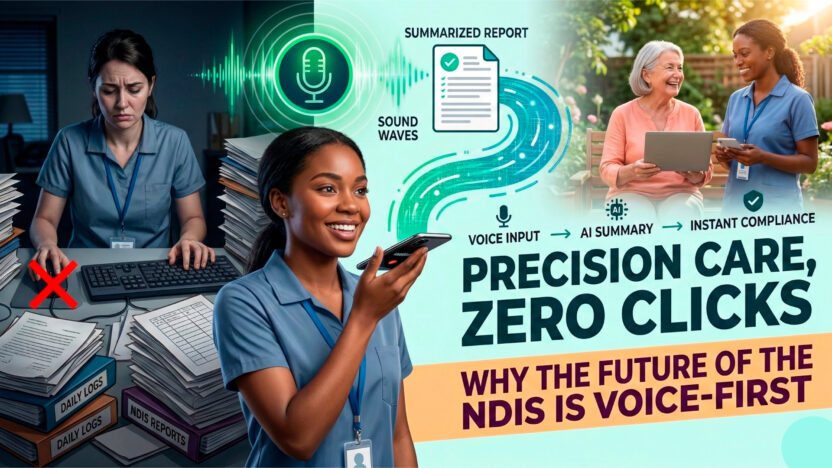
Precision Care, Zero Clicks: Why the Future of the NDIS is Voice-First
Carelogix is solving the healthcare burnout crisis by replacing manual typing with a sophisticated AI “care co-pilot.” By reclaiming nearly half of a caregiver’s day, the platform offers a significant value inflection point for providers and investors in the trillion-dollar care economy.
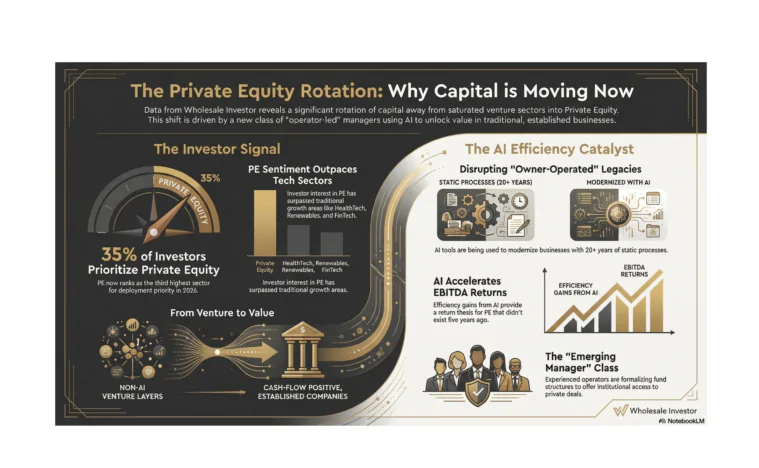
The Private Equity Signal I Am Watching Very Closely
Pattern recognition in private markets is not about predicting the future. It is about reading what is already moving before the wider market notices. I spotted the same signal in life sciences 18 months before it became consensus. We are watching it happen again, this time in private equity.

Arterial Alchemy: Turning the ‘Ticking Time Bomb’ of Heart Disease into Excretable Waste
Current heart medications thin the “grease” in our blood, but Atherid Therapeutics is building the first biological clearing agent to actually scrub the pipes clean. With human trials slated for 2027, the goal is to make heart attacks a preventable and reversible condition.
Backed By Leading Investment Groups and Family Offices