
News and Announcements
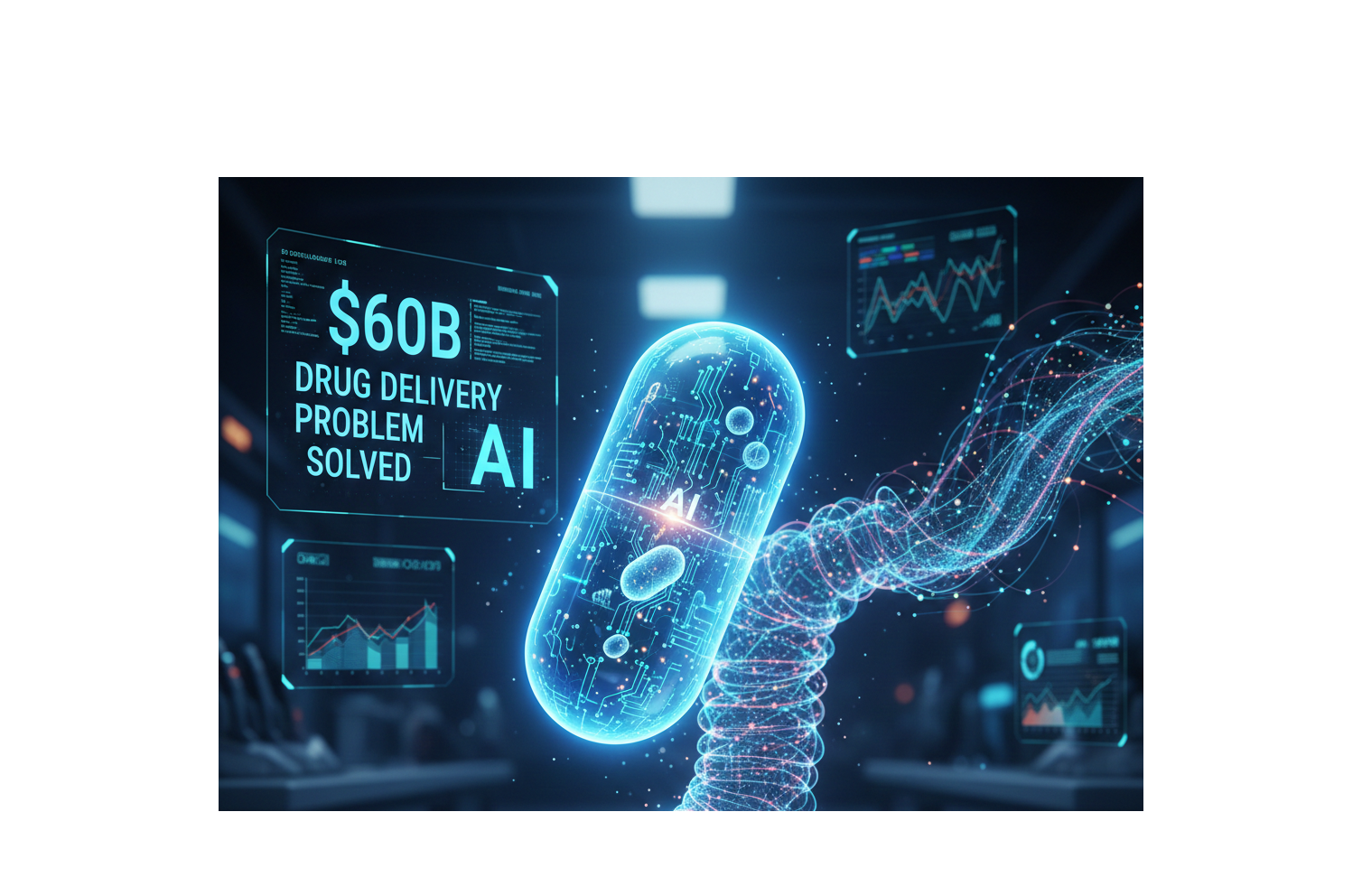
The Better Pill to Swallow: Solving the $60B Drug Delivery Problem with AI
- Published February 13, 2026 12:53AM UTC
- Publisher Jade Miguel
- Categories Capital Insights, Executive Interviews, Landing, Life Science Hub, Trending
In the high-stakes world of biotechnology, the “holy grail” is usually a new molecule—a silver bullet for a previously untreatable disease. But for Stuart Gunzburg, the founder of BCS2, the greatest opportunity isn’t hidden in a new discovery; it is hiding in plain sight within the medicine cabinets of millions.
Gunzburg, a scientist who moved into the entrepreneurial space with a deeply personal mission, isn’t trying to invent new drugs. He is trying to fix the ones we already have.
“My path started with my brother,” Gunzburg reflects. “He was suffering from prostate cancer and asked me to reformulate treatments for erectile dysfunction.” During that process, Gunzburg identified a glaring clinical “blind spot”: many of the world’s blockbuster drugs are fundamentally flawed in their delivery. They are “insoluble,” meaning they don’t dissolve well in the body, leaving patients with only a fraction of the promised therapeutic benefit.

The Solubility Crisis: A $60 Billion Opportunity
The pharmaceutical industry is facing a looming “patent cliff.” Over the next five years, drugs with a combined $60 billion in annual sales will lose their patent protection. While generic manufacturers typically rush in to create cheaper versions of these pills, they often replicate the original design flaws.
BCS2 is targeting this inefficiency. Currently, roughly 40% of existing drugs—and up to 80% of those in development—are insoluble. When taken as a tablet, these medications must run a gauntlet: they struggle to enter the bloodstream, are metabolised variably by the liver, and often require high doses to be effective, which increases the risk of side effects.
“We’re not reinventing the wheel,” Gunzburg says. “We’re just making the wheel better.”
The ‘Molecular Key’: AI-Driven Reformulation
To solve the solubility puzzle, BCS2 utilises artificial intelligence to bypass years of traditional “wet chemistry.” Instead of manually mixing drugs with various solvents in a lab for years, BCS2’s AI screens the fundamental characteristics of a drug to identify the optimal method for solubilisation in a fraction of the time.
This technology allows BCS2 to take a drug like Vardenafil (the active ingredient for treating erectile dysfunction) and transform it from a slow-acting pill into a rapid-response oral spray.
“It’s absorbed in the mouth cavity sublingually, meaning it gets into the bloodstream extremely quickly—within 15 minutes compared to an hour for a tablet,” Gunzburg explains.
By bypassing the liver, the drug provides a consistent dose for every patient, regardless of their individual metabolism. In BCS2’s tests, this led to a 90% efficacy rate, with every patient responding positively to the reformulated spray.
Solving for ‘Dysphagia’ and Compliance
Beyond the chemistry, BCS2 is addressing a massive human hurdle: dysphagia (difficulty swallowing). As populations age, many patients struggle with traditional tablets, leading to poor “patient compliance”—the industry term for patients simply not taking their medicine.
By reformulating drugs into:
- Dissolvable oral films (similar to breath strips)
- Sublingual sprays
- Gummies (which can deliver active ingredients into the lymphatic system)
BCS2 is making life-saving medication accessible to elderly patients and children alike, ensuring that the medicine actually makes it from the bottle to the bloodstream.
Operational Efficiency: The ‘Rinse and Repeat’ Model
For investors, the BCS2 proposition is built on a significantly de-risked model. Unlike traditional biotech “moonshots” that face a 90% failure rate in Phase clinical trials, BCS2 works with known safety profiles.
“We don’t have to go through long, tedious, and expensive clinical trials,” Gunzburg notes. “We only need to perform bioequivalence trials to prove our delivery method matches the original tablet’s efficacy.”
This slashes development timelines from over six years to just 12 to 18 months. The company’s business model is equally lean: they reformulate the drug, patent the new process, and then license it to global manufacturers in exchange for royalties or equity.
The Investor Takeaway: The 2026 Inflection Point
With a $2 million seed round currently underway, BCS2 is moving into a “hot zone” of activity. The company has already successfully solubilised Apixaban, a drug with $20 billion in global sales, and plans to reformulate six more drugs in the coming year.
As BCS2 prepares to showcase its technology at the Emergence 2026 conference in Sydney, the economic logic is clear. By fixing the delivery of proven blockbusters, BCS2 is positioning itself as the high-efficiency bridge between “good science” and “better medicine.”
In a sector often defined by high-risk bets, Gunzburg is offering a rare alternative: a high-speed, AI-powered “rinse and repeat” strategy that turns pharmaceutical waste into commercial gold.
Trending
The Private Capital Infrastructure Is Failing High-Growth Companies
The Broken Reality of Capital Raising Infrastructure Venture capital poured 55% of global funding into AI companies in 2025. Seed and Series A rounds saw 70% of capital flow to AI-related opportunities. The capital is available. The demand is clear. But the infrastructure connecting founders to investors remains unchanged. Deal flow arrives through LinkedIn messages, […]
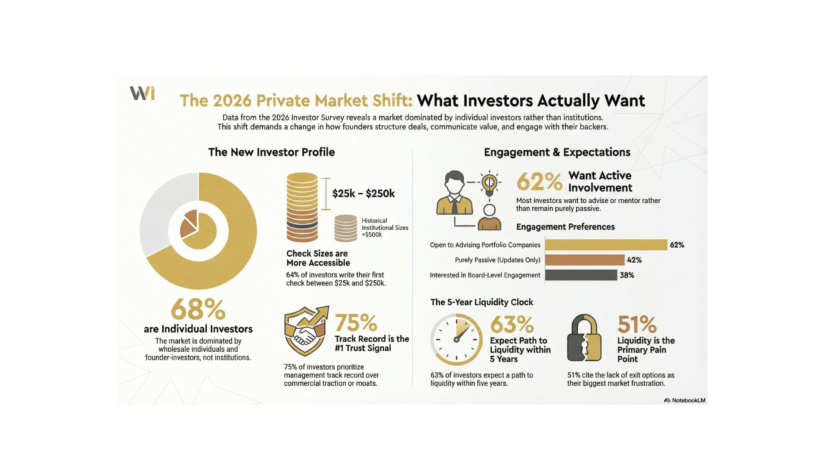
What Active Private Market Investors Told Us They Want in 2026
We just released the 2026 Investor Survey, the most comprehensive look at what private market investors are actually thinking and prioritizing as they deploy capital this year. Key data challenges assumptions, revealing that nearly 68% of the active investor base are individuals, not institutions.
The Better Pill to Swallow: Solving the $60B Drug Delivery Problem with AI
While most biotechs hunt for new molecules, BCS2 is fixing the ones we already have. Founder Stuart Gunzburg explains how his AI-powered platform transforms “insoluble” blockbuster drugs into rapid-acting sprays and films, creating a de-risked, high-speed pathway to market for a $60 billion opportunity.
Backed By Leading Investment Groups and Family Offices