
News and Announcements

How to Raise Capital from Wholesale Investors in Australia
- Published March 23, 2026 5:38AM UTC
- Publisher Wholesale Investor
- Categories Capital Raising Tips, Company Updates, Trending
Raising capital from wholesale investors is the most efficient path to funding for Australian companies that want to avoid the cost, time, and regulatory burden of producing a full prospectus. Under Section 708 of the Corporations Act 2001, companies can raise capital from investors without a disclosure document, provided specific exemptions are met.
This guide covers everything founders need to know: who wholesale investors are, how the exemptions work, what investors actually look for, and how to build a capital raising strategy that attracts serious capital.
What Is a Wholesale Investor?
A wholesale investor is a classification under Australian law that identifies individuals and entities experienced enough to evaluate investment opportunities without the regulatory protections afforded to retail investors. The Corporations Act 2001 defines wholesale investors across three main categories: sophisticated investors, professional investors, and experienced investors.
Sophisticated investors must hold net assets of at least $2.5 million or have earned gross income of at least $250,000 per year for each of the previous two financial years, verified by an accountant’s certificate dated within the past two years.
Professional investors include holders of an Australian Financial Services Licence (AFSL), entities regulated by APRA, trustees of superannuation funds with net assets above $10 million, and individuals or entities controlling gross assets of at least $10 million.
Experienced investors are those assessed by a financial services licensee as having sufficient prior experience in securities investing to evaluate the merits and risks of an opportunity without a disclosure document.
There is also a transaction-based threshold: any person investing $500,000 or more in a single transaction is treated as a wholesale investor for that investment, regardless of their asset or income position.
How the Section 708 Exemptions Work
Section 708 of the Corporations Act provides several exemptions from the requirement to issue a prospectus or other disclosure document. The most commonly used exemptions for private capital raises are:
Small-Scale Offerings (the 20/12 Rule)
A company can raise up to $2 million from up to 20 investors in any rolling 12-month period without a disclosure document. Each offer must be a personal offer, meaning it can only be accepted by the person to whom it is made. This exemption is useful for early-stage raises from founders’ networks, but the caps make it unsuitable for larger rounds.
Sophisticated Investor Exemption
No disclosure document is required when making offers to sophisticated investors who hold a current accountant’s certificate confirming they meet the net asset or gross income thresholds. The certificate must have been issued within the preceding two years. Companies must retain copies of these certificates.
Professional Investor Exemption
Offers to professional investors, including AFSL holders, regulated bodies, and entities with gross assets of $10 million or more, are exempt from disclosure requirements. Evidence of professional investor status should be documented.
Experienced Investor Pathway
A financial services licensee can facilitate offers to investors who the licensee is satisfied have previous experience in securities investing. The licensee must provide written reasons for this assessment, and the investor must sign an acknowledgment that no disclosure document has been provided.
What Wholesale Investors Actually Look For
Based on the 2026 Wholesale Investor Survey of active investors across Australia’s private capital markets, the factors that most influence investor engagement are clear and consistent.
Management track record is the number one factor, cited by 75% of investors as a top-three consideration when evaluating a direct company opportunity. This includes prior exits, industry experience, and leadership tenure.
Commercial traction ranks second at 57%, covering revenue growth, pilot customers, retention metrics, and other evidence that the business model is working.
Competitive moat is close behind at 56%, reflecting investors’ focus on barriers to entry, defensibility, and long-term positioning.
Path to liquidity matters to 47% of investors, who want clarity on how and when they will see returns, whether through an IPO, trade sale, or secondary transaction.
The typical first investment from this investor cohort sits between $25,000 and $100,000, with 43% of respondents in that bracket. Another 21% invest between $100,000 and $250,000 on their initial ticket. Follow-on capacity is overwhelmingly situational, with over 50% of investors saying they decide based on the specific opportunity.
Building a Capital Raising Strategy
1. Qualify Your Investor Audience
Before you begin outreach, confirm the exemption pathway you will rely on and ensure every target investor meets the relevant criteria. For sophisticated investors, this means a current accountant’s certificate. For professional investors, documented evidence of status. For small-scale offers, a clear log of how many investors you have issued to in the past 12 months.
2. Lead with Track Record and Traction
Your investment narrative should open with the team’s credentials and the company’s commercial progress. Investors are not buying a slide deck. They are backing a management team with evidence of execution.
3. Be Specific About the Opportunity Structure
The 2026 survey shows that 64% of investors prefer priced equity rounds, followed by convertible notes at 36% and private credit with equity upside at 33%. Be explicit about your deal structure, valuation methodology, and terms. Ambiguity reduces conversion.
4. Address Liquidity from Day One
The number one frustration among wholesale investors is the lack of liquidity and exit options, cited by 51% of survey respondents. Your capital-raising materials should include a clear timeline and an exit pathway. If you cannot articulate this, expect investor hesitation.
5. Use the Right Channels
Private market investors in Australia overwhelmingly prefer to receive deal opportunities via email (99% of respondents). Platform notifications and WhatsApp are supplementary, not primary. A weekly or bi-weekly cadence is preferred by the majority. Personal, targeted outreach through private capital marketplaces, advisors, and trusted intermediaries is the most effective distribution mechanism.
Common Mistakes to Avoid
Public advertising of an offer that relies on personal offer exemptions will breach the Corporations Act. Keep communications targeted and private. Do not broadcast on social media or through public channels unless you are operating under a different regulatory framework.
Failing to collect and retain proper documentation, particularly accountants’ certificates and investor acknowledgments, creates compliance risk that can unwind an entire raise.
Treating all investors the same is a missed opportunity. Wholesale investors have different mandates, sector preferences, and stage appetites. Segmentation and personalisation significantly improve conversion rates.
Trending
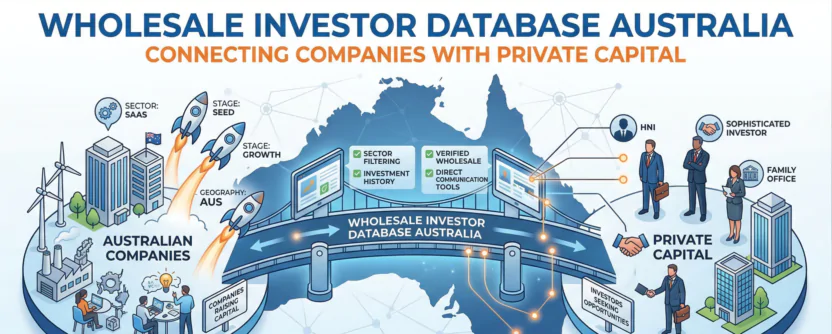
Wholesale Investor Database Australia: Connecting Companies with Private Capital
Finding wholesale investors in Australia has historically relied on personal networks, advisors, and word of mouth. For companies raising capital under Section 708 of the Corporations Act, the challenge is not just identifying investors who meet the legal thresholds, but finding investors whose mandate, sector focus, and ticket size actually align with the opportunity. A wholesale […]

How to Raise Capital from Wholesale Investors in Australia
Raising capital from wholesale investors is the most efficient path to funding for Australian companies that want to avoid the cost, time, and regulatory burden of producing a full prospectus. Under Section 708 of the Corporations Act 2001, companies can raise capital from investors without a disclosure document, provided specific exemptions are met. This guide […]

Steve Torso: Founder of Wholesale Investor & CapitalHQ
Steve Torso is the Founder and CEO of Wholesale Investor, Australia’s leading private capital marketplace, and CapitalHQ, the AI-powered Capital Engagement Agent platform transforming how companies raise capital and manage investor relationships. Building Australia’s Private Capital Infrastructure Steve co-founded Wholesale Investor in 2008 with a clear thesis: the gap between companies seeking private capital and […]
Backed By Leading Investment Groups and Family Offices