
News and Announcements
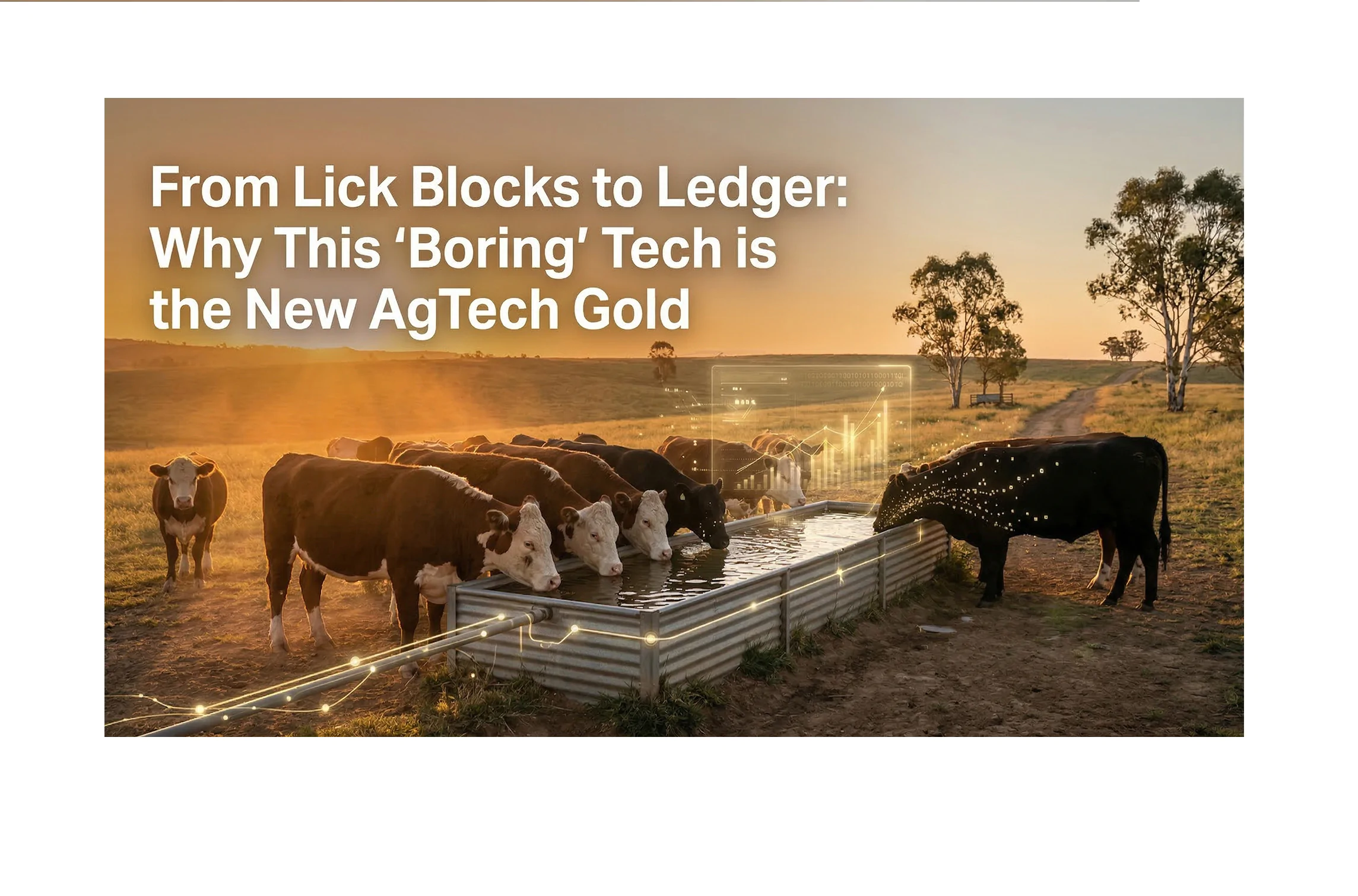
From Lick Blocks to Ledger: Why This ‘Boring’ Tech is the New AgTech Gold
- Published March 23, 2026 10:42PM UTC
- Publisher Jade Miguel
- Categories Capital Insights, Executive Interviews, Landing, Trending
For decades, the standard practice for supplementing livestock in the Australian Outback has involved a high-stakes, low-tech logistical nightmare: dropping 100kg “lick blocks” across millions of acres and hoping the right cattle find them at the right time.
“If you can’t measure something, you can’t manage production,” says Mark Peart, founder and CEO of DIT AgTech.
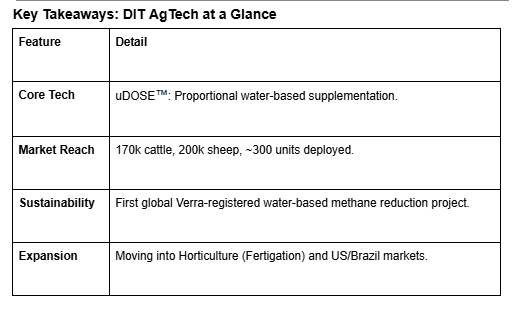
Peart is on a mission to digitise the “extensive” agriculture sector—the 92 per cent of livestock that don’t live in controlled environments like feedlots or dairies. By ditching the lick blocks for a patented water-based dosing system called uDOSE™, DIT AgTech has turned a generational family legacy into a high-growth climate-tech play that is now eyeing the Americas.

Precision in the Paddock
The logic is deceptively simple: ruminant animals drink proportional to their body weight. By injecting nutrients directly into the water supply, DIT AgTech ensures every animal receives a precise dose.
The results for the $150 million Australian supplementation market are stark. Traditional “ad lib” methods are labour-intensive and notoriously inconsistent. In contrast, Peart’s 300 deployed units—covering 170,000 cattle and 200,000 sheep—allow producers to see consumption data in real-time via telemetry.
“We’ve seen the price of supplementation come down while production increases,” Peart says. “We use algorithms to determine the type of livestock and dose accordingly. It turns a logistical challenge into a data-driven science.”
The First ‘Water-to-Carbon’ Credit
While productivity gains are the hook for farmers, the “alpha” for investors lies in ESG. DIT AgTech recently became the first company globally to register a Verra carbon project using water-delivered methane-reducing additives.
The industry has long known how to reduce methane in a lab, but the “last mile” of delivery has been the bottleneck.
“The biggest problem to solve has never been the additive,” Peart explains. “It was the delivery mechanism. We built the platform that records consumption, back-solves it with math and coefficients, and issues a verified carbon credit.”
By integrating software that monetises methane reduction, DIT AgTech allows farmers to either sell carbon credits or “inset” them to command a premium for low-carbon beef.
Building the ‘Moat’
Despite the high-tech backend, Peart is comfortable with his technology being described as “boring.” In the harsh environments of Western Queensland or the Northern Territory, “boring” means reliable.
“I say to investors that sometimes the most boringly simple technologies have the most exponential changes,” he says. “We’ve spent years building a distribution and delivery moat. It’s hard to replicate that last-mile logistics.”
The Next Frontier: Horticulture and Export
The company isn’t stopping at livestock. Peart is currently expanding the core dosing logic into horticulture and fertigation. The “uDOSE™ AG” (for agriculture) is already being trialed in Queensland to automate the delivery of fertilisers and biologicals through irrigation systems—a market Peart notes is significantly larger than livestock.
With a proven track record in Australia’s toughest terrain, DIT AgTech is now raising capital to export its “delivery-as-a-service” model to the massive pastoral markets of Brazil and the United States.
“We’ve nailed it in Australia,” Peart says. “Now we’re going to scale it around the world.”
Trending
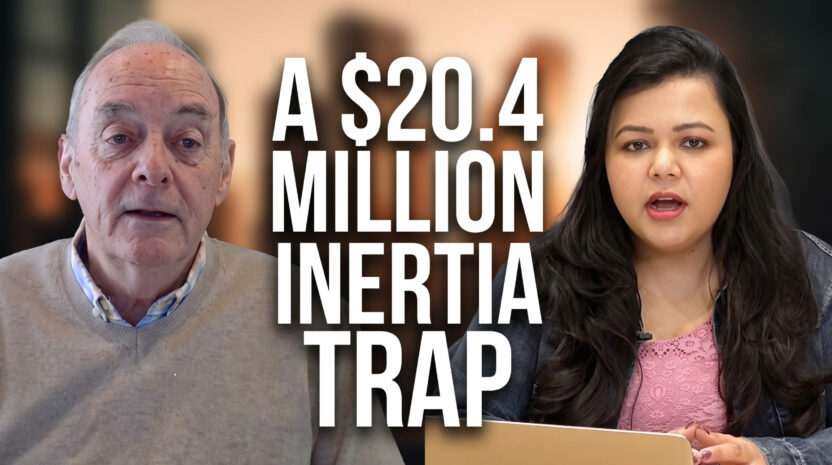
The A$20.4 Million Inertia Trap: How Kepa Software Is Unlocking Value in Enterprise Capital Allocation
A government agency renewed the same maintenance decision nine years running, because auditing the original choice was deemed too expensive. When the portfolio was finally tested, A$20.4 million of low value spend was identified in a single year. Kepa Software’s capital governance platform was built to expose and eliminate precisely these boardroom blind spots. For […]
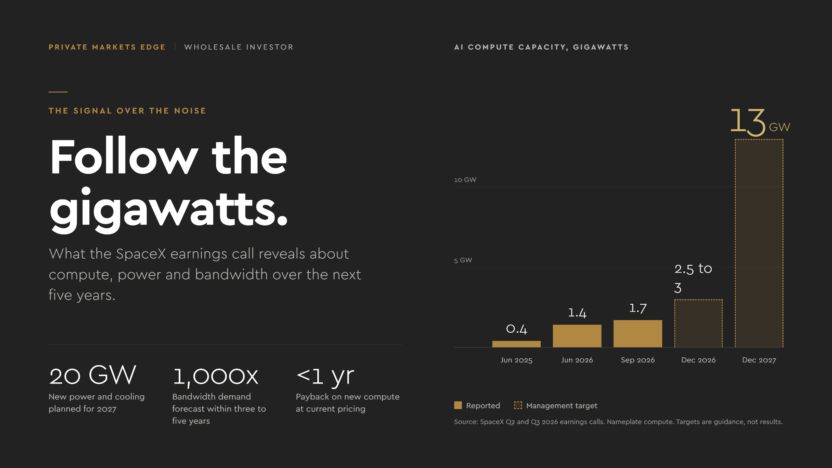
Forget the share price. SpaceX just published a map of the next five years.
Most coverage of SpaceX’s result focused on a 9.1% share price fall. That is noise. The signal is in the transcript: compute, power, bandwidth and demand over the next five years.

The prefab company that deliberately leaves part of the house unbuilt
BuiltQuik prefabricates the floor and roof structure and stops there. Co-founder Ryan Mullaney argues the omission is the product. Prefabricated housing usually means a factory. A large central facility, identical modules, limited room to move on design, and a logistics problem getting the finished box to site. BuiltQuik builds the opposite, and the design decision […]
Backed By Leading Investment Groups and Family Offices