
News and Announcements

Capital Raising from Wholesale Investors: The Complete Guide
- Published March 25, 2026 4:54AM UTC
- Publisher Wholesale Investor
- Categories Capital Raising Tips, Trending
Capital raising from wholesale investors is the primary funding mechanism for private companies in Australia that want to raise significant capital without the cost and complexity of a public offer. Thousands of companies each year rely on the Section 708 exemptions to raise funds from sophisticated, professional, and experienced investors.
This guide covers the full lifecycle of a wholesale capital raise: structuring the offer, building investor materials, executing outreach, and closing the round.
Structuring Your Raise
The first decision in any capital raise is structure. The 2026 Wholesale Investor Survey shows clear preferences among Australian wholesale investors.
Priced equity rounds remain the dominant preference at 64%. Investors value the clarity of a defined valuation, clear share allocation, and straightforward ownership calculation. If you are raising a priced round, come prepared with a defensible valuation methodology.
Convertible notes are the second most popular structure at 36%, particularly for earlier-stage companies where setting a fixed valuation may be premature. Ensure your note terms are market-standard: discount rate, valuation cap, interest rate, and maturity date should all be clearly defined.
Private credit with equity upside appeals to 33% of investors, reflecting growing demand for yield-plus-growth structures. This is particularly relevant for companies with recurring revenue or tangible assets that can support a debt component.
SAFE notes, while common in the US market, have lower adoption in Australia at 24%. If you are using a SAFE, be prepared to explain the structure and its implications for Australian investors who may be less familiar with it.
Return Expectations by Stage
Aligning your raise with investor return expectations is critical. The survey data shows a clear correlation between stage and expected returns.
For equity investments, the largest group (40%) targets 3x to 5x returns, consistent with Series A and B stage investing. Steady growth expectations of 2x to 3x appeal to 34%, aligning with private equity and late-stage opportunities. Venture-scale returns of 5x to 10x are targeted by 29%, and outlier returns of 10x or more by 24%.
For credit strategies, the sweet spot is hybrid yield-plus-growth at 12% to 18% per annum, preferred by 42% of credit-focused investors. High yield of 10% to 12% appeals to 36%, and balanced returns of 8% to 10% to 30%.
If your opportunity cannot credibly deliver returns within the range your target investors expect, you either need to restructure the offer or target a different investor segment.
The Investor Materials That Matter
Investment Memorandum or Information Memorandum
While wholesale raises do not require a prospectus, a well-structured information memorandum is the standard document investors expect. It should cover the company overview, market opportunity, business model, financial performance, management team, use of proceeds, deal terms, and risk factors. Lead with management track record and commercial traction, as these are the two factors investors weigh most heavily.
Financial Model
A detailed, assumption-driven financial model is non-negotiable for any raise above $500,000. Investors will stress-test your projections, so build in scenario analysis and be transparent about key assumptions.
Data Room
Prepare a structured data room before you begin outreach. Include corporate documents, financials, customer contracts, IP documentation, cap table, and any due diligence materials. Having a ready data room signals professionalism and accelerates the decision process.
Executing the Raise
Phase 1: Pre-Launch (Weeks 1 to 4)
Finalise deal structure and terms. Complete all investor materials. Build your target investor list segmented by sector, stage, and ticket size. Prepare compliance documentation including accountant’s certificate templates and investor acknowledgment forms. Identify your anchor investors and schedule pre-launch conversations.
Phase 2: Active Raise (Weeks 5 to 12)
Launch outreach through your chosen channels: private capital marketplace, advisor network, direct email, and events. Run structured information sessions for investors. Maintain a pipeline tracker with clear stages: approached, engaged, due diligence, committed, closed. Follow up consistently. The majority of capital commitments come after multiple touchpoints.
Phase 3: Close and Post-Raise (Weeks 12 to 16)
Convert committed investors to signed subscription agreements. Complete settlement and share issuance. Immediately establish a post-raise communication cadence: monthly or quarterly updates that keep investors informed and build the relationship for follow-on investment.
The Liquidity Question
The single biggest frustration among wholesale investors is the lack of liquidity, cited by 51% of 2026 survey respondents. Companies that address this proactively, with a clear timeline and pathway to exit, convert at higher rates.
Too much noise and not enough signal is the second most cited frustration at 45%. This reinforces the importance of quality, targeted communications over volume-based approaches.
Trending

Capital Raising from Wholesale Investors: The Complete Guide
Capital raising from wholesale investors is the primary funding mechanism for private companies in Australia that want to raise significant capital without the cost and complexity of a public offer. Thousands of companies each year rely on the Section 708 exemptions to raise funds from sophisticated, professional, and experienced investors. This guide covers the full […]
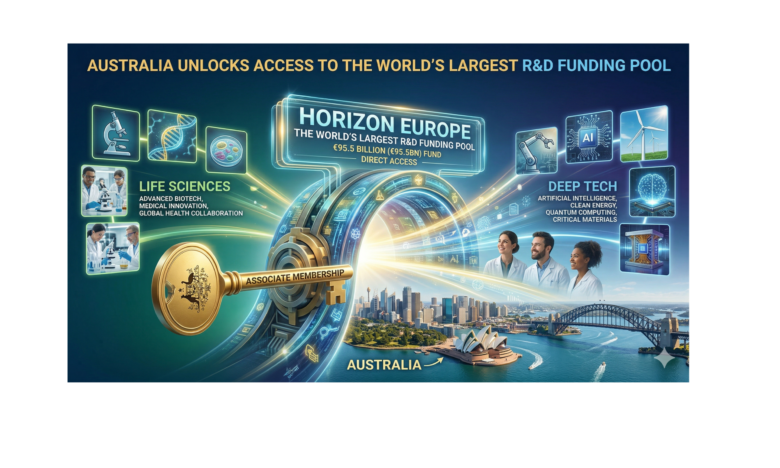
Australia Just Unlocked Access to the World’s Largest R&D Funding Pool. Here’s What It Means for Life Sciences and Deep Tech
Australia has begun formal treaty negotiations to become an associate member of the EU’s Horizon Europe program, the world’s largest single collaborative R&D funding pool. This new status will allow Australian universities and companies to lead projects and access full funding streams on equal terms with EU entities, fundamentally benefiting sectors like life sciences, medical devices, deep tech, and critical minerals.

How to Reach Wholesale Investors in Australia
Reaching wholesale investors in Australia requires a fundamentally different approach to reaching retail investors or the general public. Wholesale investors, as defined under Section 708 of the Corporations Act 2001, operate in private markets where deal flow is curated, relationships are personal, and trust is the currency that drives capital allocation. This article covers the […]
Backed By Leading Investment Groups and Family Offices