
News and Announcements

AsiaPhos Continues on Growth Track with Revenue Up 51% in 4Q2015
- Published February 16, 2016 11:49AM UTC
- Publisher Wholesale Investor
- Categories Company Updates
15th February 2016, August Consulting
- Declare final dividend of 0.1 cent per ordinary share for FY2015
- Gross profit rose 23% while net profit declined due to a non-recurring accounting gain in 4Q2014 relating to the acquisition of LY Resources Pte Ltd
Summary of Financial Results For the Period Ended 31 December:
| S$’000 | 4Q2015 | 4Q2014 | +/(-) % | FY2015 | FY2014 | +/(-)% |
| Revenue | 16,839 | 11,125 | 51 | 44,505 | 23,822 | 87 |
| – Upstream | 5,837 | 5,996 | (3) | 17,957 | 12,731 | 41 |
| – Downstream | 11,002 | 5,129 | 115 | 26,548 | 11,091 | 139 |
| Gross Profit | 3,190 | 2,585 | 23 | 8,487 | 4,684 | 81 |
| Other income | 4,863 | 20,834 | (77) | 6,378 | 21,781 | (71) |
| Profit before tax | 4,760 | 20,747 | (77) | 3,027 | 19,484 | (84) |
| Net attributable profit | 4,309 | 20,761 | (79) | 2,209 | 19,498 | (89) |
SINGAPORE – 15 February 2016 – AsiaPhos Limited (“AsiaPhos” and together with its subsidiaries, the “Group”), a Singapore-headquartered mineral resources company focused on exploring and mining phosphate with a vertically-integrated business model, reported a 51% year-on-year (“y-o-y”) growth in revenue to S$16.8 million for the quarter ended 31 December 2015 (“4Q2015”), driven by strong contribution from its downstream segment.
Downstream revenue in 4Q2015 more than doubled to S$11.0 million, from S$5.1 million in the same period last year (“4Q2014”), mainly from the sale of P4 and its by-products. Revenue from P4 and its by-products amounted to S$10.8 million, or 99% of downstream revenue, in 4Q2015 on the back of 4,600 tonnes of P4 sold. In 4Q2014, only 1,800 tonnes were sold which generated revenue of S$5.1 million.
To read the full press release, please click here.
To view the SGX Announcement, please click here.
Company Updates
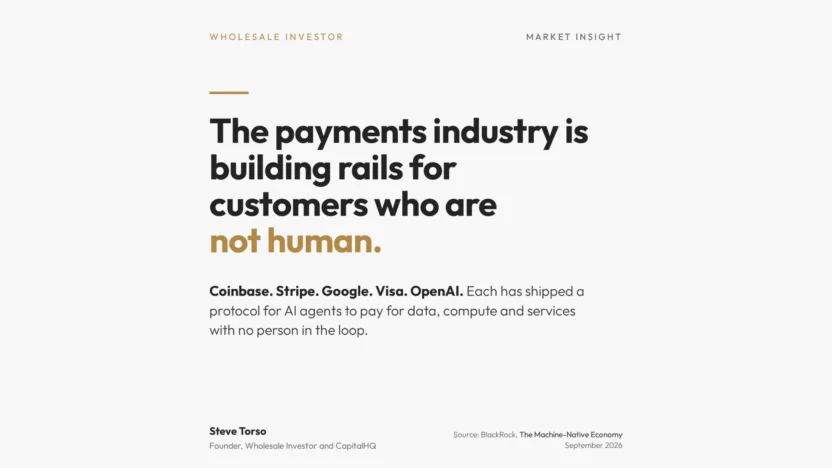
BlackRock has named the next Economy. What this latest paper means for Private Market Investors.
BlackRock has put a name on something the smart money has been circling for two years. Its digital assets research team calls it the machine-native economy. The thesis fits in one line. AI is machine-native intelligence. Digital assets are machine-native money. Both are built on the same architecture, and they are converging into a single […]
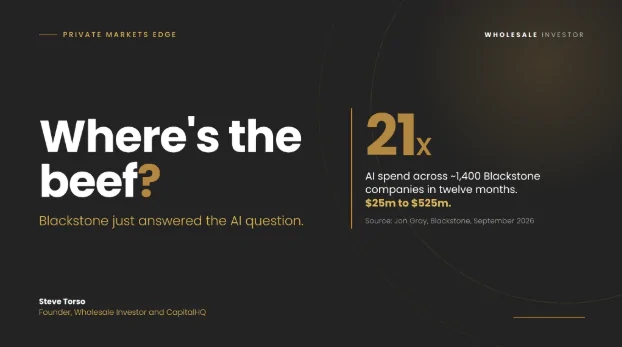
Where’s the beef? Blackstone just answered the AI question.
In 1984, a fast food ad asked a question that became a catchphrase. Where’s the beef? Jon Gray, President of Blackstone, used that line this month in front of global LPs. It is the question every capital allocator is asking about AI. Trillions of dollars are going into chips, data centres and power. That is […]
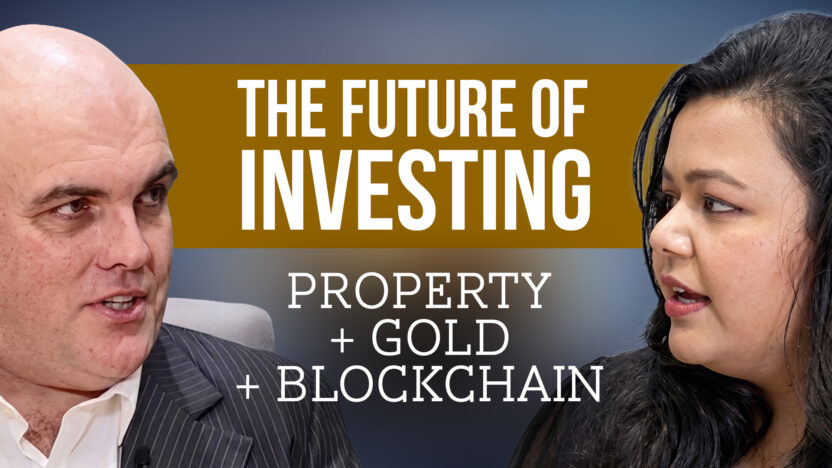
The Best of Both Worlds: How Omnique Fund is Rewiring Real World Assets via Tokenisation
For decades, the playbook for Australia’s wholesale investors has remained relatively unchanged: pick between the slow-moving, illiquid reliability of tangible assets like property and gold, or chase the frictionless, high-velocity liquidity of public equity and digital markets. But as macroeconomic volatility spikes and a structural housing deficit reshapes private debt demand, sophisticated investors are demanding […]
Backed By Leading Investment Groups and Family Offices