News and Announcements
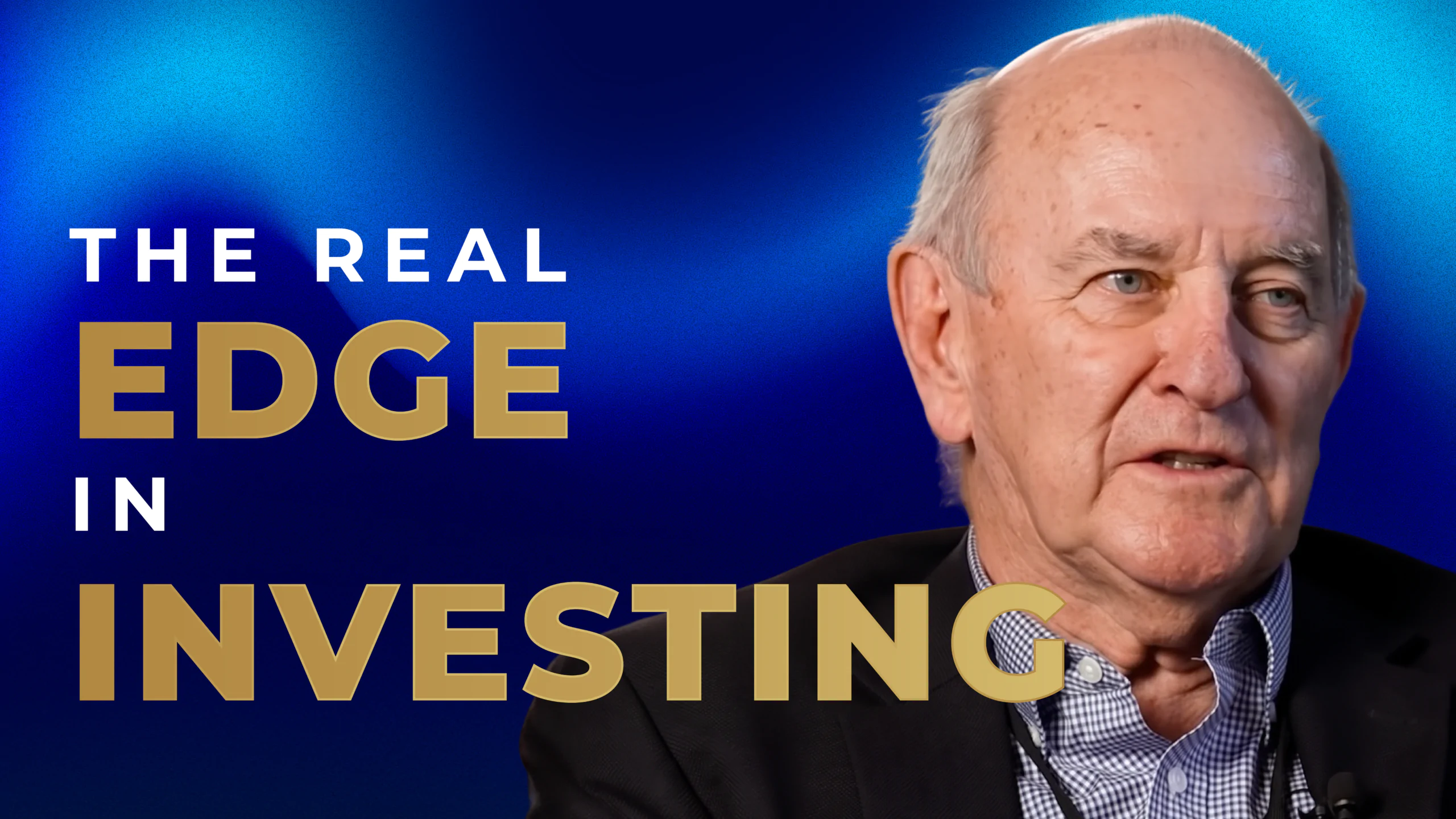
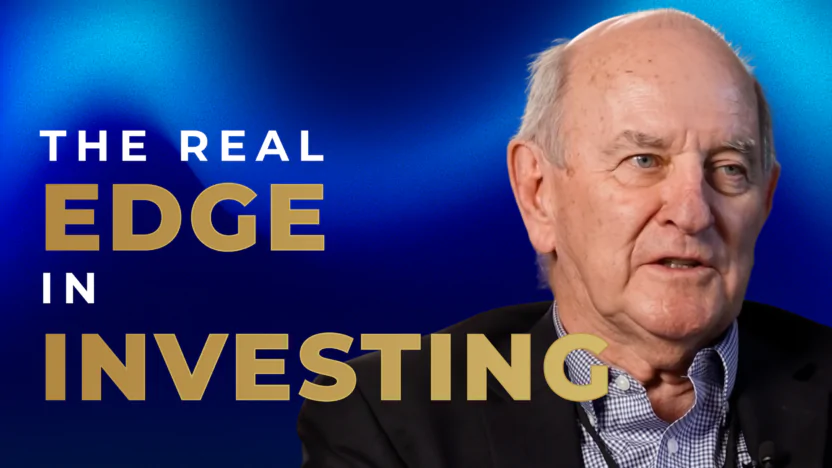
It looks like a fund with no thesis. It is not really a fund.
- Published November 02, 2026 11:39PM UTC
- Publisher Bella Battsengel
- Categories Capital Insights, Company Updates, Executive Interviews, Landing, Trending
Cattle reproductive biotech, a heart failure drug and a ski helmet sit in the same vehicle. Chairman Jim Creagh’s explanation is structural, and it changes what an investor is actually being offered.
On paper the portfolio reads like a list assembled at random.
Cattle IVF technology. A heart failure drug. A snow sport helmet designed to look like a beanie.
Conventional advice says to look for a fund with a defined thesis, and by that standard the Opportunity Plus Investment Fund fails immediately. Jim Creagh’s answer is that the standard does not apply, because the thing being described is not a diversified fund.
“It really is an umbrella fund, and each project is actually a single purpose fund,” he said in the interview.

What investors are actually buying
The mechanics matter more than the metaphor.
An investor is presented with the available projects and selects one. That is the only project they are invested in. It sits in its own unit class, with the assets siloed and held in the trustee’s name, and that vehicle invests into the investee company.
Which means the breadth of the portfolio is not diversification being offered to any individual investor. It is a menu.
That reframing is more useful than it first appears, because it moves the question an investor should be asking. Not “does this fund have a coherent thesis”, which it does not claim to. But “is this specific project sound, and are the people selecting it any good at selection”.
A diversified fund asks you to trust a strategy. This structure asks you to trust a filter, and then make your own call.
Where the deal flow comes from
Jim is direct that the edge is not a sector view. It is who the people are and what arrives at their door as a result.
His co-founder and partner Bruce Kennedy has spent over 30 years raising capital for startups and early stage companies, deliberately without a sector specialisation.
“It wasn’t driven by any one particular sector. It was agnostic to which sector the opportunities came up in.”
Jim’s account is that Bruce’s track record, including companies that subsequently listed on the ASX or exited through trade sales, is what generates inbound pipeline. Founders looking to raise approach him, which means the fund sees deals without competing for them.
The same logic runs in reverse at the assessment stage. Jim says the fund looks hard at the people behind each company, and lists several portfolio founders and associated figures with substantial public profiles.
It is a reasonable position and also a circular one, and worth naming as such. Reputation attracts deal flow, and deal flow quality is then assessed by reputation. That works while the judgement is good. It is not a process that catches a bad call from the outside.
Fifty years of watching companies grow into listings
Jim spent roughly five decades as a corporate lawyer before co-founding Cromwell, which became one of Australia’s largest listed property trusts.
What he says that career taught him was less about transactions than about trajectory.
“Companies that grow big enough to list typically start small,” he said. Acting for them through that growth, rather than only at the listing, let him watch which ingredients actually compounded. Vision. Leadership. Commitment to principle. How a company treated its shareholders. The quality of its advisers.
The Cromwell launch itself came out of that toolkit. Rather than building from nothing, the founders identified a distressed company already operating in their target sector, acquired it, and backdoor listed onto the ASX.
It is a lawyer’s solution to a market entry problem, and it is the same instinct visible in how the fund is structured now.
Governance
Asked what he personally does to make sure governance holds up across projects that have almost nothing in common, Jim points to process and to regulation.
He describes a strict due diligence process, applying the same discipline he used across many such processes as a lawyer. He also chairs the management entity behind the fund, which he describes as a regulated entity carrying licensing conditions and subject to audit.
“Governance is something that comes easily,” he said.
The cattle project
The clearest illustration of the model is the reproductive biotech business.
Jim describes a Queensland pharmaceutical entrepreneur who built a small business into a substantial one before turning to cattle breeding, and who has since spent a significant sum, from shareholders and grants combined, developing genetic technology that allows the genetics and sex of cattle to be predetermined.
The claimed compression is from seven years under conventional breeding programmes to seven days.
Jim’s account is that the project has drawn philanthropic grant funding tied to improving cattle and dairy production in India, where predetermining sex has obvious consequences for a dairy herd, as well as investment from a Queensland institutional investor.
He is candid about why it appealed beyond the science. Queensland is a major beef cattle state, and a meaningful share of the fund’s investors come from properties and regional communities.
“It was a natural fit.”
A closing observation
Jim exhibited at the conference and came away struck by volume rather than by any single pitch.
“There are hundreds of good ideas out there that need funding, and it would be a crying shame if they couldn’t be funded.”
That led him to the one unprompted policy view he offered, on recent changes to the taxation of capital gains. His argument is that a country trying to encourage entrepreneurship, innovation and productivity should think carefully about the signal sent by the capital gains discount, and that the current direction does not reconcile with the stated objective.
It is his view, offered as such.
The implication
The uncomfortable question about a structure like this is not whether the projects are interesting. Cattle genetics, cardiac therapeutics and protective equipment can all be good businesses.
It is that an investor selecting a single project out of an umbrella is not getting the risk mitigation that the word fund normally implies. They are making a concentrated early-stage bet, with the selection work done by someone else.
That can be an excellent arrangement, provided both sides understand which one it is. The structure is honest about this. The language around funds generally is not.
Trending
Industrial AI does not fail on models. It fails on context.
Operational Intelligence connects fragmented operational data and systems across an industrial facility, including control systems, historians and equipment data, to give operators and AI tools a connected view of what a plant is actually doing. It sits within the broader industrial software and Asset Performance Management market, where predictive maintenance is one application among several, and can be deployed on premises, at the edge or in airgapped environments where operational data cannot leave the site.
It looks like a fund with no thesis. It is not really a fund.
An umbrella fund structure holds multiple single-purpose sub-funds, each with its own unit class and segregated assets held in the trustee’s name. Investors select an individual project rather than acquiring exposure to the whole portfolio, which means they carry concentrated exposure to that project and do not obtain diversification across the fund’s other investments.
What they took out paid for the production line
Flint’s paper battery is usually described by what it removes. Carlo Charles’s even more interesting point is that removing the materials also removed a lot of machinery, and that is why two products reached production on roughly US$4 million. Asked what is inside his battery, Carlo Charles starts with what is not. No lithium. No […]
Backed By Leading Investment Groups and Family Offices