News and Announcements
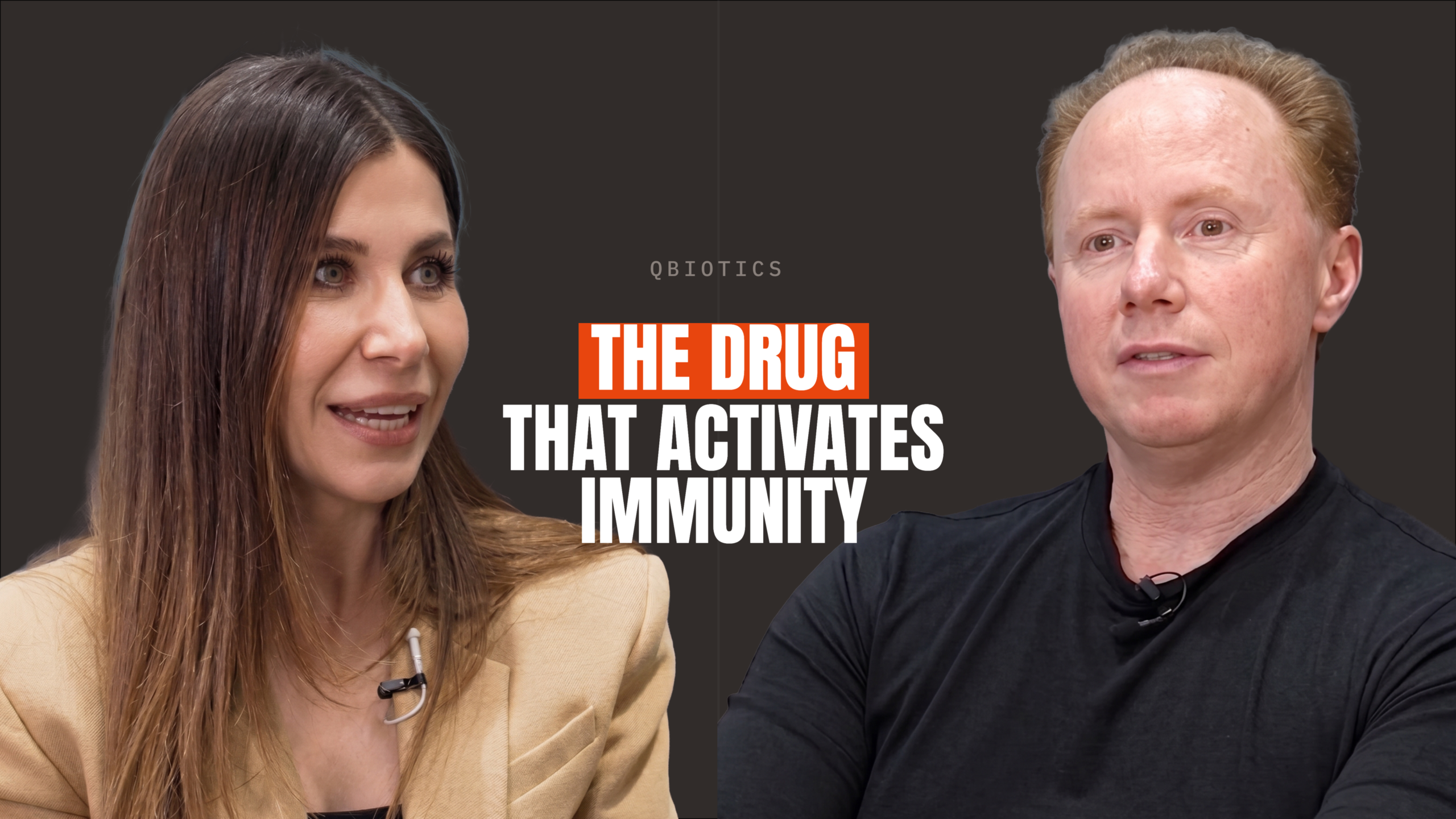
Dogs First to Reduce Risk: QBiotics’ Smarter Path to Oncology Markets
- Published October 06, 2026 2:00AM UTC
- Publisher Bella Battsengel
- Categories Company Updates, Executive Interviews
QBiotics took a compound derived from a north Queensland rainforest tree all the way to veterinary registration before pursuing human oncology to de-risk its human cancer programme. Interim CEO Ebru Davidson argues that sequence – now backed by early responses across several human cancers – is the company’s real asset.
The story that pulled Wholesale Investor into life sciences involves a dog that was going to die.
Steve, who conducted the interview, first encountered QBiotics in 2009 through a subscriber introduction. His co-founder Reuben had a brother whose dog had a tumour. The dog was enrolled in a trial of the compound that became STELFONTA. Within two to three weeks the tumour began to disappear, then fell away, and the animal recovered.
That anecdote is not the investment case. The strategy behind it. QBiotics chose to prove its drug first in dogs, whose cancers arise naturally as they do in people, and to take it all the way to registration – retiring manufacturing, toxicology and regulatory risk that most cancer drugs still carry when they first reach patients.

Registering in animals first
QBiotics has been running for more than 25 years. It was founded by Dr Victoria Gordon and Dr Paul Reddell, who began biodiscovery work in their basement at a time when a large pharmaceutical company was conducting similar work in Australia.
The founders had an advantage that money could not replicate. Paul is a forest ecologist. They knew what they were looking for, and where on private land to look for it.
The premise is less exotic than it sounds. Ebru notes that around 40 per cent of drugs currently registered have their origins in nature.
After roughly a decade of biodiscovery, the founders concluded that demonstrating value required taking a finding into development. They chose oncology, which Ebru describes with some understatement as the hardest area available, and began work on tigilanol tiglate.
The strategy was to de-risk early. Animal trials came first, on the basis that dog models are closely linked to humans in cancer – like people, they develop cancer spontaneously, with intact immune systems. The results in dogs were strong enough that the company took the drug all the way to veterinary registration. STELFONTA(R) which provided both validation of the underlying science and an early commercial platform is approved in a number of key jurisdictions including the US, Europe and Australia for the treatment of canine mast cell tumours.
That deliberate decision is the part worth understanding. A registered veterinary product means the manufacturing has been demonstrated at scale, the chemistry and controls work has been done, and a substantial body of toxicology exists. Ebru describes it as return on investment for the human development programme.
The company also holds a full commercial-scale plantation in the Queensland tablelands, which she says can produce millions of doses a year, removing supply as a constraint.
The combination of strong foundational science, a commercial scale plantation and advanced chemistry and manufacturing, she sums up as “what really differentiates QBiotics from other early stage biotechs”
A platform, not a single asset
QBiotics describes itself as a clinical-stage biotechnology company developing first-in-class small molecules from its epoxytigliane platform.
Ebru is emphatic on the structural point. This is not a single asset play. Three interrelated but differentiated programmes span oncology, wound healing and antimicrobials, with the first two in clinical development.
The distinction matters for risk. A single-asset biotech is a binary outcome. A platform with three programmes drawn from the same chemistry has more than one route to value, and learnings transfer between them.
How the drug is said to work
Tigilanol tiglate is injected directly into the tumour rather than delivered systemically.
Ebru describes a rapid local effect on injection. Vascular disruption, then tumour necrosis. The tumour is destroyed and a wound is left, which she says heals over roughly 28 days in most cases, with complete healing over the following months.
The contrast she draws is with systemic treatment. Chemotherapy carries a significant toxicity burden and a well-known set of side effects. Newer immunotherapies, she notes, work in only 20 to 30 per cent of patients.
The more interesting claim concerns what happens beyond the injection site. Ebru says the drug triggers immunogenic cell death, a form of tumour cell death that alerts the immune system and primes it to attack the cancer, and that appears to produce a systemic response alongside the local one.
“In addition to the local effect, we’re seeing a systemic response,” she said. “That’s the key.”
She cites a melanoma case in which three tumours were injected and a response was observed in a fourth, uninjected tumour, an abscopal effect.
On safety, she says the drug has been well tolerated to date, with pain on injection the main reported effect. She attributes this to the drug leaving the body quickly, limiting systemic exposure.
Where the clinical programme sits
Ebru is careful to frame the data as early.
“I need to be very upfront about that. It’s still early days,” she said.
With that caveat, she reports a 78 per cent response rate in injected tumours from a head and neck trial, with the Royal Marsden as lead site, and an 82 per cent response rate in injected tumours from stage 1 of a two stage soft tissue sarcoma trial being run at Memorial Sloan Kettering. She notes that combined with Gustave Roussy where clinicians have been using the drug on a compassionate use basis these are three of the top ten cancer institutes globally.
The patient population is the context that gives those figures meaning and limits them at the same time. These are late-stage, typically large tumours in patients who have exhausted other options. Ebru notes three patients in the sarcoma trial were previously refractory to systemic therapies. Clinical trials are, in her words, a last attempt at something experimental that may not work.
Tigilanol tiglate holds FDA Orphan Drug Designation for soft tissue sarcoma, granted on the basis that it is a rare indication with unmet need. The designation confers seven years of marketing exclusivity on registration and creates potential for an accelerated pathway.
The second clinical programme, wound healing, comes from the same platform as the oncology drug delivered as a topical hydrogel. It is in trials for venous leg ulcers, with Ebru noting broad potential application across wounds and burns.
The French route
A third Phase II trial is in planning, in breast cancer in France, through a collaboration with Unicancer.
The relationship arrived through data rather than business development. Gustave Roussy has been using the drug on a compassionate use basis for several years under French regulatory authority. Ebru says around 14 patients have been treated that way, nine of them breast cancer patients, frequently recurring chest wall cases.
Unicancer, a federation of around 20 cancer hospitals in France, noticed the results. The planned trial covers 50 patients across 20 centres and will be largely funded by Unicancer, with substantial translational work attached rather than a straightforward response study.
Separate work at Gustave Roussy is exploring visceral cancers. To date the drug has only been used on cutaneous and subcutaneous tumours.
The raise
QBiotics is raising up to $40 million in a bridging round, with proceeds directed primarily at the oncology programme and the data package behind it.
The business model, which Ebru says the company has made no secret of, is to partner at Phase II. Her position is that the data now exists to do so, and that potential partners have been approaching the company rather than the reverse.
Funds would also cover QBiotics’ contribution to the Unicancer breast cancer trial, the visceral cancer work at Gustave Roussy, and, depending on the amount raised, a liver cancer trial.
Ebru describes the pre-money valuation as compelling, and says it was set deliberately to give existing shareholders the opportunity to participate again. A detailed prospectus is available, and investors should consider it in full before deciding whether to invest, and the offer appears in the CapitalHQ deal room.
The implication
Most clinical-stage biotech asks investors to underwrite a scientific hypothesis and a manufacturing hypothesis and a regulatory hypothesis at the same time.
QBiotics has already resolved two of those in a different species. The compound has been manufactured at scale, taken through a regulatory process to registration, and sold. What remains unproven is whether the human efficacy signal holds through larger, controlled trials.
That is still the hardest question in the sequence. It is also, unusually, the only one left.
Executive Interviews
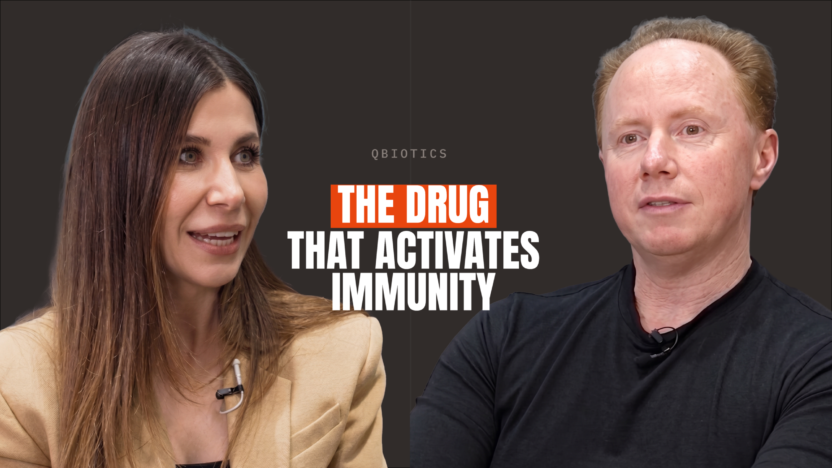
Dogs First to Reduce Risk: QBiotics’ Smarter Path to Oncology Markets
QBiotics took a compound derived from a north Queensland rainforest tree all the way to veterinary registration before pursuing human oncology to de-risk its human cancer programme. Interim CEO Ebru Davidson argues that sequence – now backed by early responses across several human cancers – is the company’s real asset. The story that pulled Wholesale […]
Built on discipline, not complexity: inside an ASX equities income strategy
Haydn Froggatt and Zac Brabin have decades of derivatives experience between them and access to almost any strategy in the market. They use two of the simplest structures available, and wrote 202 positions with them last year. Published by Fairway Capital Management. Based on an interview with co-founders Haydn Froggatt and Zac Brabin. Two traders, […]
BlackRock has named the next Economy. What this latest paper means for Private Market Investors.
BlackRock has put a name on something the smart money has been circling for two years. Its digital assets research team calls it the machine-native economy. The thesis fits in one line. AI is machine-native intelligence. Digital assets are machine-native money. Both are built on the same architecture, and they are converging into a single […]
Backed By Leading Investment Groups and Family Offices