
News and Announcements
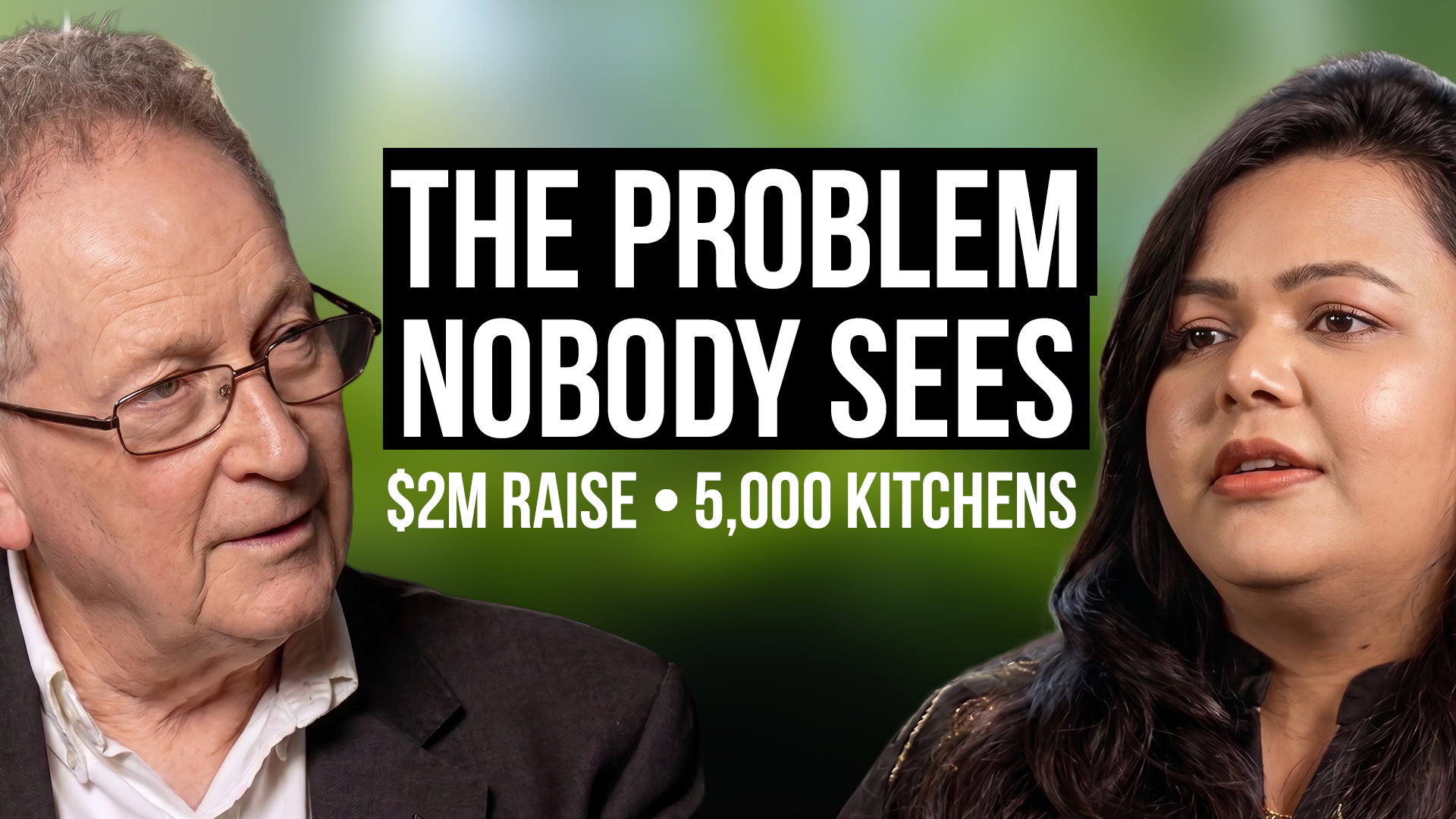
The Biofilm Breakthrough: How An Australian BioTech Firm Is Tapping Indonesia’s $45,000-a-Kitchen Bottleneck
- Published August 14, 2026 9:00AM UTC
- Publisher Bella Battsengel
- Categories Company Updates, Executive Interviews
Australian sustainability and deep-tech firm Altair International Pty Ltd is commercialising plant-based clinical hygiene technology, targeting a prime operational bottleneck in Indonesia’s massive national free meals program.
Every few years, an Australian deep-tech company emerges combining proprietary science with a transformational anchor contract, the kind of business that quietly creates an entirely new market category before institutional capital takes notice.
Altair International is positioning itself to be that next company. Led by Managing Director Gerard McDonald, the Australian sustainability business is commercialising a plant-based clinical hygiene formulation engineered to eliminate biofilms in industrial kitchens and healthcare environments.
Now seeking $2 million in capital on the Wholesale Investor platform, Altair is preparing to execute a multi-front commercial expansion: anchoring its growth in Indonesia’s nation-building $82.9 million daily meal program, while simultaneously penetrating US defence and rail maintenance, repair, and overhaul (MRO) supply chains.
What Legacy Cleaners Miss: The Biofilm Problem
Industrial hygiene has long relied on harsh, toxic, and corrosive chemicals like chlorines, alcohols, and quats. While these legacy cleaners sanitise exposed surfaces, they consistently fail to solve a foundational issue: biofilms.
“Most cleaning products clean the surface quite well, but what they don’t do is remove the biofilm, a microscopic organic film that sits on surfaces and forms a shield for bacteria and viruses,” explains McDonald. “Our product lifts that biofilm off so pathogens no longer have a place to live, removing cross-contamination risks entirely.”
Unlike standard industrial agents, Altair’s proprietary chemistry is:
- Non-corrosive: Preserves capital equipment and surface integrity without pitting.
- Non-caustic & Non-volatile: Fumes-free and safe for kitchen crews, mitigating workplace health and safety (WHS) hazards.
- Residual & Persistent: Chlorines and alcohols evaporate within two to three minutes, losing efficacy. Altair’s formulation leaves a persistent antimicrobial barrier that continues protecting surfaces over time.
Inside Indonesia’s 82.9 Million Daily Free Meals Bottleneck
The immediate commercial catalyst for Altair lies in Indonesia. Under President Prabowo Subianto, the Indonesian government’s flagship BGN (Badan Gizi Nasional) program aims to feed 82.9 million children daily across a network of roughly 32,000 industrial kitchens.
While market observers assumed food supply logistics would pose the primary bottleneck, operational reality has proven otherwise. Widespread hygiene non-compliance and E. coli contamination have caused severe foodborne illness outbreaks, stalling rollout schedules.
Altair is deploying its market-tailored brand, EcoClarion, directly into this hygiene deficit.
“President Subianto promised meals for effectively every kid in Indonesia to lift standards of living, but kitchens are under severe operational pressure due to lack of hygiene compliance,” says McDonald. “Eco Clarion steps directly into that void.”
Strategic Mechanics: Brunei Hub & Induk Kut JV
To navigate Southeast Asian market entry, Altair established a strategic framework backed by government and regional sovereign alignment:
- Brunei Production Base: Partnered with Brunei-based Farm Fresh Industries (FFI), with the Brunei Economic Development Board offering to co-fund up to 30% of a purpose-built manufacturing facility.
- Indonesian Distribution Joint Venture: FFI holds a JV arrangement with Indonesia’s Induk Kut Cooperative, an entity closely connected to senior government leadership with an initial contract to roll out 5,000 kitchens.
- Regulatory Milestones: Altair and its partners are accelerating Halal certifications and Indonesian regulatory accreditations, backed by high-level government access to ensure a smooth runway.
The Unit Economics
For investors evaluating the $2 million raise, the core financial appeal rests on recurring consumable economics and expanding operational leverage.
| Financial Metric | Targeted Value |
| Annual Recurring Revenue (ARR) | ~$45,000 per kitchen / annum |
| Target EBITDA Margin | ~48% at operational scale |
| Initial Phase Target | 5,000 kitchens (out of 32,000 total national network) |
| Production Footprint | Low-cost manufacturing hub in Brunei |
At $45,000 per kitchen annually, capturing just the initial 5,000-kitchen tranche represents a major recurring revenue foundation, even before accounting for expansion across the remaining 27,000 national kitchens or adjacent ASEAN commercial food service sectors.
Key Investment Takeaways
- Defensible Deep-Tech IP: Replaces harsh chemicals with a non-toxic, non-corrosive, persistent antimicrobial chemistry that eliminates biofilm-sheltered pathogens.
- Anchor Government Customer: Positioned directly inside Indonesia’s national school lunch initiative via an established ASEAN partnership structure.
- Dual-Front Strategy: Parallel expansion underway into high-compliance US defence and rail MRO sectors, offering market diversification.
- 18-Month Catalyst Horizon: Funds raised in the current $2M round will directly support regulatory conversion, Brunei production setup, and initial kitchen rollouts across Java.
Executive Interviews
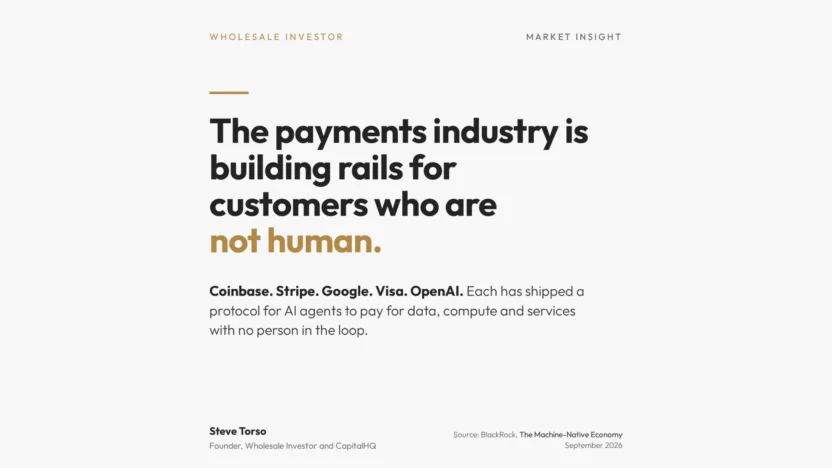
BlackRock has named the next Economy. What this latest paper means for Private Market Investors.
BlackRock has put a name on something the smart money has been circling for two years. Its digital assets research team calls it the machine-native economy. The thesis fits in one line. AI is machine-native intelligence. Digital assets are machine-native money. Both are built on the same architecture, and they are converging into a single […]
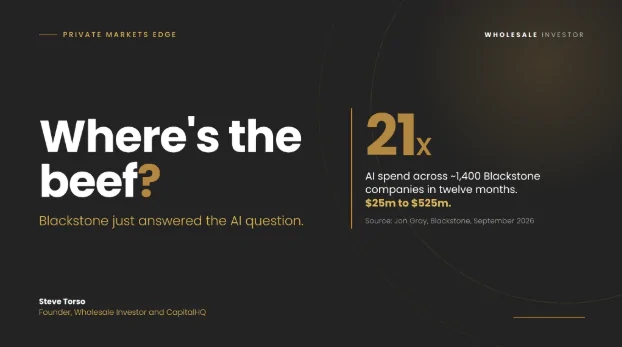
Where’s the beef? Blackstone just answered the AI question.
In 1984, a fast food ad asked a question that became a catchphrase. Where’s the beef? Jon Gray, President of Blackstone, used that line this month in front of global LPs. It is the question every capital allocator is asking about AI. Trillions of dollars are going into chips, data centres and power. That is […]

The Best of Both Worlds: How Omnique Fund is Rewiring Real World Assets via Tokenisation
For decades, the playbook for Australia’s wholesale investors has remained relatively unchanged: pick between the slow-moving, illiquid reliability of tangible assets like property and gold, or chase the frictionless, high-velocity liquidity of public equity and digital markets. But as macroeconomic volatility spikes and a structural housing deficit reshapes private debt demand, sophisticated investors are demanding […]
Backed By Leading Investment Groups and Family Offices