News and Announcements
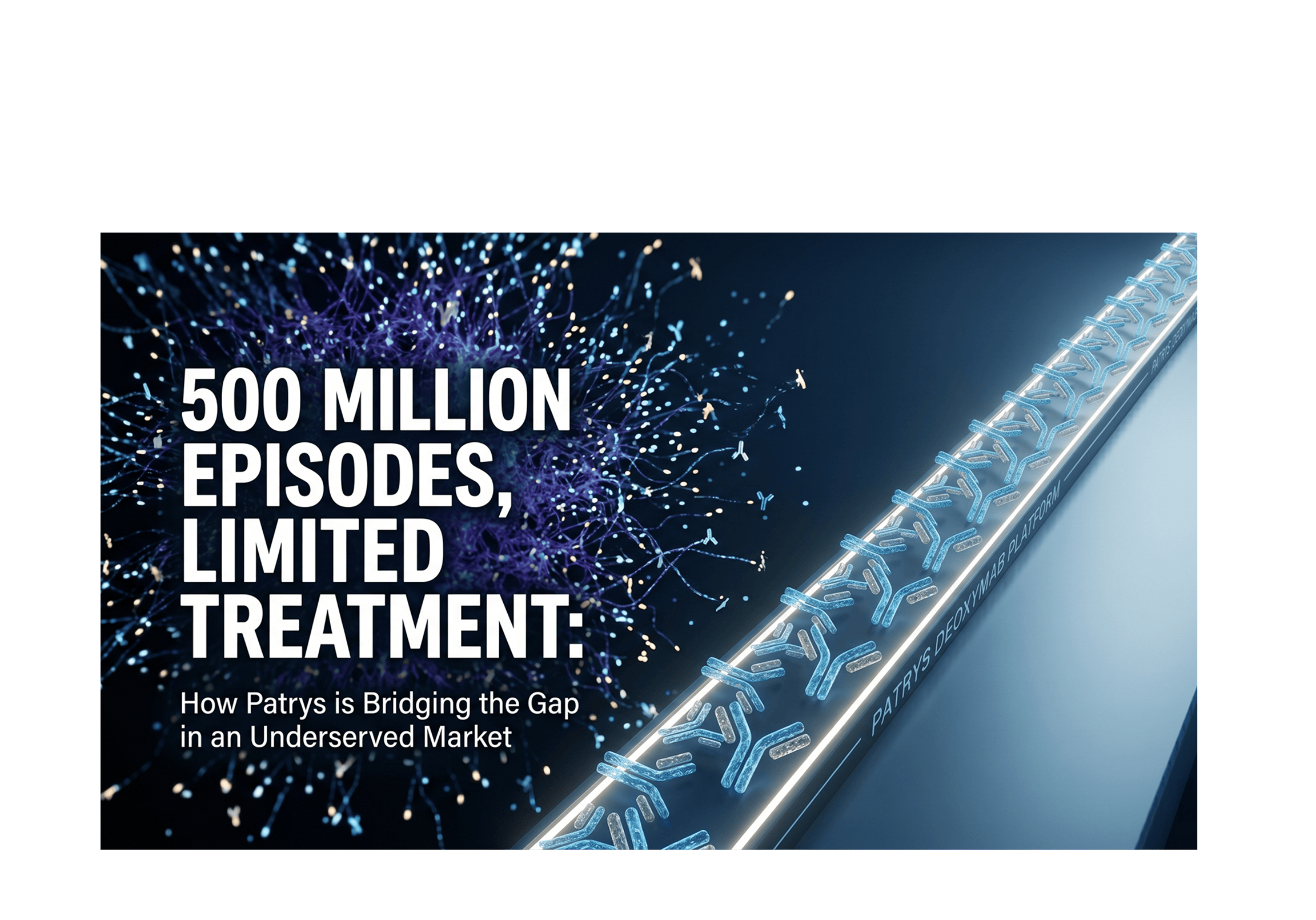
500 Million Episodes, Limited Treatment: How Patrys is Bridging the Gap in an Underserved Market
- Published May 08, 2026 3:04AM UTC
- Publisher Jade Miguel
- Categories Capital Insights, Executive Interviews, Landing, Life Science Hub, Trending
In the clinical vocabulary of the Intensive Care Unit, there is perhaps no word that carries as much quiet dread as delirium. It is a “chemical storm” of the brain—an acute dysfunction where the delicate balance between calming and activating signals is scrambled. For the patient, it can be a waking nightmare of hallucinations and agitation; for the family, it is a heartbreaking loss of recognition; and for the hospital, it is more than a $100 billion-a-year drain on resources.
“It’s really kind of been treated like a nuisance symptom as opposed to the brain dysfunction that it is,” says Dr. Samantha South, CEO of Patrys (ASX: PAB). A veteran of the biotech sector with a background rooted in the rigours of translational science, Dr. South is leading the charge to provide the world’s first effective, approved pharmacological treatment for a condition that drives over 500 million patient episodes globally every year, representing a serviceable addressable market of at least $2 billion annually..
Despite a prevalence that rivals depression or schizophrenia, the field of delirium has remained a massive “blind spot” for global pharma. Currently there is effectively no approved treatment — only certain EU member states permit limited use of a single antipsychotic, one that carries a significant side effect burden.. Clinicians are forced to rely on off-label antipsychotics and sedatives—drugs designed for chronic psychiatric conditions, not the high-stakes, acute environment of critical care. The majority of delirium patients simply go untreated or receive suboptimal alternatives.
A condition this common, this serious, and this costly — with no real approved treatment anywhere in the world — isn’t just a clinical gap. It’s a market waiting to be unlocked.
The Genius of the Injectable “Bridge”
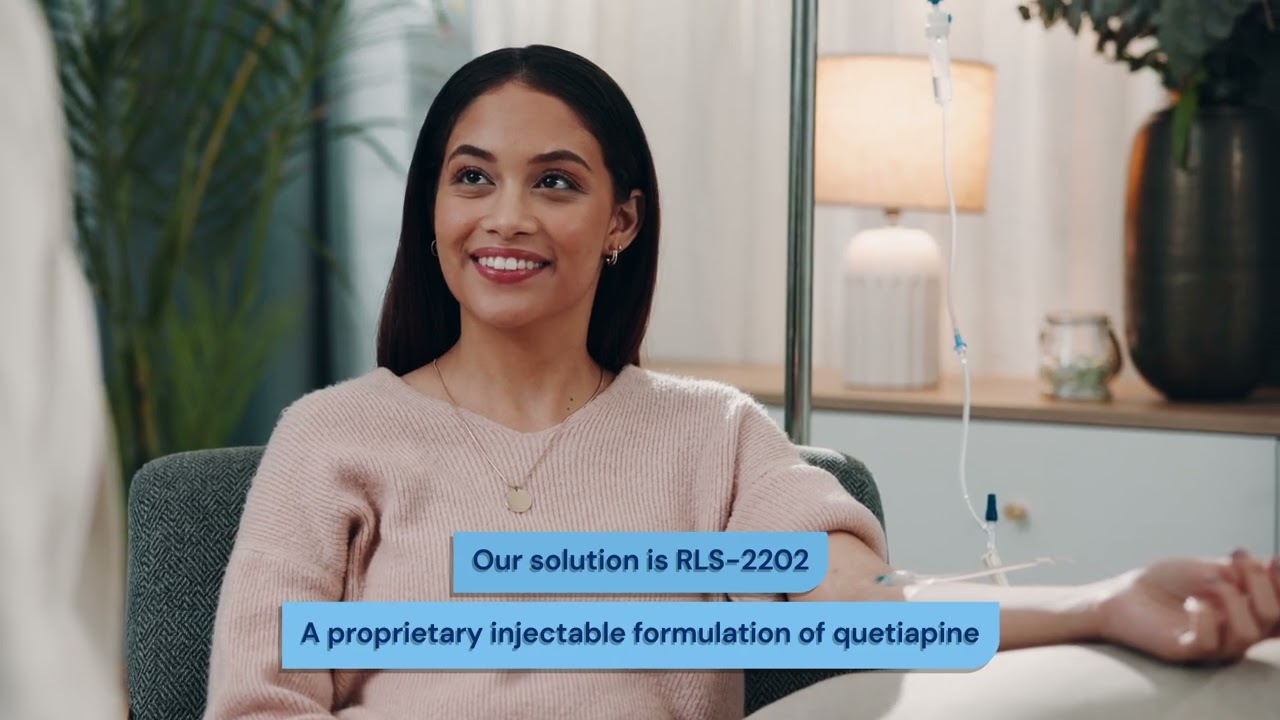
Patrys’ lead asset, RLS-2202, is a masterclass in pragmatic drug development. The company isn’t trying to reinvent the wheel with a brand-new molecule; instead, they are developing an injectable formulation of an existing, well-understood oral drug.
In the chaotic environment of the ICU, this shift in delivery is transformative. “Most delirious patients are either too confused or drowsy or uncooperative or aggressive to swallow tablets safely,” Dr. South explains. “If you think people are trying to kill you, someone coming near you with a tablet may not end well for your fingers.”
By moving to an intravenous (IV) route, Patrys offers:
- Immediate Action: Bypassing the two-hour peak time of oral tablets for instant calm.
- Precision Titration: Allowing clinicians to adjust dosages in small increments to avoid the over-sedation that often worsens confusion.
- Workflow Integration: Utilising the IV lines that patients, in particular critical care patients already have in place. No additional procedures, no change in workflow, no access barriers.
De-risking the “Moonshot”
For investors, the Patrys story is one of dual-track value. While the RLS-2202 program offers a near-term path to market, the company also holds a long-term “moonshot” in its deoxymab platform. Originally licensed from Yale University, these unique antibodies have the rare ability to cross the blood-brain barrier to target neuroinflammation and cancer.
“The two programs complement each other by balancing long-term innovation with near-term value generation,” says Dr. South. This dual-platform approach effectively removes the “binary risk” often associated with junior biotechs. The company’s fate is no longer tied to a single, high-risk biological discovery.
The $1.4 Billion Precedent
The “economic logic” of Patrys’ strategy is backed by historical success. Dr. South points to Cadence Pharmaceuticals, which took a similar path by reformulating a chronic oral pain medication for acute post-operative use. Cadence was eventually acquired by Mallinckrodt for $1.4 billion.
Patrys is following this “well-trodden path” with a significantly lower risk profile. Because RLS-2202 is based on a drug with decades of safety data, the company can utilise a truncated regulatory pathway.
“We can benefit from a two to three times shorter and much cheaper development timeline,” Dr. South notes. “We’re leveraging existing safety profiles to accelerate the timeline for revenue generation.”
The 2026 Inflection Point
The next 12 months represent a “value inflection” window for Patrys. The company is targeting the completion of Phase 1A and the initiation of Phase 1B bridging studies in 2026.
Unlike traditional Phase 1 trials that can sometimes take years, these bridging studies require smaller subject numbers and shorter timeframes. They are designed to confirm that Patrys’ intravenous formulation, in doses that achieve the same amount of drug in the bloodstream that is already proven effective in oral clinical trials, is just as safe as the oral dosing- with no new or unexpected side effects from the change in delivery.The Roadmap to 2026:
- Australian Ethics Approval: Setting the stage for Phase 1 clinical trials.
- Phase 1A Completion: Confirming safety and dosing in healthy volunteers.
- FDA Engagement: Ensuring trial designs meet the criteria for a global pivotal study.
- Phase 1B Initiation: Confirming safety and dosing in critical care populations.
The Investor Takeaway
In a sector often defined by decade-long horizons and astronomical burn rates, Patrys offers a rare combination: a clear regulatory shortcut, a massive unmet clinical need, and a diversified pipeline.
With a market opportunity reaching over $2 billion, the company is addressing one of the last great “white spaces” in acute hospital care. For investors, the current valuation relative to international peers—and the proximity of the 2026 clinical milestones—suggests that Patrys is entering the “hot zone” for growth.
“Now is the right time to invest,” Dr. South concludes. “We’re addressing a commercially underserved condition with minimal technical risk. We’re not just building a business; we’re bringing families back to their loved ones.”
Trending
The Algorithm Re-Dosing Cancer Treatment: Inside the University of Melbourne Spin-Out Rewriting a 60-Year-Old Formula
Oncology specialists are still calculating toxic chemotherapy doses using a formula from the era of the Ford Model T, leading to a system where seven out of eight patients are routinely overdosed. University of Melbourne spin-out PredicTx is dismantling this legacy approach, utilizing advanced AI to analyze existing patient CT scans, deliver precision medicine to the bedside, and return a massive 100x financial rerate to hospital networks.

Asset over thematic: Centuria’s Andrew Essey warns against ‘blanket strategies’ as global capital eyes Australia
Relying solely on broad macroeconomic trends is the single biggest mistake property investors make today. Centuria Capital CIO Andrew Essey explains why asset-level “lettability” always trumps the overarching sector thematic, and reveals where global institutional capital is quietly pivoting to capture high-octane returns.
Material gains: Swinburne spin-out EntroMat takes aim at $160b global market
Traditional metallurgy has hit a performance wall. Discover how Swinburne University spin-out EntroMat is leveraging physics-based AI and circular critical minerals to engineer high-entropy alloys capable of surviving the world’s most extreme industrial environments.
Backed By Leading Investment Groups and Family Offices