
News and Announcements

The Endocannabinoid Entrepreneurs: Inside Medigrowth’s Mission to Mainstream Plant-Based Medicine
- Published February 13, 2026 12:18AM UTC
- Publisher Jade Miguel
- Categories Capital Insights, Executive Interviews, Landing, Life Science Hub, Trending
In the high-stakes world of biotechnology, the “why” is often as critical as the “what.” For Todd McClellan, the spark didn’t ignite in a laboratory, but at the bedside of a terminally ill grandparent in Canada. Years later, when a debilitating chronic headache condition threatened his own quality of life, it was medicinal cannabis—not traditional pharmaceuticals—that finally provided a resolution.
“When you experience something that changes your life so dramatically, it’s hard not to share it with others who are suffering,” McClellan reflects.
McClellan, alongside his long-time friend and business partner Adam Guskich, is now the driving force behind Medigrowth. Since 2017, the pair has been quietly building one of Australia’s few fully licensed companies working toward registered cannabis-based medicines for TGA approval. While the sector was once dismissed as a regulatory “wild west,” Medigrowth applies a rigorous, clinically driven approach to an industry now transitioning from alternative therapy to regulated pharmaceutical science.

The Biological Switch: Unlocking the Body’s Network
To the uninitiated, cannabis medicine still carries a whiff of controversy. But for Guskich, a seasoned entrepreneur with a sharp eye for regulatory landscapes, the science is a matter of simple, elegant biology.
“The human body has a natural signaling network called the endocannabinoid system (ECS),” Guskich explains. “It’s there to keep things in balance—regulating pain, mood, sleep, and immune function.”
Think of the ECS as a series of “biological switches” distributed throughout the brain, nervous system, and immune organs. When the body’s internal balance is disrupted by chronic pain or anxiety, the compounds in cannabis—specifically THC and CBD—act as “molecular keys” that fit into these receptors to restore equilibrium.
By targeting this system, Medigrowth provides an alternative for patients who have exhausted the Standard of Care. The company is currently serving a cohort of thousands dealing with hundreds of TGA-recognised indications, ranging from chronic pain and PTSD to epilepsy and autism spectrum disorder (ASD).
Clinical Rigour over Anecdote
McClellan cites countless conversations with patients and families reporting life-changing improvements in quality of life. Notably, the continuation of treatment with Medigrowth products long after the conclusion of formal clinical trials speaks volumes. While patient experiences are powerful, Medigrowth deliberately avoids reliance on anecdote alone, instead anchoring outcomes in rigorous clinical trials, peer-reviewed research, and real-world evidence.
The company has pivoted toward a “clinical-first” strategy, partnering with five Australian universities, including Deakin and the University of WA, to build a definitive evidence base.
“In the early days, doctors would ask: ‘Where’s the clinical evidence? How do I know it’s safe?'” says Guskich. “We decided that building our own sustainability and commercial success meant bringing that evidence to the table.”
The Sovereign Advantage
Furthermore, the company is leveraging the TGA’s “gold standard” regulatory reputation to eye global markets. By adhering to these strict pharmaceutical protocols, Medigrowth isn’t just a local player; it’s an export-ready biotech.
Medigrowth has future-proofed its operations through a strategically co-located university site, positioning the company to ultimately control the full manufacture of registered medicines alongside ongoing research and development. In a post-pandemic environment, sovereign capability has emerged as a critical strategic asset.
The “Value Inflection” Point: The Road to the PBS
For investors, the Medigrowth proposition rests on a unique “dual pillar” business model that balances immediate cash flow with long-term “blue sky” potential:
- The Distribution Pillar: An existing, high-growth revenue arm focused on the sale of unregistered medicines to pharmacies and clinics via their telehealth platform, Azure Health.
- The Clinical Pillar: A mid-to-long-term play focused on registered medicines.
The “economic logic” is compelling: moving a drug from an “unregistered” status to a TGA-registered, PBS-listed medication is the ultimate value rerate. It removes the price barrier for patients and provides the institutional legitimacy required for mass-market adoption.
The Investor Takeaway
Medigrowth represents a “hot zone” investment in a sector that is rapidly maturing. By combining clinical gravitas with a mission-driven soul—evidenced by their Concession Program for vulnerable patients—Guskich and McClellan have built a biotech that is both ethically grounded and commercially aggressive.
“We’ve spent years de-risking this opportunity before taking external investment,” McClellan notes. “We are already at a Phase 3 gateway with an innovative product. This is a de-risked biopharmaceutical opportunity with a moat built on years of regulatory expertise.”
Trending

The A$20.4 Million Inertia Trap: How Kepa Software Is Unlocking Value in Enterprise Capital Allocation
A government agency renewed the same maintenance decision nine years running, because auditing the original choice was deemed too expensive. When the portfolio was finally tested, A$20.4 million of low value spend was identified in a single year. Kepa Software’s capital governance platform was built to expose and eliminate precisely these boardroom blind spots. For […]
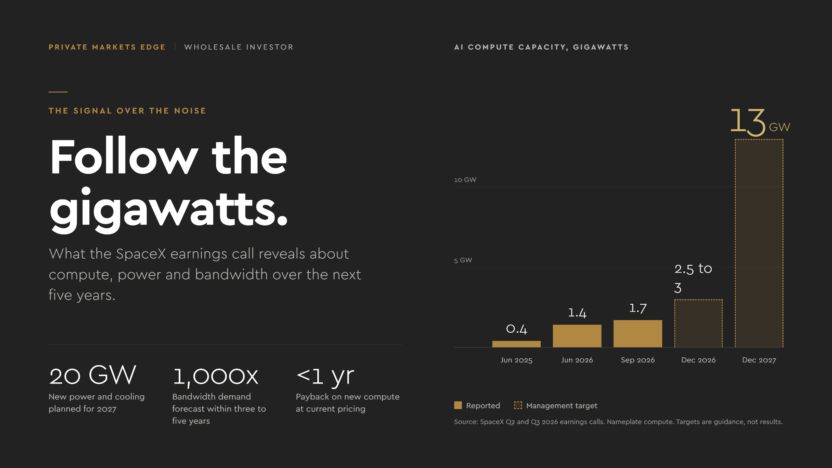
Forget the share price. SpaceX just published a map of the next five years.
Most coverage of SpaceX’s result focused on a 9.1% share price fall. That is noise. The signal is in the transcript: compute, power, bandwidth and demand over the next five years.

The prefab company that deliberately leaves part of the house unbuilt
BuiltQuik prefabricates the floor and roof structure and stops there. Co-founder Ryan Mullaney argues the omission is the product. Prefabricated housing usually means a factory. A large central facility, identical modules, limited room to move on design, and a logistics problem getting the finished box to site. BuiltQuik builds the opposite, and the design decision […]
Backed By Leading Investment Groups and Family Offices