
News and Announcements
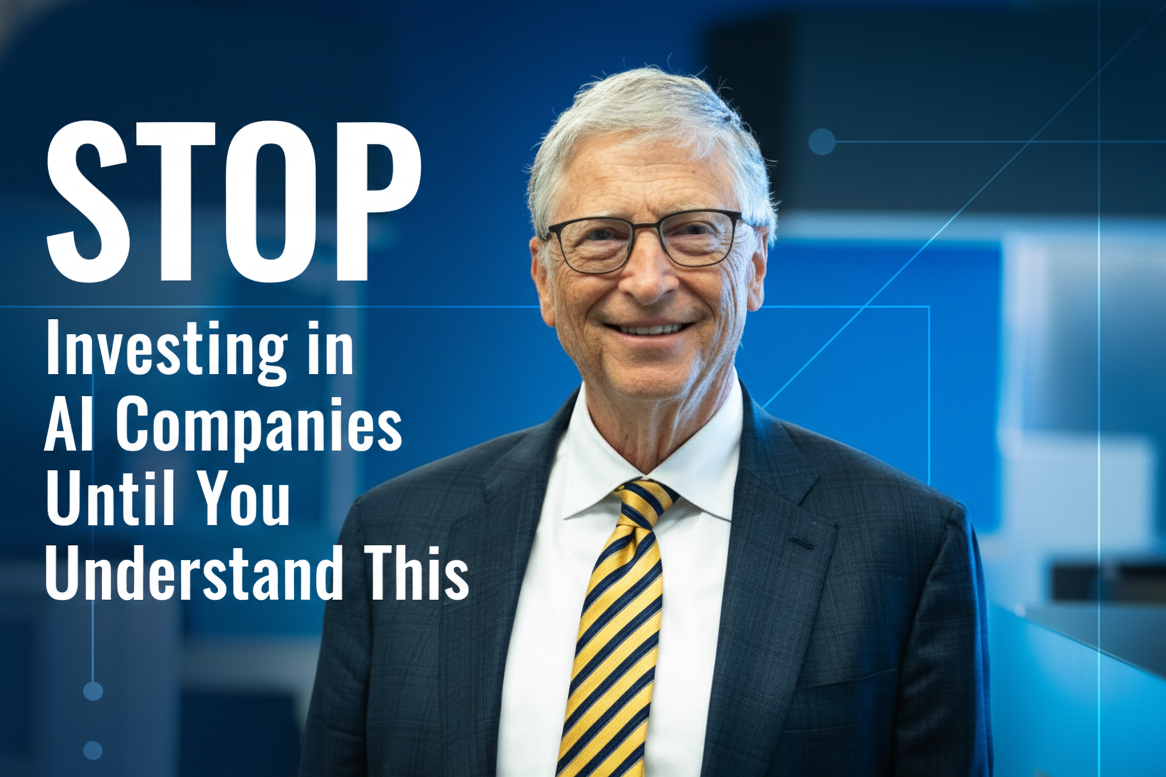
Bill Gates AI Warning: Why Most AI Companies Will Fail
- Published February 06, 2026 3:36AM UTC
- Publisher Bella Battsengel
- Categories Trending
AI Company Valuations Face Reality Check
Bill Gates issued a stark warning to investors. Most AI companies will fail despite technology improvements.
This creates a critical disconnect. AI works. AI will improve. But AI company valuations may not be justified.
Gates draws from 50 years of technology investing experience. He understands that technological validity does not guarantee company success.
For investors deploying capital into AI companies in 2026, this distinction matters. The technology thesis is separate from the investment thesis.
Technology Success Does Not Equal Investment Returns
Gates frames the challenge clearly in his Australian Financial Review interview. Picking technology winners differs from picking investment winners.
“The majority of AI companies will fail,” Gates told the AFR. “It’s a tough discrimination for a non-technical investor to pick which one.”
The Historical Pattern
Every major technology platform shift follows this pattern. Personal computing created winners and losers. The internet boom destroyed most companies. Mobile and cloud followed the same path.
The technology becomes ubiquitous. The companies become concentrated. A handful of winners capture most value.
AI is following the same trajectory at accelerated speed.
The Valuation Trap
Gates separates two distinct questions that investors often conflate.
Question 1: Does AI technology work? Answer: Yes, dramatically.
Question 2: Are AI company valuations justified? Answer: Unclear.
“Saying that AI really works today is different from defending all these valuations,” Gates explained to the AFR.
This distinction matters for capital deployment. Believing in AI as technology does not require believing in AI company valuations.
Market Signals
Global software companies sold off heavily the week of Gates’ interview. Investors feared AI progress could make their products obsolete.
The Nasdaq plunged 1.4% after Anthropic announced tools that automate legal tasks. This market reaction validates Gates’ warning.
AI advancement creates destruction alongside creation. The companies getting destroyed are not necessarily bad businesses. They are simply vulnerable to displacement.
China Creates Super Competition
Gates identifies “super competition” as the current market dynamic. China makes AI models available for free. Other companies respond with extremely low pricing.
This pricing pressure compresses margins across the entire AI ecosystem. Free AI models from state-backed Chinese competitors change competitive dynamics.
For investors, this creates valuation risk. Companies underwritten assuming premium pricing face margin compression from competitors willing to subsidise market share.
Traditional vs Super Competition
| Traditional competitive dynamics | Super competition dynamics |
| Companies compete on features, performance, and price within rational bounds. | State-backed competitors price below cost to gain strategic advantage. Venture-backed companies cannot compete on price. |
This bifurcates the AI market into two layers. Infrastructure layer dominated by well-capitalised players. Application layer where differentiation is possible but difficult to defend.
Investors must identify which layer their target company operates in.
The 10-Year Job Market Transformation
Gates frames the most significant AI impact as labour displacement, not technology capability.
“Ten years from now the job market could be very different,” Gates told the AFR.
This statement has implications for capital deployment beyond AI company valuations.
Timeline Compression
Gates identifies a 2-5 year window before robotics capabilities mature for widespread blue-collar work displacement. White-collar displacement is already underway.
“This one is broader in terms of jobs affected, including white-collar jobs, and the speed of it,” Gates explained.
For investors evaluating companies across all sectors, this creates a fundamental question. Does this business model assume stable labour costs?
If yes, the model is structurally vulnerable within 5 years.
Tax Policy Will Shift
Gates suggests tax policy restructuring may be necessary within 5 years. The shift would move tax burden from labour towards capital.
“You might shift the tax burden from labour to capital, or specifically to taxing robots or AI,” Gates said to the AFR.
Business Model Implications
If AI or robotic labour gets taxed, automation economics change. Companies building business models assuming zero-cost digital labour may face regulatory risk.
This taxation shift is not guaranteed. But Gates’ track record of identifying technology inflection points early suggests taking this possibility seriously.
The AI Accuracy Paradox
Gates identifies a paradox in AI criticism. People simultaneously complain AI is not accurate enough whilst worrying it will become too accurate.
“When people complain about AI, they partly complain it’s not accurate and therefore useless. I guarantee that’s wrong,” Gates told the AFR. “Then they worry it’ll get so good that it’ll change the world. That is a legitimate concern.”
Investment Implications
The accuracy improvement trajectory is predictable. AI will get dramatically better in 2026 alone, Gates predicts.
This improvement surprises people outside the field but is visible to those inside it. For investors, this creates information asymmetry.
Technical investors understand the improvement trajectory. Non-technical investors do not. This asymmetry explains valuation divergence.
By the time improvement is obvious to non-technical investors, valuations have already adjusted.
AI and Philanthropy Intersection
Gates frames AI as “the intersection of my first career at Microsoft with my second career” focused on global health.
He sees AI as unprecedented opportunity to improve healthcare delivery in poor countries. Populations that never see doctors could access AI-powered diagnostics.
Impact Investing Signal
Gates commits to spending the Gates Foundation’s remaining $200 billion over the next 20 years. A significant portion will deploy towards AI applications in global health and agriculture.
This creates a signal for impact investors. AI applications in underserved markets have both commercial potential and philanthropic validation.
The Gates Foundation’s deployment will de-risk certain AI application categories through proof-of-concept funding.
Technical Investors Have Advantage
Gates advises multiple AI companies beyond Microsoft. He mentions Dario Amodei at Anthropic, Demis Hassabis at Google DeepMind, and Sam Altman at OpenAI.
This level of access creates information advantage. Gates understands capability roadmaps that are not public.
Non-Technical Investor Challenge
The challenge Gates identifies is real. Non-technical investors lack expertise to discriminate between AI companies that will succeed and those that will fail.
This creates two options for capital deployment.
- Option 1: Invest in index exposure to AI through diversified holdings in mega-cap tech companies.
- Option 2: Partner with technical advisers who have domain expertise to evaluate AI company capabilities.
Attempting direct investment in AI companies without technical expertise is speculation, not investment.
Regulatory Risk Underestimated
Microsoft faced major antitrust cases in the 1990s. Gates acknowledges governments should have competition policy. But he sees current dynamics as “super competition” rather than monopoly risk.
The difference is important. Antitrust concerns arise from lack of competition. Super competition arises from too many well-capitalised competitors.
Likely Regulatory Intervention
Forced sell-offs of tech giants remain possible. But more likely regulatory intervention is around AI safety, data privacy, and algorithmic transparency.
These regulations could disadvantage smaller AI companies relative to well-capitalised incumbents with compliance infrastructure.
Investors should model regulatory compliance costs into AI company valuations.
Climate Innovation Lessons Apply
Gates applies the same efficiency framework to climate innovation as he does to AI investment. He identifies the “green premium” as the barrier to adoption.
“If things are more expensive, then understanding who should pay for that is so difficult we might not solve the problem,” Gates told the AFR.
AI Adoption Principle
The same principle applies to AI business models. If AI solutions are more expensive than human labour, adoption will be limited.
If AI solutions are cheaper than human labour, adoption will be universal and rapid.
Investors should evaluate whether the AI company makes something cheaper or more expensive for the end user.
Measurement Discipline Missing
Gates emphasises measurement in both climate spending and global health initiatives. He applies the same rigour to evaluating which interventions produce the most impact per dollar spent.
This measurement discipline is absent in much AI investment. Valuations are based on narrative and potential rather than concrete metrics.
Rigorous AI Metrics
- Revenue per AI engineer. How much revenue does each technical team member generate?
- AI contribution to margin. What percentage of margin improvement comes from AI deployment?
- Customer acquisition efficiency. Does AI reduce CAC or increase it?
- Retention impact. Does AI improve customer retention or create switching risk?
These metrics separate AI companies creating real value from those creating narrative.
Cautious Optimism Framework
Gates describes himself as “an optimist by nature.” But his AI optimism comes with major caveats.
AI will be “potentially so beneficial but potentially so disruptive.” The technology is “like nothing he’s ever seen.”
Capital Deployment Approach
Believe in AI technology advancement. Be sceptical of AI company valuations.
Invest in AI infrastructure leaders with defensible moats. Be cautious about AI application companies with unclear differentiation.
Prepare for labour market transformation. Underwrite business models assuming automation accelerates.
Model regulatory scenarios. Tax policy changes and safety regulations will reshape economics.
This framework balances opportunity with risk management.
Investment Implications
Bill Gates’ warning is not about AI technology. It is about AI company selection.
The majority of AI companies will fail despite AI technology succeeding. This has always been true of platform shifts.
For investors deploying capital in 2026, this creates a critical challenge. How do you gain AI exposure without taking company-specific risk?
The answer is threefold:
- First, invest in diversified AI infrastructure exposure through established tech leaders.
- Second, partner with technical expertise for direct AI company investment.
- Third, evaluate all portfolio companies across sectors for AI displacement risk.
The market has separated into two categories. Investors who understand the distinction between technology validity and company viability. And investors who conflate them.
The coming wave of AI company failures will reveal which category participants fall into.
Source: Interview quotes from Bill Gates’ conversation with Jennifer Hewett, Australian Financial Review, 4 February 2026.
#AIInvestment #TechnologyValuations #BillGates #CapitalDeployment #AIStrategy
Trending
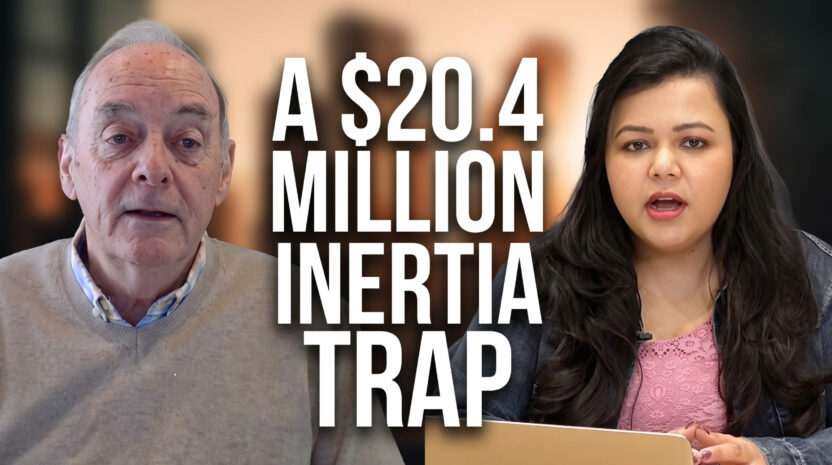
The A$20.4 Million Inertia Trap: How Kepa Software Is Unlocking Value in Enterprise Capital Allocation
A government agency renewed the same maintenance decision nine years running, because auditing the original choice was deemed too expensive. When the portfolio was finally tested, A$20.4 million of low value spend was identified in a single year. Kepa Software’s capital governance platform was built to expose and eliminate precisely these boardroom blind spots. For […]
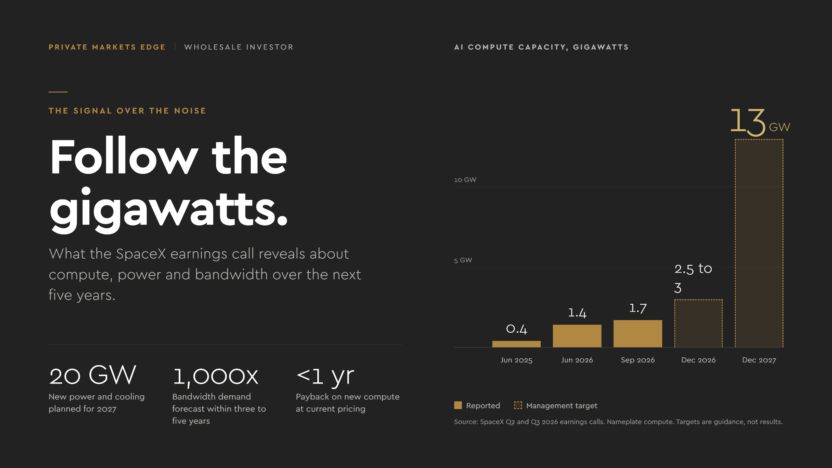
Forget the share price. SpaceX just published a map of the next five years.
Most coverage of SpaceX’s result focused on a 9.1% share price fall. That is noise. The signal is in the transcript: compute, power, bandwidth and demand over the next five years.

The prefab company that deliberately leaves part of the house unbuilt
BuiltQuik prefabricates the floor and roof structure and stops there. Co-founder Ryan Mullaney argues the omission is the product. Prefabricated housing usually means a factory. A large central facility, identical modules, limited room to move on design, and a logistics problem getting the finished box to site. BuiltQuik builds the opposite, and the design decision […]
Backed By Leading Investment Groups and Family Offices