News and Announcements

The Great Life Science Reset: Why the “Sick Care” Model is Failing
- Published January 23, 2026 2:05AM UTC
- Publisher Steve Torso
- Categories Capital Insights, Landing, Trending
I have spent the last four months in deep conversation with over 80 life science founders and CEOs. I asked our team to analyse the transcripts from these briefings to identify the structural shifts occurring in the market. The data reveals a significant transition. We are witnessing the end of the traditional sick care model and the rise of a proactive healthcare ecosystem.
This is not a temporary trend. It is a fundamental shift in how capital is allocated and how human health is managed at scale.
The $2 Trillion Efficiency Gap
The current state of drug development is a high-stakes gamble. Industry data shows that over 90% of drugs fail in clinical trials. Perhaps most striking is that 60% of these failures are attributed to inadequate trial design.
We are now seeing founders utilise AI platforms to simulate clinical trials up to 100,000 times before recruiting a single patient. These systems are predicting outcomes with over 92% accuracy. This is how smart money is cutting discovery times in half while doubling success rates.
Turning the Lights on in Diagnostics
Diagnostics has been the greatest blind spot in medicine for decades. For example, chronic conditions like endometriosis still take an average of seven to nine years to diagnose. This delay creates a massive economic and social burden.
The companies I am speaking with are solving this through AI-powered analysis of biochemical signatures. We are seeing non-invasive tests that can diagnose complex diseases in days rather than years. This shift from reactive symptom management to proactive detection is where the most significant value is being created.
Creating System Capacity
Our clinicians are currently overwhelmed by a hidden tax of administrative burdens. The solution being built right now is what I call “boring but valuable” AI. This includes:
- Automated medical scribes to reduce burnout.
- Intelligent referral management to eliminate data silos.
- Ambient AI that handles documentation in real time.
By creating these efficiencies, we are finally allowing the healthcare system to scale without a proportional increase in costs.
Witness the Future at Emergence 2026
The founders behind these breakthroughs are not just building products. They are redefining the future of human longevity.
We have partnered with MTPConnect to host a dedicated Life Science Investor Day during Emergence 2026. This is your opportunity to be in the room with the companies orchestrating this reset.
- Date: February 18th, 2026.
- Location: Four Seasons Hotel, Sydney.
- Focus: Precision medicine, AI diagnostics, and clinical trial innovation.
The momentum is building and the room is filling fast. This is the pivotal moment for those looking to connect with the next decade of wealth creation in life sciences.
Trending
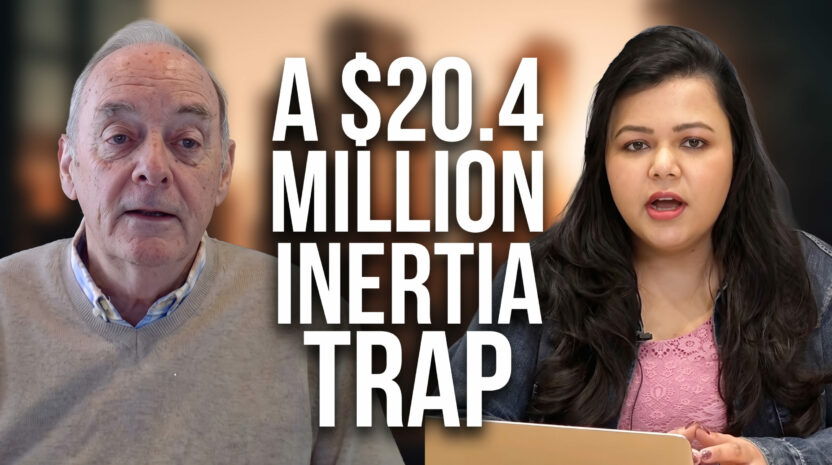
The A$20.4 Million Inertia Trap: How Kepa Software Is Unlocking Value in Enterprise Capital Allocation
A government agency renewed the same maintenance decision nine years running, because auditing the original choice was deemed too expensive. When the portfolio was finally tested, A$20.4 million of low value spend was identified in a single year. Kepa Software’s capital governance platform was built to expose and eliminate precisely these boardroom blind spots. For […]
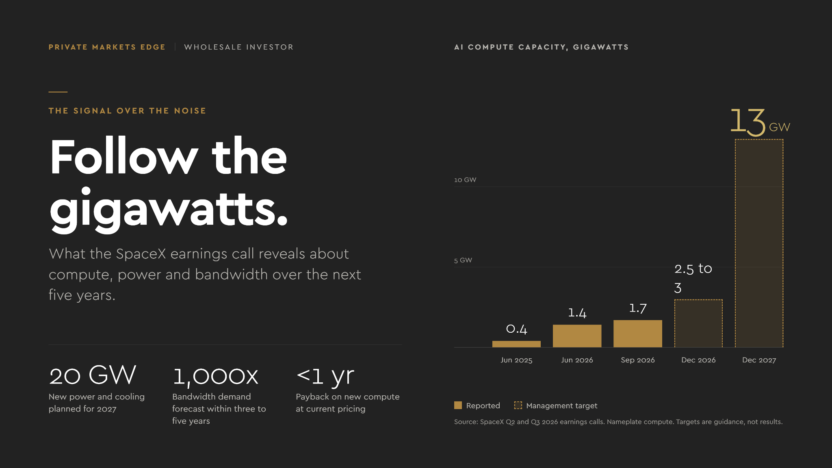
Forget the share price. SpaceX just published a map of the next five years.
Most coverage of SpaceX’s result focused on a 9.1% share price fall. That is noise. The signal is in the transcript: compute, power, bandwidth and demand over the next five years.

The prefab company that deliberately leaves part of the house unbuilt
BuiltQuik prefabricates the floor and roof structure and stops there. Co-founder Ryan Mullaney argues the omission is the product. Prefabricated housing usually means a factory. A large central facility, identical modules, limited room to move on design, and a logistics problem getting the finished box to site. BuiltQuik builds the opposite, and the design decision […]
Backed By Leading Investment Groups and Family Offices