
News and Announcements
Why the Gig Economy is Gaining Traction: An Analysis of Project-Based Work
- Published February 16, 2023 6:20AM UTC
- Publisher Wholesale Investor
- Categories Company Updates
The traditional model of salaried employment is undergoing a seismic shift, as more and more workers flock to project-based work and the contract economy. This trend is driven by a combination of factors, including the meteoric rise of remote work, employers de-risking their companies by removing salaried staff, and above all else, employees seeking greater flexibility. According to a recent survey, 87% of employees prefer to work remotely, with 49% citing the ability to set their own hours as the biggest draw.
At its core, the gig economy refers to a labor market that is characterised by short-term contracts and freelance work, rather than permanent, full-time employment. Even though articles have been flooded with images of Uber drivers and food delivery riders when the gig economy is brought up, this paints an inaccurate picture of what this term really means.
The fastest growing sector of the gig economy has actually been white-collar professionals, with over 40% of all white-collar professionals now engaging in project-based work, or “gig” work, applying their skill sets to whichever company needs them at the time. 30% of the entire workforce is now made up of project-based professionals, and it is predicted to be over 50% of the workforce by 2027. This trend is clearly here to stay.
For businesses, the benefits of project-based work are clear. By embracing flexibility, they can not only reduce their baseline payroll and limit their risk but also tap into a much wider pool of talent who are often accustomed to high productivity and tight turnarounds. However, this shift also presents new challenges for HR professionals, who must adopt new procedures and technologies in order to make this change correctly.
The tools used for hiring in today’s world don’t seem to be facilitating this trend very effectively. The average time to hire has risen to 40 days and the average cost per hire currently sits at a record high of $23,860. Given these trends, it’s clear that companies need to reconsider their hiring strategies if they are going to stay current, capitalise on the benefits of the gig economy, and continue to attract talent.
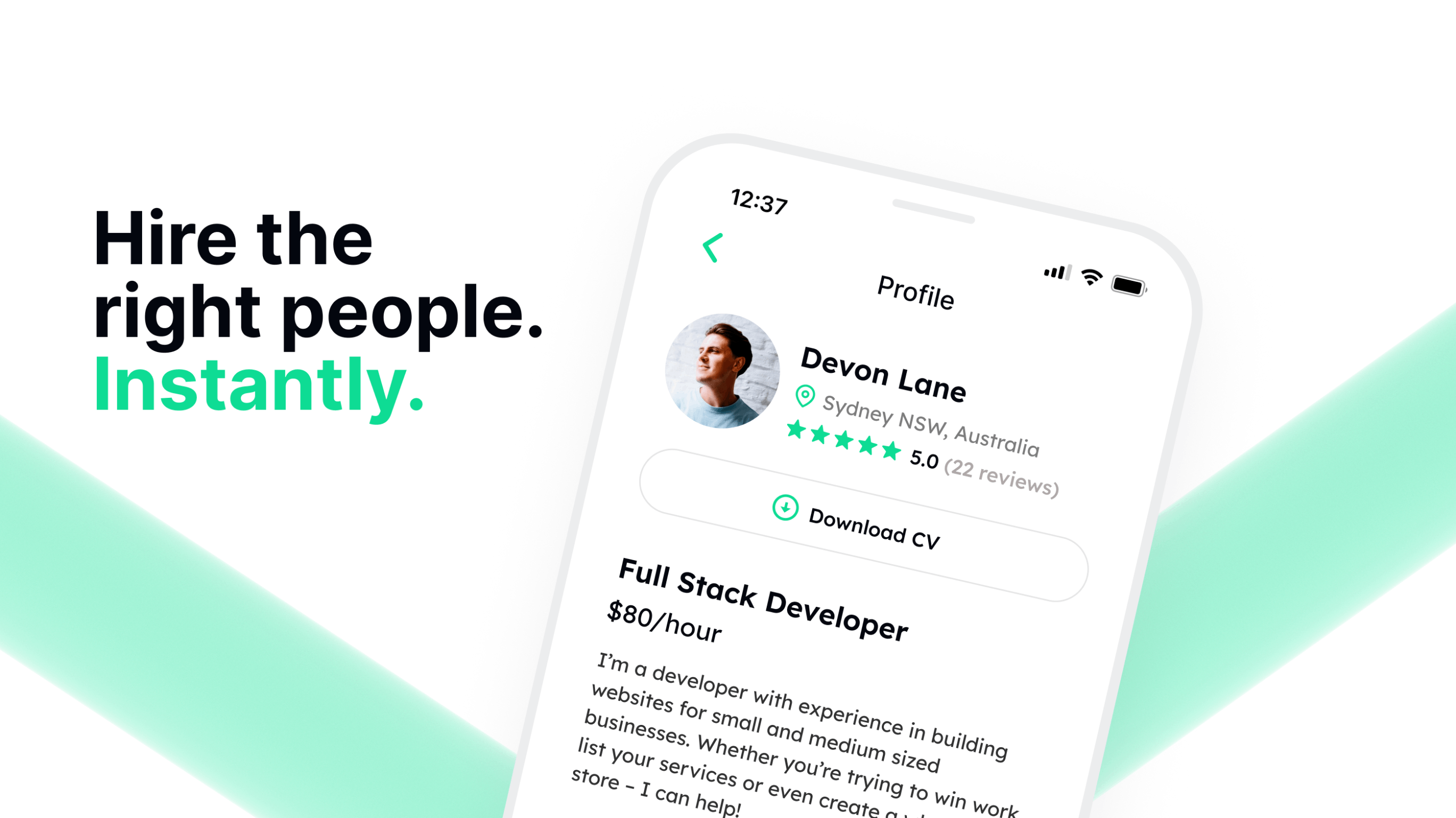
One company working on this problem is Sydney-based technology startup Credible. The HR technology company has experienced overwhelming demand for its hiring platform, allowing companies to hire project-based talent from its database of verified professionals that it maintains. The platform shows detailed talent profiles with skills, reference checks and verified work histories. It allows employers to access the profiles directly with a quick search, and then hire and pay professionals straight from the platform. Credible says that using their system as opposed to relying on job boards and recruitment agencies can potentially reduce the time to hire down to just 2 days, and the cost per hire down to $89.
Credible is currently raising growth capital in order to launch its product in Australia and is now taking final meetings with potential investors. If you are interested in participating, you can view their offering here.
Connect with the company and learn more about Credible by accessing their deal room here.
Company Updates

The A$20.4 Million Inertia Trap: How Kepa Software Is Unlocking Value in Enterprise Capital Allocation
A government agency renewed the same maintenance decision nine years running, because auditing the original choice was deemed too expensive. When the portfolio was finally tested, A$20.4 million of low value spend was identified in a single year. Kepa Software’s capital governance platform was built to expose and eliminate precisely these boardroom blind spots. For […]
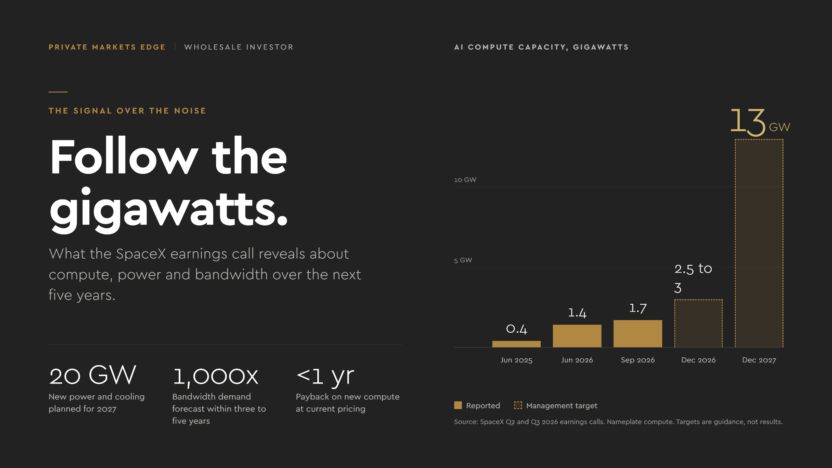
Forget the share price. SpaceX just published a map of the next five years.
Most coverage of SpaceX’s result focused on a 9.1% share price fall. That is noise. The signal is in the transcript: compute, power, bandwidth and demand over the next five years.

The prefab company that deliberately leaves part of the house unbuilt
BuiltQuik prefabricates the floor and roof structure and stops there. Co-founder Ryan Mullaney argues the omission is the product. Prefabricated housing usually means a factory. A large central facility, identical modules, limited room to move on design, and a logistics problem getting the finished box to site. BuiltQuik builds the opposite, and the design decision […]
Backed By Leading Investment Groups and Family Offices