
News and Announcements
1,000km, sustainable, efficient , no onboard pilot: How ‘Gap Drone ’ is rewriting the rules of remote logistics
- Published March 11, 2026 11:39PM UTC
- Publisher Jade Miguel
- Categories Capital Insights, Executive Interviews, Landing, Trending
In the vast expanse of the Australian outback, geography isn’t just a landscape but a tax. For remote and First Nations communities, living 1,000 kilometres from a distribution hub can mean paying $15 for a packet of Tim Tams, $6 for a single apple, and waiting days or weeks for life-saving medicine.
“Geography still determines who gets access to security and prosperity,” says Liesl Haris, co-founder and CEO of GAP Drone. “If you live in a capital city, the supply chain is invisible and everywhere. If you live 1,200 kilometres away, supply chains decide your outcomes.”
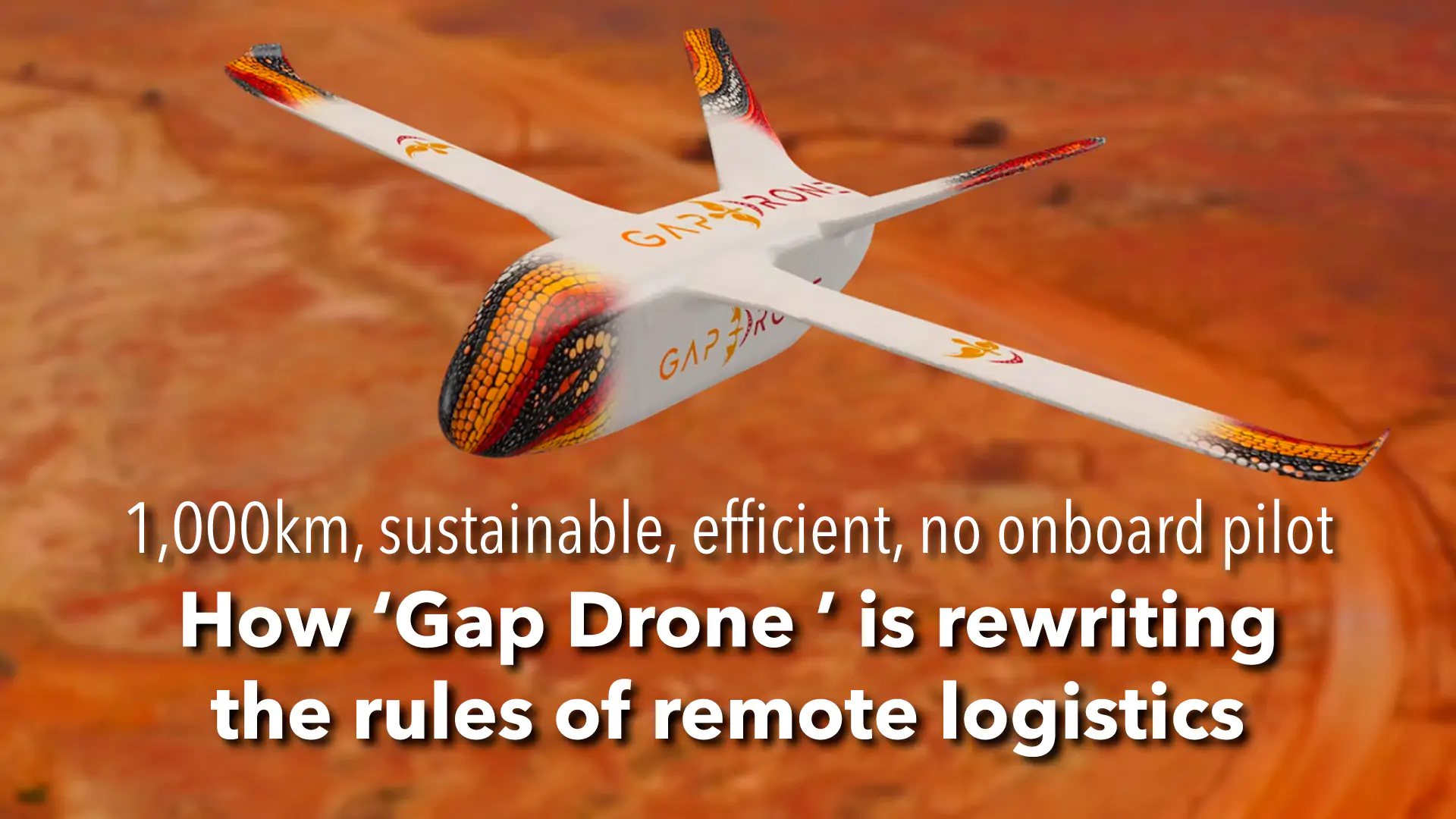
Haris isn’t interested in “slick politically leveraged statements” about closing the gap. She’s interested in hardware. Her company is currently flight-testing ATLAS—the Autonomous Transport Logistics Aircraft System—an unmanned aerial vehicle (UAV) designed to turn the “too hard basket” of remote logistics and innovation into a high-growth frontier.

A Payload with Purpose
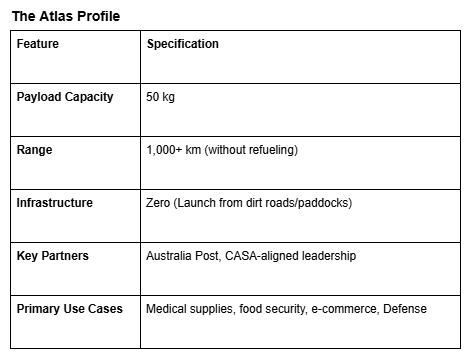
The ATLAS isn’t your average hobbyist drone. It is a heavy-lift workhorse capable of carrying 50kg of cargo over 1,000 kilometres without refueling.
Critically, it bypasses the need for the multi-million dollar infrastructure that hamstrings traditional aviation. Atlas can launch from a dirt road or a paddock, requiring no specialist ground crew or runway extensions.
“We bring the infrastructure,” Haris says. “ATLAS will take freight where it’s needed, not just where infrastructure happens to exist.”
Learning from Billion-Dollar Blunders
The “Deep Tech” graveyard is littered with ambitious eVTOL (electric vertical take-off and landing) startups like Lilium and Volocopter, which burned through billions only to stall at the regulatory finish line. Haris is determined not to be another cautionary tale.
GAP Drone’s strategic “moat” is its conservative approach to regulation:
- Regulatory Alignment: ATLAS was designed to fly within current allowable regulatory realms, avoiding the 5-to-10-year wait and tens of millions of dollars for new type certifications.
- Boardroom Heavyweights: The company’s chairman is the former chairman of the Civil Aviation Safety Authority (CASA), providing a “steady hand on the tiller” and an intrinsic understanding of safety compliance.
- Low-Risk Testing: By operating in sparsely populated remote corridors, GAP Drone can prove its reliability with significantly lower third-party risk than urban delivery startups.
“A lot of the startups that have failed did so because they couldn’t certify. We took that off the table,” Haris explains.
The Australia Post Factor
While the social impact—improving food security and healthcare and access to opportunity for Indigenous communities—is the heart of the mission, the commercial validation is already landing.
Australia Post, which holds an 84% market share in national logistics, has thrown its weight behind the startup. Facing the “dire need” for viable remote delivery pathways, the national carrier is eagerly awaiting the results of the current flight test campaign.
For investors, Haris argues that while remote communities are the immediate focus, the long-term play is a total disruption of the air freight cost model.
“This is the Uber of Airfreight,” she says. “We’re bringing the cost of air freight more in line with road and rail. Software has had its time—it’s our time now.”
Trending
1,000km, sustainable, efficient , no onboard pilot: How ‘Gap Drone ’ is rewriting the rules of remote logistics
Can autonomous drones solve Australia’s “tyranny of distance”? GAP Drone CEO Liesl Haris thinks so. With the launch of ATLAS—an autonomous transport logistics aircraft system—the company is bypassing traditional infrastructure to deliver 50kg payloads over 1,000km. Dubbed the “Uber of airfreight,” GAP Drone is tackling the “too hard basket” of remote logistics, partnering with Australia Post to provide First Nations communities and regional hubs with reliable, low-cost access to medicine, food, and economic opportunity. By operating within current regulatory frameworks and utilising a “no-runway” launch model, GAP Drone is transforming air freight from an expensive luxury into a scalable utility.
Precision Care, Zero Clicks: Why the Future of the NDIS is Voice-First
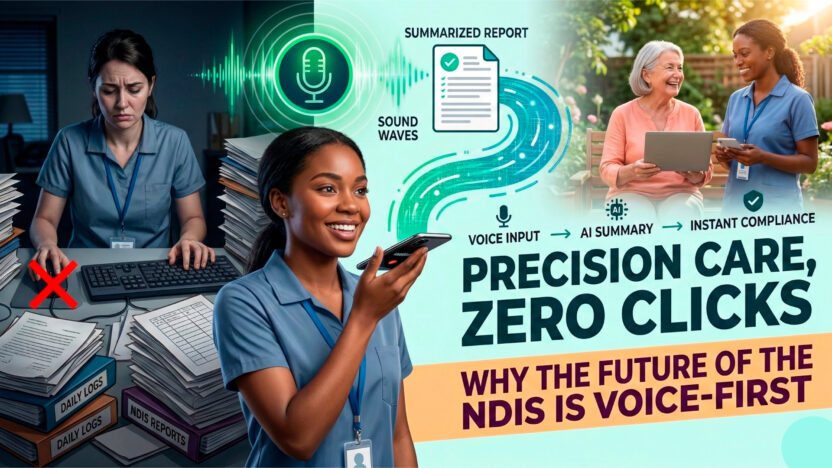
Carelogix is solving the healthcare burnout crisis by replacing manual typing with a sophisticated AI “care co-pilot.” By reclaiming nearly half of a caregiver’s day, the platform offers a significant value inflection point for providers and investors in the trillion-dollar care economy.
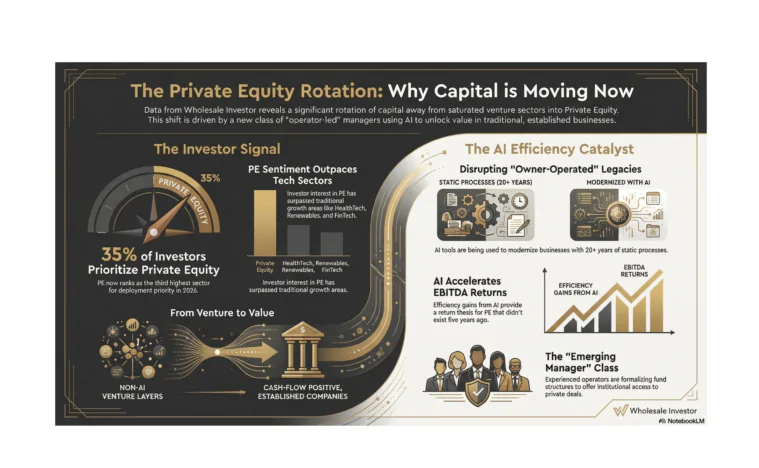
The Private Equity Signal I Am Watching Very Closely
Pattern recognition in private markets is not about predicting the future. It is about reading what is already moving before the wider market notices. I spotted the same signal in life sciences 18 months before it became consensus. We are watching it happen again, this time in private equity.
Backed By Leading Investment Groups and Family Offices