
News and Announcements

Targeting the Untouchable: The High-Stakes Race to Outsmart ‘Invisible’ Tumors
- Published February 09, 2026 3:43AM UTC
- Publisher Jade Miguel
- Categories Capital Insights, Executive Interviews, Landing, Life Science Hub, Trending, Venture Investor Interviews
In the sterile, high-tech world of oncology, there is a hurdle that even the most successful cancer drugs struggle to clear: the “invisible” tumor.
These are the cancers that the much-lauded “miracle” drugs of the last decade simply cannot see. While immunotherapy has famously turned the tide for thousands, a silent majority of patients—those with aggressive breast, lung, , or head and neck cancers—find themselves standing on the outside of the medical revolution, looking in.
“Some cancers are like a fortress that the immune system just can’t find a way into,” says Dr. James Garner. A physician who traded the hospital ward for the boardroom without ever losing his bedside manner, Garner is now leading Percheron Therapeutics (ASX: PER), a lean ASX-listed team in a high-stakes sprint to make these untouchable tumors visible again.

The ‘Cloaking Device’ Problem
To understand the breakthrough Percheronis chasing, you have to understand why current treatments fail. Modern blockbusters like Keytruda work by blocking a protein called PD-1—essentially “uncloaking” the cancer so the body’s own immune system can attack.
The problem is that cancer is a shapeshifter. When one door is locked, it finds another.
“The trouble is this: some patients respond for a while, but almost all eventually stop,” Garner explains. “And some cancers don’t respond at all. They use a different ‘cloaking device’ entirely.”
That device is a protein called VISTA. While the global pharmaceutical industry has been crowded around the PD-1 switch, Percheron Therapeutics is targeting this second, more elusive barrier with its lead drug, HMBD-002. By drugging VISTA, they aren’t just trying to add another medicine to the cabinet; they are trying to restore the “hope” that immunotherapy promised but hasn’t yet delivered to everyone.
A Clinician’s Conscience in a Virtual Office
Despite managing over 30 product approvals and having raised over $80 million in capital throughout his career, Garner speaks with the grounded empathy of someone who has had to deliver the hardest news possible to a family.
“I started in hospital medicine. The fact that what we do brings tangible benefits to patients is still what gets me out of bed,” he says. “I don’t see the business and the science as contradictory. They are two sides of the same coin.”
Percheron operates on a model that would make a McKinsey consultant weep with joy: a “virtual” business. They don’t have sprawling campuses or thousands of staff. Instead, Garner has assembled a “special forces” unit—a board of professional drug developers, including the former Chief Medical Officer of CSL, and a team where the average employee has 25 years in the trenches.
The 2026 Inflection Point
Percheron is currently transitioning from “interesting science” to “investment reality.” Having recently completed Phase 1 trials at six US hospitals including global titans like Stanford and MD Anderson, they proved HMBD-002 was safe—a hurdle that trips up half of all biotech hopefuls.
But the real magic happened in the margins: the trial saw actual tumor shrinkage in patients who had run out of other options.
Now, as the calendar turns to 2026, Percheron is preparing for its Phase 2 human trials. In the biotech world, this is the “value inflection” point—the moment where a company’s valuation can detach from its junior status and soar if the drug proves effective in a broader group of humans.
“Phase 2 is where the rubber hits the road,” Garner says. “It’s where you show definitively that the drug works. We’re moving into the part of the life cycle where the action happens.”
The Road Ahead
With recruitment for the Phase 2 trial slated to begin in the second half of 2026, Garner is playing the long game with short-term urgency. He knows that for the patients with “invisible” tumors, every day counts.
For investors, Garner argues the window is similarly tight, suggesting Percheron is currently valued far below international peers at a similar stage of development.
“We are in the hot zone,” he concludes. “It’s about building a successful business, yes. But it’s also about making a difference for people facing the enormous challenge of a cancer diagnosis. Those two things are what define a successful biotech.”
Venture Investor Interviews

Wholesale Investor Marketing Regulations in Australia
Marketing investment opportunities to wholesale investors in Australia is subject to a distinct regulatory framework that differs significantly from retail financial product marketing. While the Section 708 exemptions remove the requirement for a prospectus, they do not eliminate all regulatory obligations. Companies that misunderstand these boundaries risk ASIC enforcement, investor claims, and reputational damage. This […]
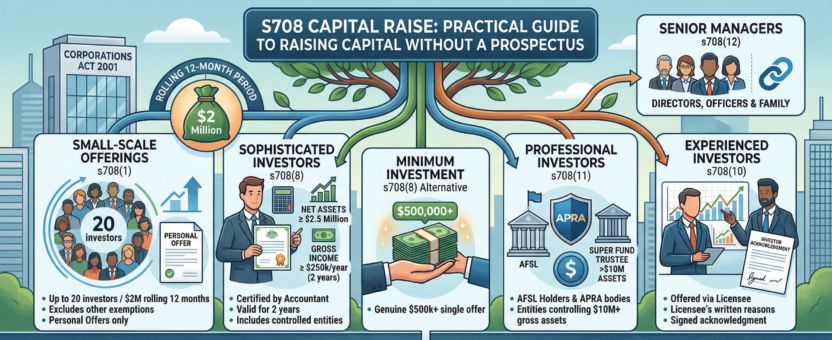
S708 Capital Raise: A Practical Guide to Raising Capital Without a Prospectus
Section 708 of the Corporations Act 2001 is the regulatory foundation for private capital raising in Australia. It defines the circumstances under which a company can offer securities without preparing and lodging a disclosure document such as a prospectus. For founders and fund managers, understanding s708 is not optional. It is the legal framework that […]
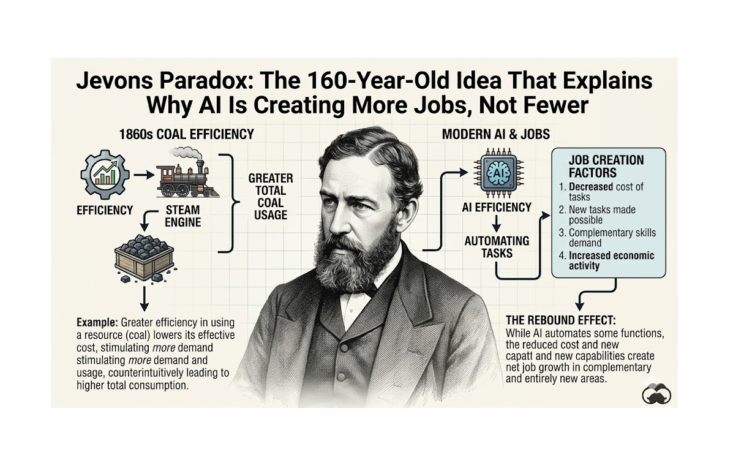
Jevons Paradox: The 160-Year-Old Idea That Explains Why AI Is Creating More Jobs, Not Fewer
When technological efficiency increases the supply of a resource, it paradoxically leads to higher total consumption and expansion of the market. This pattern, known as Jevons Paradox, played out with steam engines, automobiles, and aviation. Today, the same dynamic is happening with artificial intelligence: AI is making software development cheaper and faster, which is unlocking massive, latent demand for new applications and creating a boom in software engineering roles globally. The key question is what new forms of human effort will emerge when the cost of the old ones drops to near zero.
Backed By Leading Investment Groups and Family Offices