
A government agency renewed the same maintenance decision nine years running, because auditing the original choice was deemed too expensive. When the portfolio was finally tested, A$20.4 million of low value spend was identified in a single year. Kepa Software’s capital governance platform was built to expose and eliminate precisely these boardroom blind spots.
For nine consecutive years, an Australian public sector agency quietly signed off on a A$37 million annual asset maintenance budget. Every cycle, the board rubber-stamped the allocation on the assumption that because the decision was approved last year, it must still be correct. Auditing the underlying business case, officials reasoned, would require time, consultants, and money they were unwilling to spend.
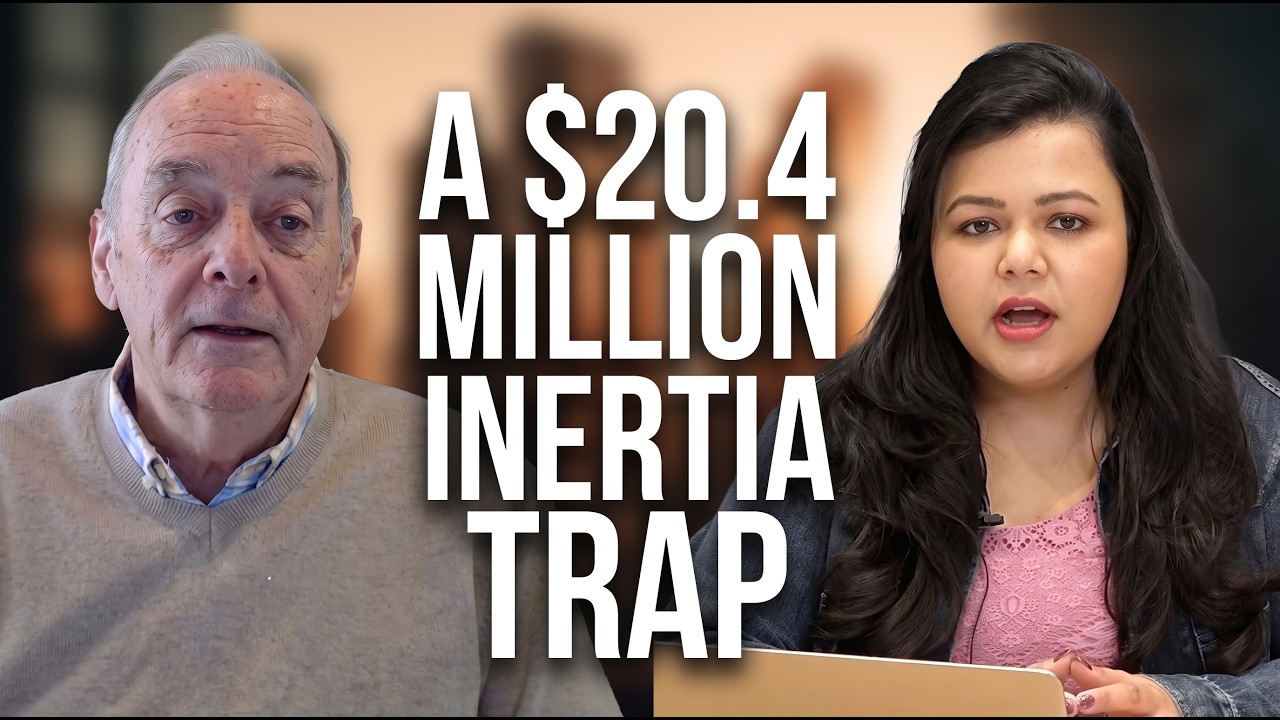
When Kepa Software’s capital governance platform, APO, was brought in to evaluate the portfolio, the reality was laid bare. In the year examined, A$20.4 million of the A$37 million maintenance budget, 55 per cent of the total, was being directed to low-value, non-strategic outcomes. Nine consecutive renewals of a decision that had never been tested, with A$20.4 million of low value spend identified when it finally was.
The 55 per cent figure is an outlier. Garrard notes that across APO deployments the platform typically identifies around 5 per cent of a portfolio as low-value allocation. The agency case sits at the extreme end of the range, which is what makes it instructive, but the 5 per cent figure is the more representative measure of what organisations should expect to find.
This single case study captures the core premise behind Kepa Software, an Australian enterprise software firm founded by technology veteran Ken Garrard.
“The original decision was made nine years earlier and renewed eight times on the assumption that it must have been right at first,” says Garrard. “Organisations don’t lack goodwill, they lack an objective, transparent process to audit and reprioritise decisions once they’ve been made.”
A US$150 Billion Market Opportunity
Boardrooms routinely weigh vastly different funding proposals against one another: a A$40 million cybersecurity overhaul on one side of the table versus a A$40 million commercial growth initiative on the other. Because traditional tools struggle to compare inherently dissimilar projects, funding allocations frequently come down to whoever advocates the hardest in the room rather than objective value creation.
Garrard, whose 17 years of work in enterprise transformation spans banking, energy, infrastructure, and government, outlines the global scale of this inefficiency:
- US$100 trillion: Total volume of capital allocation decisions made globally each year.
- US$10 trillion: Annual decisions made in mature markets governed by strict legal, agency, and institutional frameworks.
- US$500 billion: Kepa Software’s target Serviceable Addressable Market (SAM) across complex enterprise and public sector portfolios.
- US$150 billion: Estimated annual sub-optimal capital allocation sitting within that target market alone.
Solving the Non-Homogeneous Problem
While Garrard spent 17 years developing the theoretical frameworks around multi-criteria decision science and value modelling, the APO platform itself is the result of six years of dedicated software development.
Unlike conventional enterprise tools, APO is built specifically to prioritise non-homogeneous portfolios without forcing intangible metrics onto a dollar scale or breaking investments down into artificial clusters.
This structural architecture creates clear differentiation against other players in the decision analytics space:
- Monetised scale vs. native intangibles (Copperleaf): Asset investment planning platforms like Copperleaf (which was acquired by global enterprise software vendor IFS in 2024 for C$1 billion) handle dissimilar investments by converting all intangibles, such as ESG compliance, community impact, and safety, into a common monetised economic scale. Forcing every subjective value into a dollar figure creates heavy friction and administrative overhead. APO evaluates both tangible financial metrics and non-monetised intangibles natively.
- Direct ranking vs. AHP clustering (Decision Lens): Tools based on the Analytic Hierarchy Process (AHP), such as Decision Lens, evaluate complex portfolios by grouping investments into homogeneous clusters. This is a published constraint of the method rather than a matter of implementation: homogeneity is the second axiom of AHP as set out by Thomas Saaty, who created the method and who sat on Decision Lens’s advisory board. Because AHP relies on pairwise comparisons within like categories, it struggles to compare genuinely non-homogeneous initiatives side by side. APO bypasses cluster constraints to rank competing, multi-domain proposals directly within a single, unified value model.
- Governance above execution (SAP, Oracle, ServiceNow, Planview): Traditional enterprise software suites manage projects after capital has already been allocated. APO operates architecturally above those platforms, governing the upstream decision science before funds are committed.
Findings Across Enterprise and Government Deployments
Kepa Software’s decision framework has been applied across enterprise and government portfolios. Two deployments illustrate the range of outcomes:
| Deployment portfolio | Identified outcome |
| Government asset maintenance (A$37M) | 55 per cent of the annual budget, A$20.4M, identified as low-value spend in the year examined. APO typically identifies around 5 per cent; this deployment is an outlier. |
| Proposed transport infrastructure | A$50 billion in cost and complexity avoidance identified across a proposed mega-portfolio while maintaining full required capacity. The projects assessed were proposed and not built, so this figure represents avoided cost and complexity rather than a realised saving. |
Backed by Capability: The Team Behind Kepa
While Ken Garrard’s 17 years of domain expertise provided the initial vision for APO, Kepa Software is backed by an established executive and technical team:
- David Pretty, Chief Technology Officer
- Tarun Gauri, Head of Customer Success
- Dan Hillier, Chief Revenue Officer, whose background is commercial and legal
This multi-disciplinary team has productised APO’s workflow engines and AI onboarding assistants, ensuring the platform’s capability, deployment, and IP extend beyond its founder.
Commercial Traction and the A$5M Capital Raise
Kepa Software has generated approximately A$750,000 in revenue to date through commercial contracts and enterprise pilot engagements.
To accelerate its next phase of growth, Kepa Software is currently raising A$5 million at a A$15 million pre-money valuation via Capital HQ.
Key objectives for the raise include:
- Converting existing traction: Transitioning A$750k in initial revenue and established pilot environments into contracted, multi-year recurring software licences.
- Pipeline execution: Advancing the enterprise and public sector opportunities currently in Kepa’s commercial pipeline.
- Platform scaling: Hardening the core platform for multi-year account deployments and productising AI-driven onboarding assistants to shorten time-to-value for new enterprise clients.
- Series A horizon: Funding the business toward a A$3 million Annual Recurring Revenue (ARR) trigger at month 22.
With approximately A$750k in revenue already banked, documented deployment case studies, and a defensible position in capital governance, Kepa Software is raising to convert pipeline demand into multi-year recurring contracts.
“This content is provided for information only and is directed solely at persons who qualify as wholesale, sophisticated or professional investors under section 708 of the Corporations Act 2001 (Cth). It is not an offer, invitation or recommendation to acquire securities and is not directed to retail investors. Any forward looking statements are estimates based on assumptions that may not eventuate, and past results are not a guide to future performance. Figures cited are provided by Kepa Software Pty Ltd and have not been independently verified. Recipients should obtain their own independent advice.”