News and Announcements

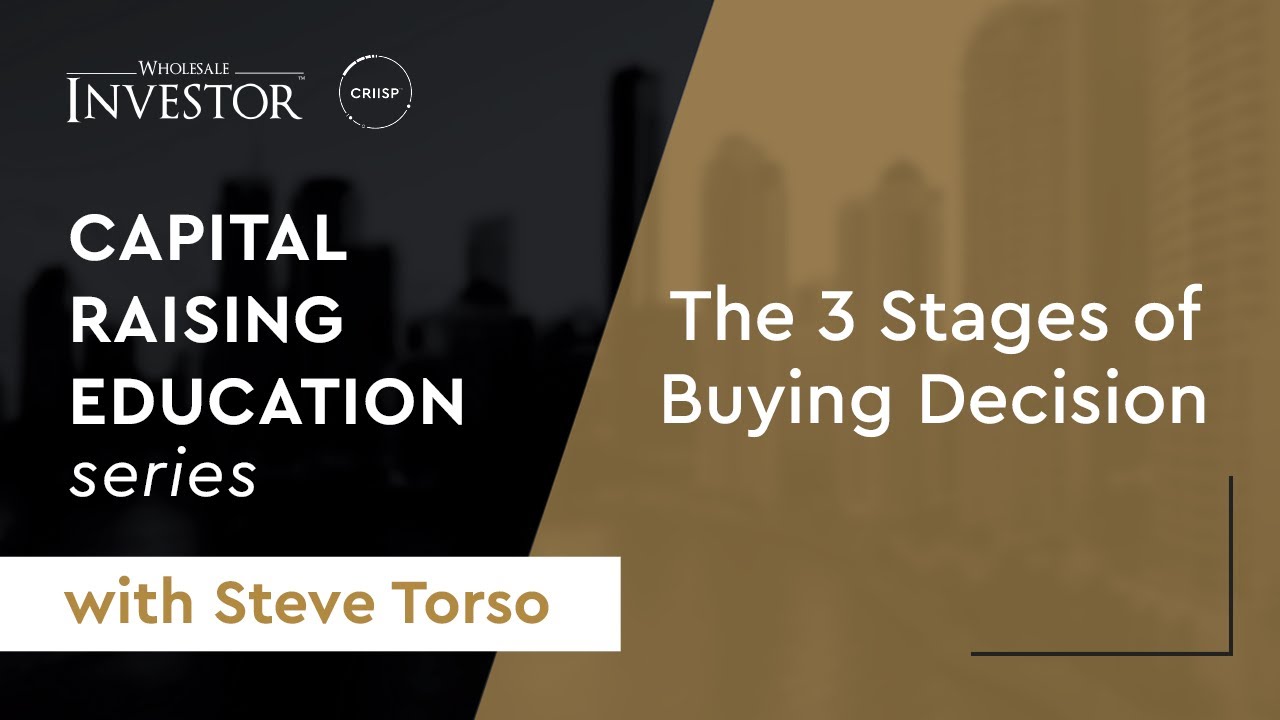
Capital Raising: Mastering the 3 Stages of the Buying Process
- Published August 08, 2023 11:00PM UTC
- Publisher Wholesale Investor
- Categories Capital Raising Tips
As a startup founder, raising capital is a critical part of your journey. Understanding the science behind the capital raising process can significantly enhance your efforts. There are many layers involved in this process, and one of the most important aspects is understanding the buying process. This article will delve into the three stages of the buying process: awareness, consideration, and decision-making.
Stage 1: Awareness – Creating Momentum
The first stage of the buying decision is awareness. This is where you make potential investors aware of your startup and its value proposition. It’s crucial to leverage key brand points and create a strong visibility in the market. This stage is all about gaining momentum and attracting investors.
Effective communication is key during the awareness stage. It’s important to identify potential investors and communicate your startup’s vision, mission, and unique selling points. Remember, the goal is not just to inform but also to intrigue and attract those most likely to become shareholders.
Stage 2: Consideration – The Bandwagon Effect
The second stage is consideration. This is where potential investors evaluate your startup and consider whether or not to invest. The psychology of investors plays a significant role in this stage. Investors typically do not want to be the first to invest, nor do they want to miss out on promising opportunities. This leads to a phenomenon known as the bandwagon effect, where many investors tend to invest together.
Having a lead investor or a renowned investor can trigger the bandwagon effect. Venture capitalists, family offices, and high net worth individuals often prefer to invest together with other friends, networks, or colleagues they have previously done deals with. Therefore, securing a lead investor can be a game-changer in your capital raising efforts.
Stage 3: Decision-Making – Setting a Deadline
The final stage of the buying process is decision-making. This is where potential investors make their final decision to invest in your startup. Interestingly, humans tend to delay tasks until a deadline is set. Once a deadline is in place, our minds start working towards it. This principle applies to both individuals and companies.
In the context of capital raising, the first closing of a fund creates a deadline and puts pressure on investors to make a decision. Therefore, setting a deadline and working towards it is crucial to finalise the capital raise.
Understanding and navigating the three stages of the buying decision – awareness, consideration, and decision-making – can significantly enhance your capital raising efforts. Each stage has its unique characteristics and requires a different approach. By mastering these stages, you can make your capital raising process more efficient and effective, ultimately leading to the growth and success of your startup.
Capital Raising Tips
Industrial AI does not fail on models. It fails on context.
Operational Intelligence connects fragmented operational data and systems across an industrial facility, including control systems, historians and equipment data, to give operators and AI tools a connected view of what a plant is actually doing. It sits within the broader industrial software and Asset Performance Management market, where predictive maintenance is one application among several, and can be deployed on premises, at the edge or in airgapped environments where operational data cannot leave the site.
It looks like a fund with no thesis. It is not really a fund.
An umbrella fund structure holds multiple single-purpose sub-funds, each with its own unit class and segregated assets held in the trustee’s name. Investors select an individual project rather than acquiring exposure to the whole portfolio, which means they carry concentrated exposure to that project and do not obtain diversification across the fund’s other investments.
What they took out paid for the production line
Flint’s paper battery is usually described by what it removes. Carlo Charles’s even more interesting point is that removing the materials also removed a lot of machinery, and that is why two products reached production on roughly US$4 million. Asked what is inside his battery, Carlo Charles starts with what is not. No lithium. No […]
Backed By Leading Investment Groups and Family Offices