
News and Announcements
Asset Management 101 For Founders
- Published December 15, 2022 4:50AM UTC
- Publisher Osama Hassan
- Categories Capital Raising Tips
Understanding the basics of asset allocation, risk diversification and risk-reward trade offs can explain why VC funding dries up in tough market conditions 💡
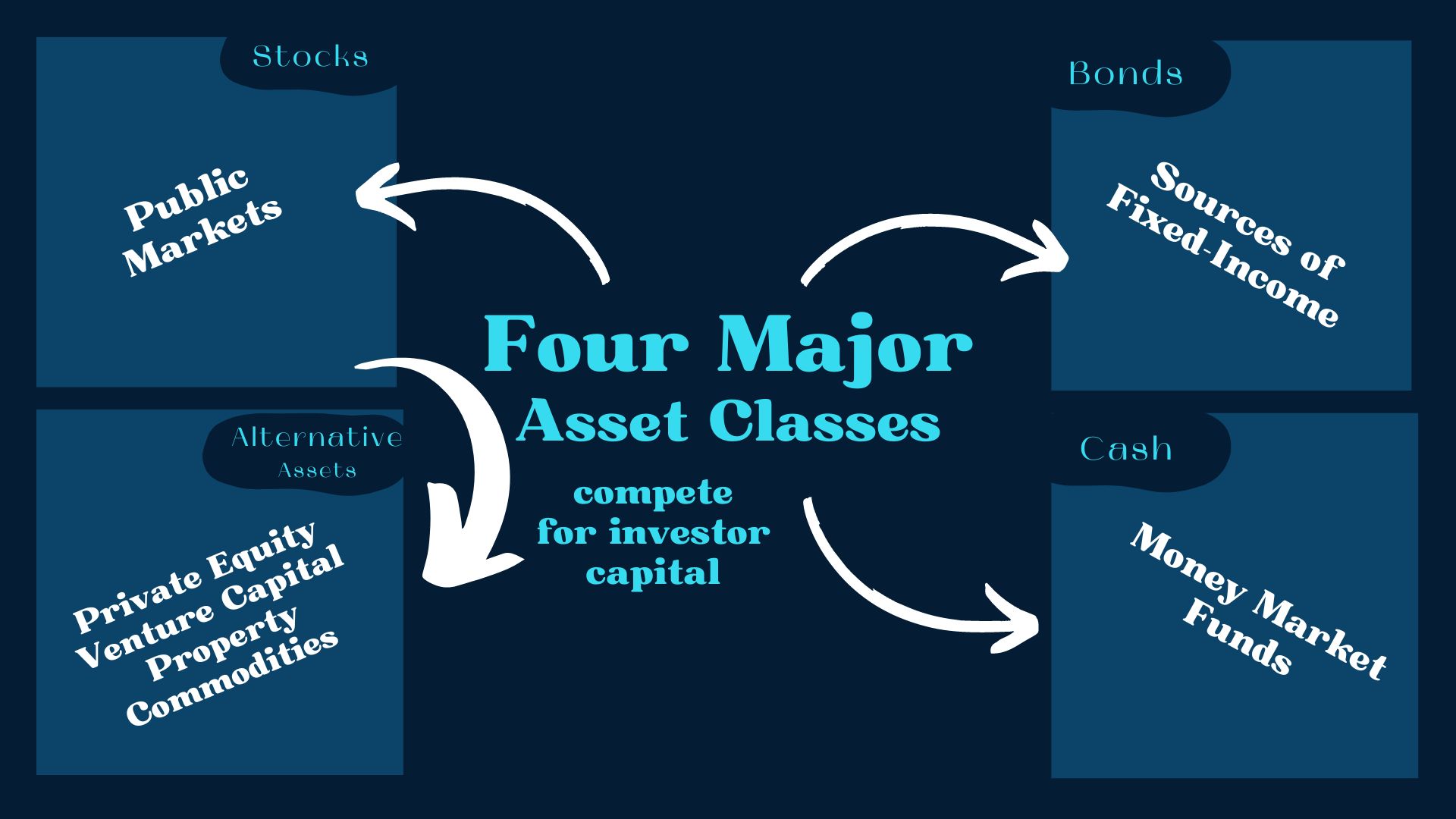
You see … multi-billion dollar institutional funds sprinkle money in different asset classes to meet asset allocation and diversification demands 💰
Each asset class has risk associated with it and each offers different financial returns …
Venture capital is actually a sub-asset class of private equity and falls under the alternative investment asset class, and for most LPs (the parties that fund VCs), it’s only a smaller fraction of the overall portfolio 🗒️
Because of risk-reward trade-offs not all asset classes are equal for investors, and because venture capital is the riskiest of them all, in trying times they will shift the allocation of their capital to reduce risk.
To make more informed decisions, essential knowledge of foundational financial concepts can really help founders better understand the economic factors behind the surplus and deficit of capital in markets 🚀🚀🚀
Click here to view the original Linkedin post.
Looking for a platform to raise capital? Click here to discover how Wholesale Investor can help you.
Your capital engagement platform
With a 14-year track record, a network of 32,000+ investors, and a capital raising platform, Wholesale investor is a leading investment platform for start-ups, scale-ups, emerging growth companies, and small caps.

Capital Raising Tips

The Biofilm Breakthrough: How An Australian BioTech Firm Is Tapping Indonesia’s $45,000-a-Kitchen Bottleneck
Australian sustainability and deep-tech firm Altair International Pty Ltd is commercialising plant-based clinical hygiene technology, targeting a prime operational bottleneck in Indonesia’s massive national free meals program. Every few years, an Australian deep-tech company emerges combining proprietary science with a transformational anchor contract, the kind of business that quietly creates an entirely new market category […]

THE TAX CHANGED. NOW THE PRODUCT IS CHANGING TO MATCH.
Changes to the 50% capital gains tax discount are shifting Australian private capital away from growth and into high-yielding wrappers. Fund managers are actively redesigning products across private credit and property to capture the incoming capital rotation

The Algorithm Re-Dosing Cancer Treatment: Inside the University of Melbourne Spin-Out Rewriting a 60-Year-Old Formula
Oncology specialists are still calculating toxic chemotherapy doses using a formula from the era of the Ford Model T, leading to a system where seven out of eight patients are routinely overdosed. University of Melbourne spin-out PredicTx is dismantling this legacy approach, utilizing advanced AI to analyze existing patient CT scans, deliver precision medicine to the bedside, and return a massive 100x financial rerate to hospital networks.
Backed By Leading Investment Groups and Family Offices